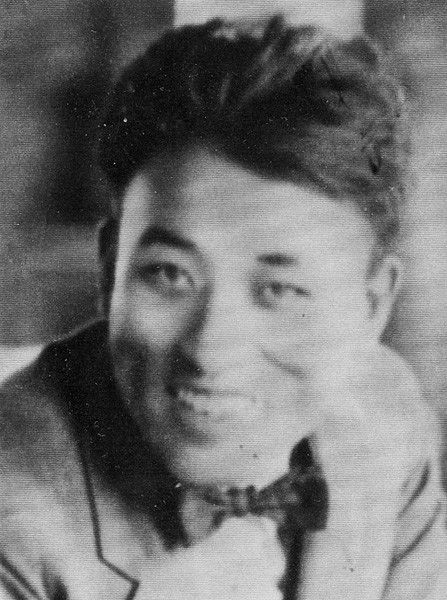
When discussing the history of Korean cinema, one of the first names to emerge is Na Woon-gyu. Yet reducing him to merely "the director of Arirang" fails to capture the breadth of his significance. Na was a director, actor, screenwriter, and producer who transformed the suppressed emotions of colonial Korea into cinematic language. More than a filmmaker, he embodied a declaration that Korean cinema itself was possible.
The Korean film industry of the 1920s and 1930s, when Na was active, lacked even the most basic industrial foundations. Film production depended heavily on Japanese capital and distribution networks, while censorship was an unavoidable reality. Freedom was scarcer than cameras or film stock. Making movies in colonial Korea demanded artistry, survival instincts, and cultural resistance all at once.
It was within this environment that Arirang premiered in 1926. Its importance does not stem merely from technical achievement. The film occupies a unique place in history because it represented Koreans depicting the emotions of their own era through their own cinematic expression.
The story centers on Yeong-jin, a young man carrying deep psychological scars. On the surface, it appears to be a personal tragedy. Contemporary audiences, however, recognized reflections of colonial reality within the narrative. In a period when direct discussions of independence were impossible, the film spoke through symbolism and emotion. Madness, sorrow, and loss became vehicles for expressing the spirit of the times while evading censorship.
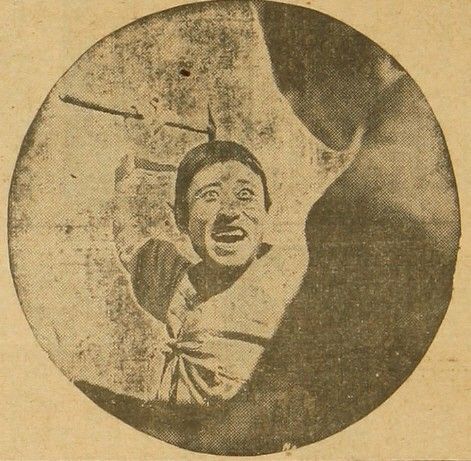
The significance of Arirang is also evident in the relationship it forged with audiences. Movie theaters at the time were not merely places of entertainment but communal spaces where collective emotions were affirmed. Viewers discovered their own suppressed feelings through the characters on screen, turning cinemas into emotional communities. The audience culture that would later become a hallmark of Korean cinema, laughing, grieving, and raging together, can be traced back to this period.
The film's theme song, "Arirang," represents an equally fascinating chapter in Korean cultural history. Drawing from folk melodies that existed throughout the Korean Peninsula, Na reimagined them through a cinematic lens to create a new form of popular culture. Recalling labor songs he had heard in childhood, he added new lyrics, creating a remarkable fusion of anonymous folk tradition and modern mass media.
The resulting "Bonjo Arirang" evolved into a song that connected communities. Its lyrics carried sorrow and hope, departure and longing, becoming an emotional voice for Koreans living under colonial rule. Over time, it grew into one of Korea's most enduring cultural symbols. In this sense, Na was not only a filmmaker but also an architect of collective cultural memory.
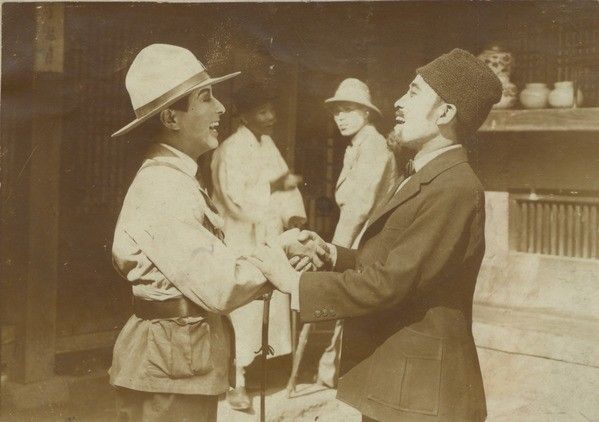
Na's cinematic world cannot be summarized by nationalism alone. He was among the first Koreans to fully understand the power of film as a medium. In an era when directing, writing, editing, and acting were rarely separated, he assumed multiple roles simultaneously, effectively experimenting with the very structure of film production.
He also recognized early on that cinema was fundamentally different from theater. His emphasis on close-ups, expressive eyes, and psychological nuance introduced a new visual language distinct from stage-centered performance traditions. The intense gaze preserved in surviving photographs remains memorable because it represented more than an individual actor's expression. It condensed the emotions of an era into a single image.
His 1929 film The Mute Samryong further expanded his artistic vision. Adapted from a story by Na Do-hyang, the film explored love, class divisions, and human tragedy. Rather than directly portraying colonial oppression, it focused on the sorrow embedded within ordinary lives, capturing the emotional structure of Korean society. Its influence can still be seen in the melodramatic sensibilities that later became a defining feature of Korean cinema.
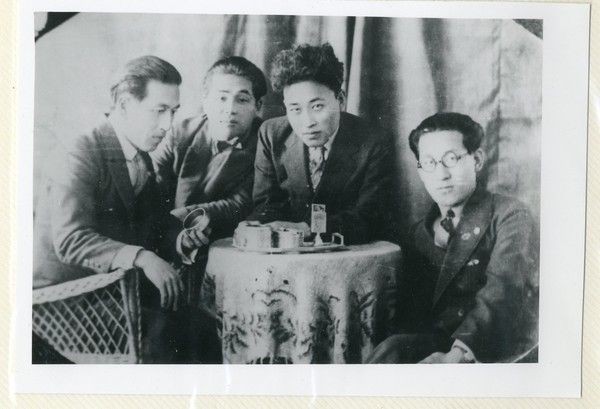
Not all of Na's films were successful. Censorship and commercial failures repeatedly disrupted his career, and many works were altered or removed. One notable example involved a project originally titled Across the Tumen River, which was renamed In Search of Love due to political concerns. Even a film title could not escape the reach of colonial authority.
Within such constraints, Na's work acquired meaning beyond cinema itself. Rather than confronting censorship head-on, he concealed messages through symbolism, emotion, and metaphor. In an age when direct speech was impossible, art developed more sophisticated and indirect forms of expression.
His final major work, Omongnyeo, deserves special attention. Focusing more heavily on directing and literary storytelling, the film marked a shift toward a more refined artistic approach. Its commercial success reaffirmed his standing as a filmmaker and demonstrated his ability to continuously adapt his cinematic language to changing circumstances.
Na's brief life also contributes to his enduring legacy. He died of tuberculosis at the age of 34, but an even greater tragedy lies in the loss of most of his films. The fact that so little remains of the work created by one of Korean cinema's founding figures underscores the fragility of cultural heritage under colonial rule.
Ironically, absence has only amplified his symbolic significance. Few people today can watch Na Woon-gyu's films, yet his influence permeates Korean cinema. The narrative expression of collective emotion, the fusion of social reality and tragedy, and the melodramatic sensibility that became central to Korean filmmaking all bear traces of his legacy.
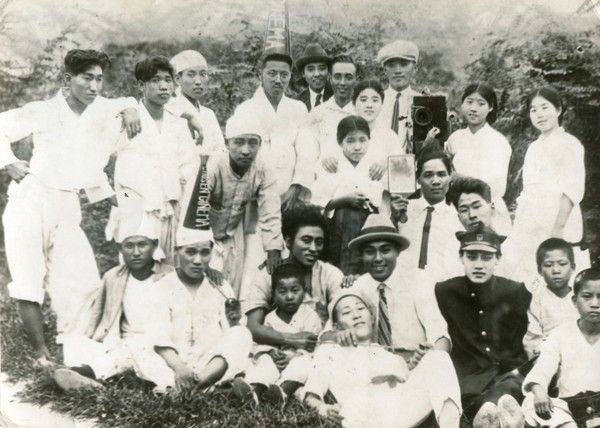
In a 1936 roundtable discussion, Na predicted that Korean films could one day reach global audiences. He argued that filmmakers should capture emotions that resonate universally while remaining rooted in Korean experiences. Even today, the statement feels remarkably forward-looking. He did not see locality and universality as opposites. Instead, he believed that the most Korean stories could also be the most widely understood.
That insight resonates strongly in the contemporary era. The global success of Korean films and television series, works deeply grounded in Korean realities and emotions, reflects the very vision Na articulated nearly a century ago.
Ultimately, Na Woon-gyu is remembered not because of a single film but because he transformed the screen into a repository of collective Korean emotion and proved that cinema could speak for its era. The name "Chunsa" endures not simply as the pen name of a filmmaker, but as a symbol of the moment Korean cinema began to discover its own voice.
Reported by News Culture M.J._mj94070777@nc.press
Copyright ⓒ 뉴스컬처 무단 전재 및 재배포 금지


