While most tourists head toward the beaches of Korea’s East Coast in June, Gangneung is presenting a different kind of travel route built around the city’s thousand-year historical legacy. Moving away from tourism centered solely on the sea, Gangneung is foregrounding cultural content linked to nationally designated heritage sites and traditional festivals.
As part of its “2026–2027 Visit Gangneung Year” initiative, the city selected June’s recommended travel theme as “Passing Through the Gates of a Thousand Years, Encountering National Treasures and Cultural Heritage.”
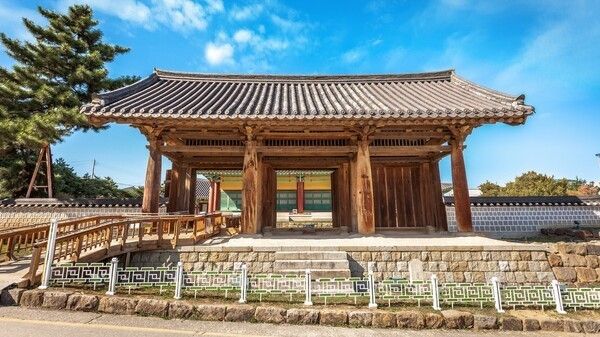
At the center of this heritage route stands Imyeonggwan, the surviving main gate of a government guesthouse originally established in 936 during the 19th year of King Taejo of Goryeo. The structure’s triple gate, recognized for the sculptural elegance and dignity of its wooden architecture, has been preserved as a National Treasure. Nearby stands Chilsadang, a designated Treasure that once functioned as the administrative office of a local magistrate during the Joseon Dynasty, where traces of governance, residence, and education remain layered within the wooden structure.
These nationally significant heritage sites are naturally connected to the nearby alleys of Myeongju-dong, creating a continuous landscape where historical architecture and modern everyday culture coexist.
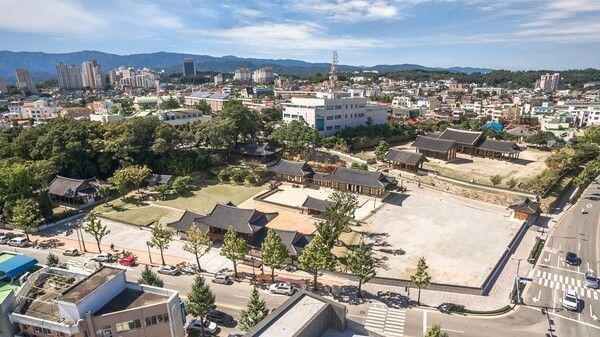
Myeongju-dong preserves many buildings dating back to the Japanese colonial era and the years surrounding Korea’s liberation, allowing visitors to trace the trajectory of Korea’s modern history. In recent years, independent bookstores, craft workshops, and local cafés have gradually settled into the neighborhood while maintaining harmony with its older architecture. The route also extends naturally toward Imdang-dong Cathedral and Seobu Market, where visitors can experience regional dishes such as jang kalguksu and potato ongshimi.
Adding an intangible layer to the city’s cultural landscape is Gangneung Danoje, which is inscribed on UNESCO’s Representative List of the Intangible Cultural Heritage of Humanity. With a history stretching back more than a thousand years, the festival will take place this year from June 15 to 22 around the Namdaecheon Stream area.
The festival begins with Confucian-style ancestral rites praying for regional peace to the Daegwallyeong guardian deity before expanding into traditional shamanic rituals, the Gwanno Mask Drama — Korea’s only surviving nonverbal mask play — and large-scale nongak performances. Visitors can also participate in folk activities including ssireum wrestling matches, surichwi rice cake tastings, and ceremonial changpo-water hair washing.
Travelers exploring Gangneung’s historic downtown in June encounter a layered view of Korea’s traditional religious systems, administrative structures, and residential culture. Walking through weathered tiled roofs and aging alleyways, visitors trace the city’s accumulated historical timeline while witnessing the living energy of a festival transmitted for over a millennium. The journey ultimately reveals the enduring vitality of community culture itself.
Reported by News Culture M.J._mj94070777@nc.press
Copyright ⓒ 뉴스컬처 무단 전재 및 재배포 금지


