The K-content industry faces a growing structural dilemma. While production budgets continue to rise and global demand remains strong, distribution channels have become increasingly concentrated around a handful of major streaming platforms. Against this backdrop, SM Entertainment, one of K-pop's most influential companies, has stepped into the FAST market, opening a new chapter in the industry's search for broader distribution networks.
On May 22, SM announced the launch of "Monthly SM Concert" in partnership with Samsung Electronics' FAST platform, Samsung TV Plus. The project will begin on May 30 with a broadcast of NCT WISH's encore concert and will continue with monthly releases featuring performances from different SM artists.
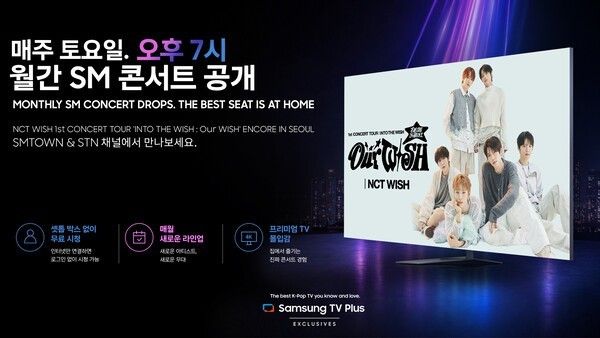
The move carries significance not only for SM but also for the wider entertainment industry.
At one level, it represents another step in SM's ongoing effort to diversify how its artist intellectual property reaches audiences. The company has steadily expanded beyond conventional music releases through initiatives such as Beyond LIVE online concerts, theatrical screenings and VR concert experiences. The Samsung TV Plus partnership extends that strategy into a viewing environment increasingly shaped by changing consumer habits and device ecosystems.
Yet the broader significance lies beyond the ambitions of a single entertainment company.
The collaboration speaks directly to one of the biggest challenges facing the K-content business today: dependence on external distribution platforms. As production costs continue to climb and monetization opportunities remain limited, the FAST sector has emerged as a potential alternative growth channel. Industry observers increasingly view advertising-supported streaming television as a space where content owners can expand audience reach while developing additional revenue streams.
FAST, short for Free Ad-Supported Streaming Television, has become one of the most closely watched segments of the North American and European media markets. Unlike subscription-based services, FAST platforms provide viewers with free access to programming supported by advertising, creating new opportunities for both content distributors and advertisers.
In that context, SM's entry carries symbolic weight. K-pop remains one of the strongest globally recognized Korean cultural exports, supported by highly engaged fandoms and a steady flow of premium content. The decision to bring that intellectual property onto Samsung's global hardware and media infrastructure signals a willingness to explore distribution models beyond traditional streaming services.
The implications may extend far beyond music.
Korean dramas and other premium content producers have also been examining opportunities within the FAST ecosystem as they seek alternatives to increasingly competitive OTT environments. If successful, partnerships such as this could help create a more diversified distribution landscape and reduce the industry's reliance on a limited number of dominant platforms.
Ultimately, the significance of the SM-Samsung collaboration lies not simply in launching another content channel. It reflects a broader recognition that producing high-quality content alone is no longer enough. Strengthening distribution capabilities and building sustainable media ecosystems have become equally important challenges for the future of K-content.
Whether the diversification of K-content distribution, led in part by K-pop's global reach, can move beyond experimental efforts and establish a stable presence within everyday viewing habits remains a question worth watching.
Reported by News Culture M.J._mj94070777@nc.press
Copyright ⓒ 뉴스컬처 무단 전재 및 재배포 금지


