|
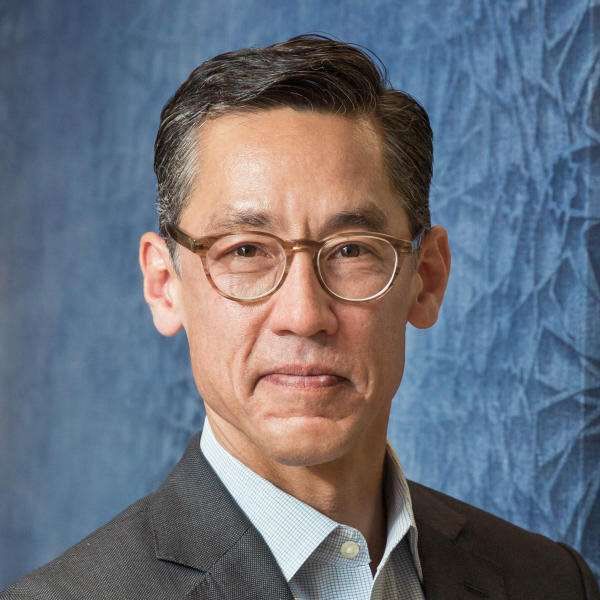
Rexon Ryu, President of The Asia Group (TAG) and head of its Korea practice, emphasized this point during an interview ahead of the 17th Edaily Strategic Forum.
Ryu is a distinguished geopolitical expert who previously managed foreign policy issues, including Iran nuclear non-proliferation, at the White House National Security Council (NSC). He also served as Chief of Staff to Secretary of Defense Chuck Hagel during the Barack Obama administration. He is highly regarded not just as a policy analyst but as a practitioner with deep insight into the internal logic behind U.S. security strategy and global supply chain restructuring. The Asia Group (TAG) was co-founded in 2013 by Kurt Campbell, who later served as U.S. Deputy Secretary of State and Indo-Pacific Coordinator at the NSC under the Biden administration, and Nirav Patel, former Deputy Assistant Secretary of State for East Asian and Pacific Affairs. The firm is staffed by numerous former U.S. government officials and maintains offices across Asia, including Seoul and Tokyo.
Regarding the U.S.-Iran recent ceasefire declaration, Ryu defined it as a tactical choice driven by a “period of diminishing strategic returns.” He advised, “Even after the ceasefire, geopolitical tensions and hegemonic rivalry will continue,” adding that “countries must redesign their national strategies by placing supply chains and energy security at the center of national security.”
He further stated, “While the U.S. is calling for allies to take on larger roles, its strategic interests on the Korean Peninsula and in the Indo-Pacific remain unchanged.” He emphasized that “The ROK-U.S. alliance has evolved beyond a military alliance into a comprehensive strategic partnership, and Korea is no longer just a frontline state, but a key economic-security partner equipped with cutting-edge industrial and technological capabilities.”
As a survival manual for Korea‘s survival in this environment, Ryu proposed what he called “competency-based autonomy.” This approach would strengthen Korea’s defense capabilities, advanced technologies, and diplomatic networks so that the ROK-U.S. alliance and Korea‘s own national capabilities function in a mutually complementary manner.
“Technology competition is no longer simply about innovation,” Ryu said. “It has evolved into a comprehensive struggle for hegemony that includes export controls, investment restrictions, standards competition, and alliance-based supply chain establishment.” He added, “Korea’s strengths in semiconductors, batteries, nuclear energy, and defense industries will be powerful tools that can secure both diplomatic influence and strategic autonomy, moving far beyond mere economic gain.”
Rexon Ryu will serve as the keynote speaker on the second day of the 17th Edaily Strategic Forum, scheduled for June 16~17 at The Shilla Hotel, Seoul, under the theme: “The Age of Power, the Realignment of Civilization: Who Designs the New World?” Hosted by comprehensive media company Edaily, the forum is regarded as one of Korea‘s premier knowledge platforms.
This year’s event will feature keynote speeches by John Hamre, President of the Center for Strategic and International Studies (CSIS), as well as participation from Noreena Hertz, Honorary Professor at University College London (UCL) and author of the bestseller “The Lonely Century”; Thorsten Beck, Professor at the European University Institute (EUI) and a leading expert on growth finance; Kwanho Shin, President of the Korea Money and Finance Association, and Jiyoon Kim, Professor at Yonsei University‘s East-West Center. Together, these global leaders and distinguished scholars will diagnose the structural risks facing Korea amid intensifying geopolitical rivalry and explore new strategic opportunities for the future.
Copyright ⓒ 이데일리 무단 전재 및 재배포 금지


