Sometimes the food placed on a table carries more stories than an entire lifetime. Aroma, warmth, and the quiet breathing of those gathered together slowly overlap, turning personal memory into the history of a community. The camera in “Yakiniku ToRaJi” lingers on those moments without rushing to explain or forcing emotion. Instead, it traces the slow texture of passing time, revealing hidden fractures beneath landscapes that once appeared familiar.
Independent film “Yakiniku ToRaJi” centers on Zainichi Koreans, yet deliberately steps away from the emotional conventions that have long shaped documentaries on the subject. Rather than relying on familiar frameworks of struggle, victimhood, solidarity, or triumph, the film quietly follows the rhythm of ordinary days, drawing out the layered emotional complexities embedded within them.
The film does not revolve around a singular event or dramatic turning point. Instead of reconstructing a life into a clear narrative arc, it gathers scattered fragments of memory. In that process, spoken words, fleeting expressions, and even moments of silence become essential forms of storytelling.
Although the story moves through the experiences of a character who graduated from a Korean school in Japan before relocating to South Korea, the film never confines itself to one perspective. Friends, family members, and shared moments intersect continuously, creating a dense and multi-layered emotional landscape.
The camera pays close attention to the temperature of relationships: the subtle hesitation behind a raised glass, the breath interrupted midway through a song, or the lingering weight left by an offhand remark. These accumulated moments gradually reveal the emotional dimensions of each character’s life.
For decades, Zainichi Koreans have often been consumed as symbols shaped by political and historical discourse. Their identities were repeatedly reduced to fixed roles and simplified narratives. “Yakiniku ToRaJi” intentionally destabilizes those frames. It approaches its subjects not as symbols, but as people. Not as political narratives, but as individuals living through everyday life.

Director Yang Ji-hoon does not create distance through observation. Instead, he quietly dissolves the boundary between filmmaker and subject. As the separation weakens, viewers themselves are drawn deeper into the film, making detached observation increasingly impossible.
What matters most in the film is the question of how people are represented. The method of depiction itself becomes the message. Throughout the work runs a consistent refusal to confine anyone within a predetermined image.
Dining scenes recur throughout the film. Sharing food functions both as a ritual affirming community and as a moment where different backgrounds subtly collide. The film never hides those tensions, allowing them to exist naturally within the frame.
The doraji root itself takes on symbolic resonance. Its slightly bitter taste and understated aroma echo the emotional textures carried by the characters. Familiar, yet difficult to define, that sensation spreads quietly across the film’s atmosphere.
“Yakiniku ToRaJi” minimizes exposition, leaving space for viewers to interpret scenes on their own. This is not merely a stylistic choice, but part of a deeper reflection on the ethics of looking at others.
Memories within the film never align neatly into a single direction. Individual experiences diverge, overlap, and sometimes clash with one another. Those dissonances themselves become one of the film’s defining movements.
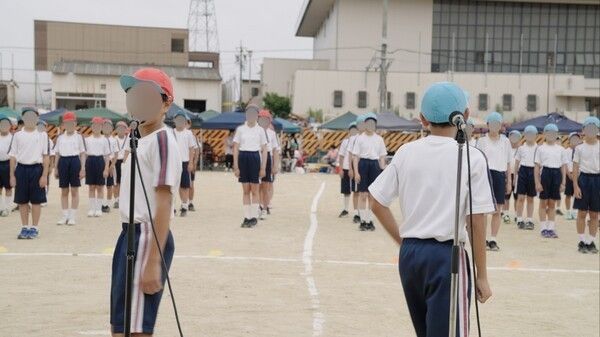
The Korean school is also presented without a fixed meaning. For some, it remains a source of pride and identity. For others, it carries unresolved and deeply complicated emotions. The film preserves those contradictions without attempting to simplify them.
Director Yang’s perspective never settles entirely into sympathy, nor does it retreat into cold objectivity. Instead, it remains suspended somewhere between the two. That fragile balance sustains the film’s emotional tension.
Rather than guiding audiences toward a singular conclusion, the film allows viewers to move through overlapping currents of understanding, distance, empathy, and unfamiliarity.

“Yakiniku ToRaJi” avoids foregrounding grand political discourse. Instead, it constructs something larger through seemingly small and ordinary moments. The texture of everyday life gradually gathers into a wider emotional current.
What ultimately emerges is the understanding that identity is never fixed, but constantly changing and renegotiated. No individual can be fully explained by a single label.
The film offers no definitive answers in the end. Instead, it leaves viewers with space to reconstruct meaning through their own memories and emotional responses. That lingering emptiness remains long after the screening ends, slowly settling in like a plate of food left quietly on a table.
Reported by News Culture M.J._mj94070777@nc.press
Copyright ⓒ 뉴스컬처 무단 전재 및 재배포 금지


