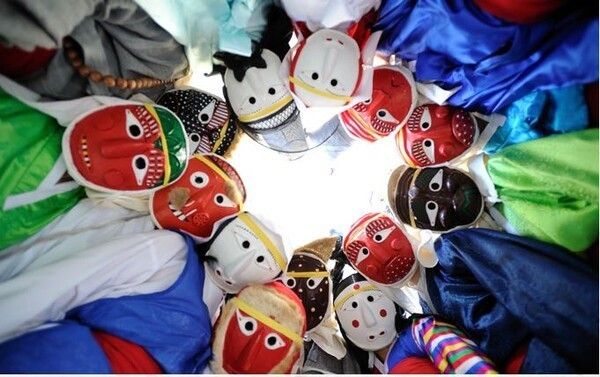
Yangju Byeolsandae Nori is one of the representative sandae mask dance traditions of central Korea. Influenced by Seoul’s bonsandae performance culture, it developed into a distinctly regional folk performance shaped by the humor, energy, and social consciousness of the people of Yangju.
Performed during occasions such as Buddha’s Birthday, Dano, Chuseok, and rain rituals, the performance blended masks, percussion, dance, improvised dialogue, and satire into a communal spectacle. Beneath its laughter and exaggerated gestures lay pointed criticism of authority, class hierarchy, religious hypocrisy, and the hardships of ordinary life.
The term sandae nori broadly refers to mask dance traditions of the central Korean region. While Yangju Byeolsandae Nori inherited theatrical structures from the sandaedogam performance tradition of Seoul and Gyeonggi, it gradually evolved into a local performance culture rooted in Yangju’s own communal identity. Rhythm drives the movement, dance leads the performance, and speech exposes the contradictions of power. The humor is never entirely lighthearted.
The masked characters include corrupt monks, fallen aristocrats, servants, shamans, elderly figures, wandering performers, and ordinary commoners. Through them, the stage becomes a place where social order is mocked and temporarily overturned.
Waiting for the Troupe From Hanyang
One of the best-known origin stories of Yangju Byeolsandae Nori begins with the people of Yangju waiting for performance troupes from Hanyang, present-day Seoul. Local residents traditionally invited the “Sajikgol Ttaktakipae,” a Seoul-based troupe, to perform during seasonal festivals such as Buddha’s Birthday and Dano.
As scheduling conflicts became frequent and the troupe often failed to arrive on time, the people of Yangju eventually stopped waiting. Instead, they began creating their own masks and performances modeled after the Seoul entertainers they had observed. Over time, these locally adapted performances developed into Yangju Byeolsandae Nori.
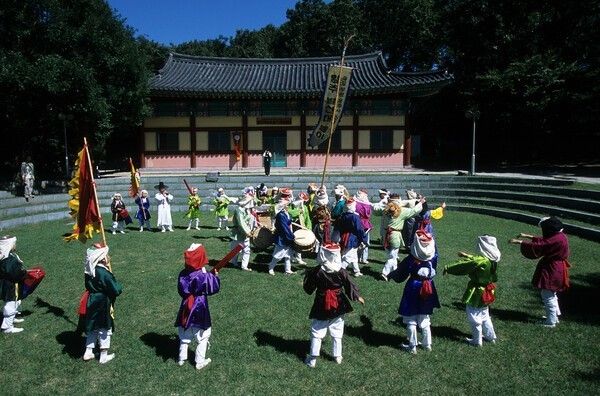
Yangju’s proximity to Seoul also helped shape the tradition. The town stood along major transportation routes leading north toward Hamgyeong Province, allowing people, goods, and performance culture to circulate constantly. Local merchants, lower-ranking government workers, itinerant entertainers, and residents all participated in sustaining the performances.
Community leaders and wealthy merchants contributed financial support, while performers often participated without compensation. The performance grounds became communal festivals involving the entire town rather than isolated theatrical events.
Sajikgol beneath Bulgoksan Mountain became one of the most important performance sites. The area included a shrine that also functioned as storage for masks and performance tools. Before formal performances began, performers conducted gilnori, a procession through the village accompanied by musicians and masked dancers. Donations of rice and money collected during the procession helped fund the festivities.
Temporary ritual spaces known as gaebokcheong were prepared before performances. Masks and instruments were arranged, memorial rites were held, and the names of deceased performers were remembered. Mask dance functioned not only as entertainment but also as a communal ritual praying for collective well-being.
By the 1910s, Yangju Byeolsandae Nori had become so popular that markets and makeshift fairs surrounded the performances. Vendors, drink sellers, candy merchants, and spectators crowded around the performance grounds. Witness accounts describe overwhelming noise and excitement filling the entire area. The mask dance stage became both festival and marketplace, a place where suppressed frustrations could erupt through collective laughter.
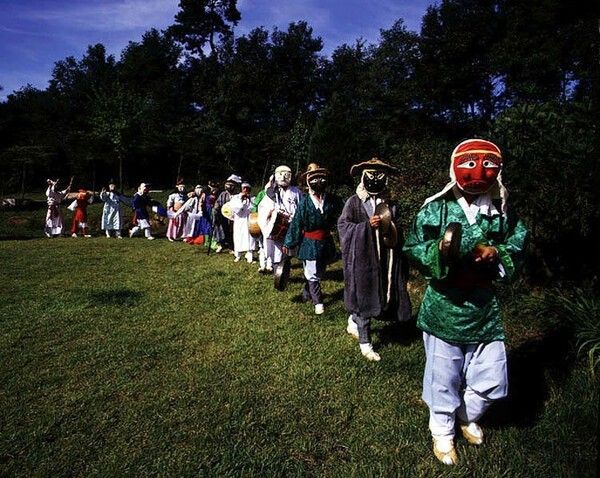
Mocking Authority Through Laughter
After the opening procession and rituals, Yangju Byeolsandae Nori unfolds across eight major acts.
The first act, Sangjwachum, opens by driving away evil spirits. Through bows and ritual gestures directed toward the four directions, the dance establishes the performance as both theatrical and spiritual.
The second and third acts introduce monks and attendants whose exaggerated appearance and behavior gradually evolve into satire targeting corrupt Buddhist clergy. Religious figures become exposed as hypocritical, vain, and consumed by worldly desire. The stage transforms into a place where hidden truths are openly revealed.
The fourth act features supernatural beings punishing corrupt monks, blending humor with moral tension. Comedy and judgment coexist within the same performance space.
The fifth act, Palmukjung Nori, intensifies the satirical tone. Through parody prayers, flirtation, and irreverent dialogue, the performance attacks religious corruption and moral hypocrisy. Beneath the crude humor lies the frustration ordinary people felt toward institutional authority during late Joseon society.
In the sixth act, Nojang, an elderly monk falls in love with a young woman named Somu. His spiritual dignity collapses before human desire. The younger character Chwibari eventually triumphs over the old monk, symbolizing the conflict between authority and vitality, old age and youth. Somu later gives birth, introducing themes of fertility, renewal, and generational continuity.
The seventh act directly targets the aristocratic yangban class. Servant characters ridicule noblemen through sharp dialogue and physical comedy. Aristocratic authority collapses under mockery, and class hierarchy is temporarily reversed through laughter and performance.
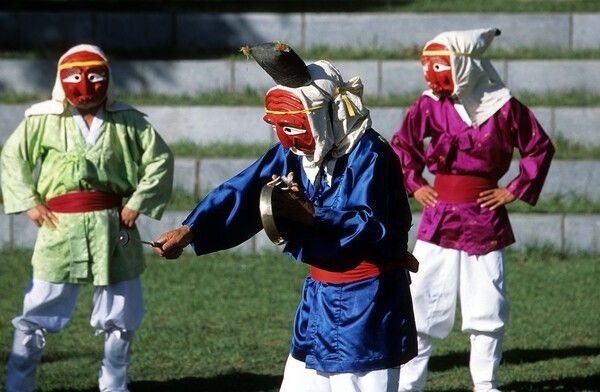
The eighth and final act, centered on Sinhalabeoji and Miyalhalmi, shifts toward the harsher realities of ordinary life. Domestic conflict, poverty, aging, death, and shamanistic funeral rites unfold onstage. Yangju Byeolsandae Nori ultimately expands beyond simple ridicule of authority and reveals the emotional exhaustion and sorrow carried by common people themselves.
From Sajikgol to the Modern Training Hall
The masks of Yangju Byeolsandae Nori are traditionally made from dried gourds covered with layers of Korean paper and painted in vivid colors. Eye and mouth holes are cut into the surface, while exaggerated noses and eyes define the personalities of each character. Compared to masks used in Bongsan Talchum, Yangju masks are often considered more realistic and expressive.
The dances themselves are broadly divided into Geodeureumchum and Kkaekkichum. Geodeureumchum emphasizes stylized elegance and deliberate bodily control, while Kkaekkichum incorporates rhythmic footwork and more energetic movement patterns.
Musical accompaniment follows the traditional Samhyeon Yukgak ensemble structure using double reed pipes, bamboo flute, haegeum fiddle, janggu drum, and barrel drum. Percussion patterns shift constantly to support dialogue, dance, and dramatic pacing. Spoken lines, songs, rhythmic chants, and movement continuously alternate to sustain the energy of the performance.
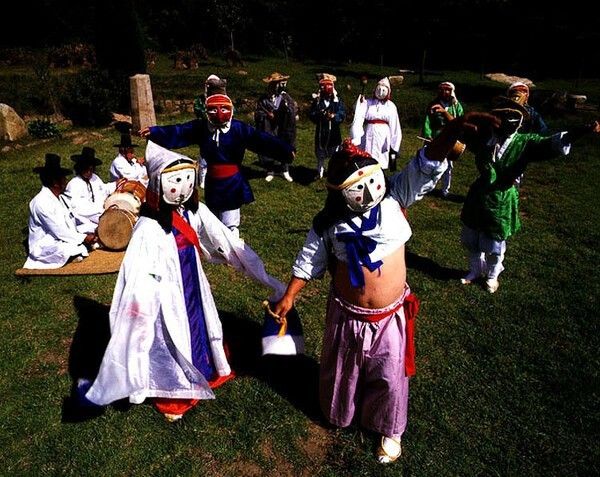
The transmission of the tradition was far from smooth. Performances were forcibly halted during the Japanese colonial period. Though revived after liberation, the Korean War caused further devastation, destroying masks and taking the lives of many performers. In 1964, landslides destroyed the old Sajikdang performance grounds.
That same year, however, Yangju Byeolsandae Nori was designated an Important Intangible Cultural Property, establishing a new foundation for preservation. Preservation societies were organized, training centers were built, and regular performances and education programs gradually resumed.
Today, Yangju Byeolsandae Nori is regarded as one of the most important surviving sandae mask dance traditions after the disappearance of Seoul’s original bonsandae performances. What began as a local adaptation of Seoul theater ultimately became a living record of Yangju’s communal spirit, satire, ritual culture, and collective memory.
Reported by News Culture M.J._mj94070777@nc.press
Copyright ⓒ 뉴스컬처 무단 전재 및 재배포 금지


