Cultural heritage items taken overseas during Korea’s turbulent modern history often face long and difficult journeys home. Their whereabouts are hard to trace, and even when discovered, the repatriation process can take years. For that reason alone, the return of artifacts in their original form carries profound meaning.
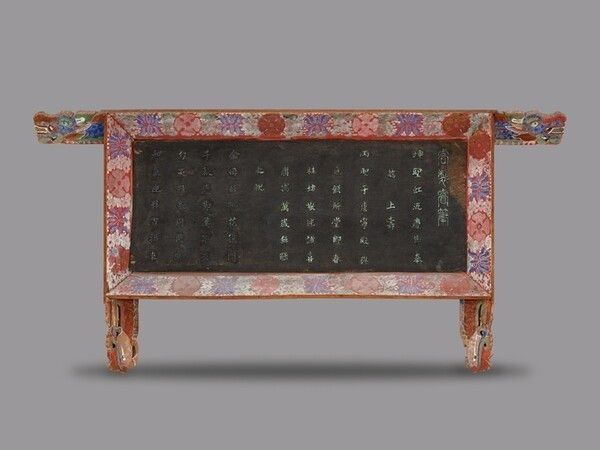
On May 8, the Overseas Korean Cultural Heritage Foundation unveiled two newly repatriated artifacts to the public for the first time at the National Palace Museum of Korea in Seoul. The treasures are the “Blue-and-White Porcelain Memorial Tablets for Yi Jin-geom” and the “Royal Calligraphy Signboard Written by Crown Prince Sunjong.” Though created in different periods and for different purposes, both works embody the artistic achievement and historical atmosphere of their respective eras.
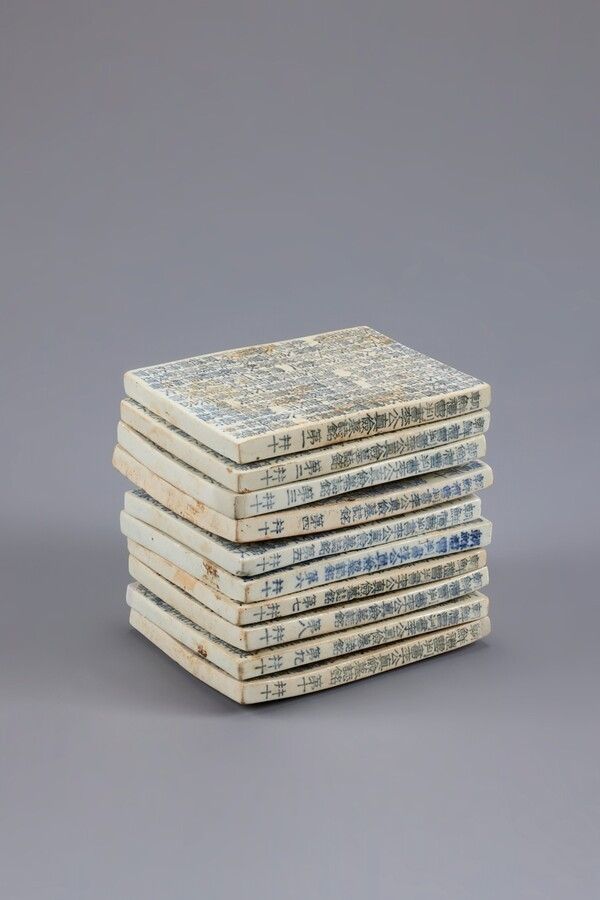
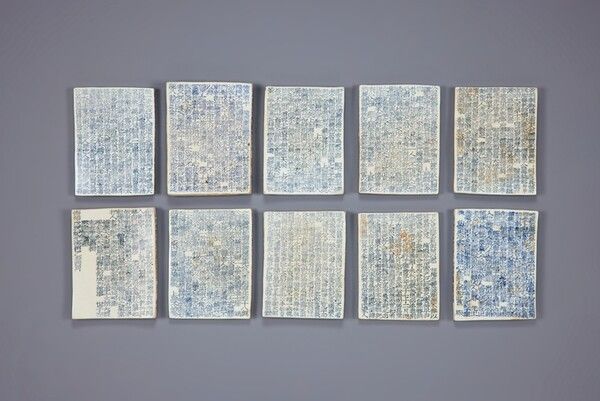
Created in 1745, the porcelain memorial tablets were produced to honor Yi Jin-geom, a scholar-official who served as Minister of Personnel during the late Joseon Dynasty. The ten porcelain panels record details of his life and the geomantic orientation of his tomb in blue pigment.
The work holds exceptional academic value because the inscriptions were written directly by Yi Gwang-sa, one of the most celebrated calligraphers of the era. While Yi is widely known for his semi-cursive and cursive styles, these tablets feature clerical script refined into a more practical form through simplified strokes, making the work especially rare. The sharply incised lines, seemingly scratched into the surface with a metal stylus, are also considered an important resource in the study of Korean calligraphy history.
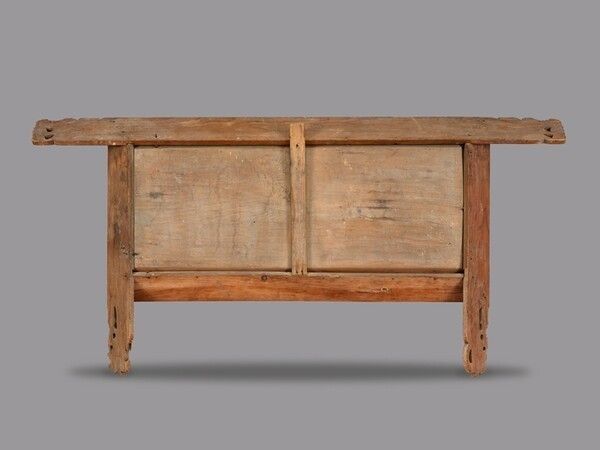
The “Royal Calligraphy Signboard Written by Crown Prince Sunjong” was created in 1892 for a royal banquet celebrating the birthday of Empress Myeongseong. At the time still a crown prince, Sunjong personally composed and wrote the text carved onto the wooden signboard.
The frame is intricately decorated with dragon and phoenix motifs, reflecting the dignity and formal aesthetics reserved for royal objects. The wooden surface was coated in black ink, while the raised characters were finished in deep green pigment, a decorative technique used to emphasize the importance of the inscription. The carefully controlled regular script, written without flowing strokes, reveals the poised elegance expected of a future monarch.
The return of the two artifacts was made possible through the decision of overseas Korean brothers who donated the works to the state. The donors reportedly believed that cultural heritage achieves its fullest value not as a private possession, but when restored to its rightful place within public history.
Once removed from private collections and placed within public institutions for research and exhibition, cultural heritage becomes a shared intellectual asset for future generations. The repatriation of historical artifacts therefore carries significance beyond ownership itself, restoring pieces of collective memory to the public sphere.
Such efforts have continued through multiple channels in recent years. Earlier this year, three historical woodblocks, including the “Woodblocks of the Anthology of Master Cheogam,” which had been taken to the United States in the 1970s, were also returned to Korea through voluntary donations from Korean Americans and local residents before being transferred through the Korean Legation in Washington, D.C.
Reported by News Culture M.J._mj94070777@nc.press
Copyright ⓒ 뉴스컬처 무단 전재 및 재배포 금지


