Lee Yuk-sa remains one of the most symbolic figures in modern Korean history, representing how literature can confront reality while defending human dignity in the harshest of times. He was never confined to the role of a poet alone. Instead, he turned his entire life into a narrative of resistance, and his works continue to function as a crucial lens through which Korean literature is understood today.
The era of Japanese colonial rule was itself a system built upon the suppression of freedom and language. Within that oppressive reality, Lee Yuk-sa’s poetry refused escapism or sentimentalism. His writing absorbed the full weight of the era and pushed human willpower to its limits. His poems condensed not only personal emotions, but also the collective pain and tension experienced by an entire generation.
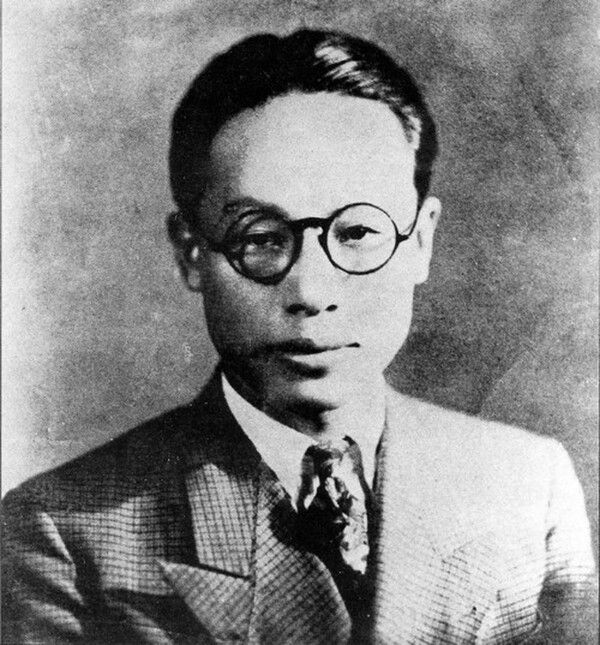
Lee Yuk-sa is often mentioned alongside poets such as Yun Dong-ju and Han Yong-un because all three left behind literary voices of resistance during the colonial era. Yet Lee Yuk-sa’s style stood apart for its density and unwavering firmness. Rather than exposing emotional fragility, he concentrated on constructing the will to endure until the very end, creating poetry that delivers both immense pressure and profound resonance.
His life further revealed that literature and action could never be separated. He participated in the Korean independence movement through the Uiyeoldan resistance organization, was repeatedly arrested and imprisoned, and continued writing even under torture and surveillance. For Lee Yuk-sa, writing was not merely an act of expression, but also a method of enduring reality itself.
One of the most symbolic aspects of his life was his decision to adopt “Prisoner Number 264” as his pen name. In a system that attempted to reduce individuals to numbers, Lee Yuk-sa reversed the meaning entirely, transforming that number into part of his own identity. It was not simply resistance against oppression, but an active reinterpretation of oppression itself into a new symbol of defiance.
Nature imagery repeatedly appearing throughout his poetry also carries deeper meaning. Elements such as wind, wilderness, winter, and the northern frontier function not as decorative landscapes, but as spaces that test the limits of human endurance. Nature in his works does not comfort humanity. Instead, it exposes the harsh conditions under which human willpower is measured.
In his representative poem “The Wilderness,” time unfolds in a unique way where the past, present, and future overlap within a single scene. The future is presented not as vague hope, but as a promise that must eventually be reached. The journey toward that promise becomes the poem’s central meaning.
“The Peak” pushes human determination to its absolute limit. It portrays a situation in which retreat is no longer possible, compressing the pressure of an entire era into a single emotional climax. The poem transcends individual experience and becomes a symbolic portrait of collective endurance.
“Green Grapes,” while remembered for its comparatively bright imagery, also contains deep longing and a desire for restoration. The “guest” appearing in the poem is often interpreted not as an ordinary visitor, but as a symbol of a new era approaching. Preparing to welcome that figure becomes an expression of preserving hope itself.
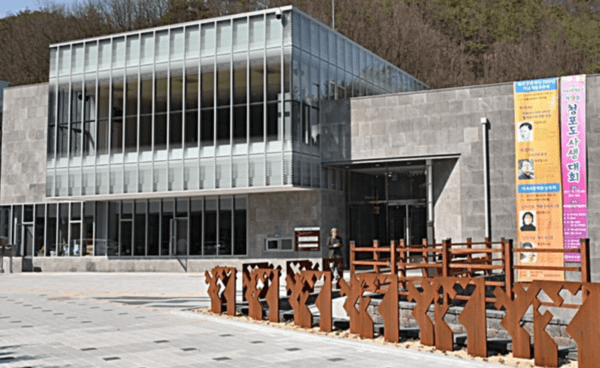
From a literary perspective, Lee Yuk-sa’s works occupy an important intersection between classical tradition and modern poetry. His sophisticated command of classical Chinese literary sensibilities merged with modern free verse, forming a unique poetic style that later influenced the direction of Korean poetry as a whole. The coexistence of classical aesthetics and modern consciousness remains one of the defining characteristics of his literature.
After Korea’s liberation, his poetry evolved into a key framework for understanding resistance itself. Beyond opposing colonial power, his works expanded the meaning of resistance into a broader ethical concept centered on preserving human dignity and freedom.
Culturally, Lee Yuk-sa has become a central figure in Korea’s collective memory. His name continues to appear through textbooks, museums, and numerous cultural contents, proving that his works continue generating new meanings across generations rather than remaining trapped within a single historical moment.
His life naturally raises enduring questions about how writers should relate to reality and how far artists are willing to carry social responsibility. Lee Yuk-sa answered those questions not through theory, but through the trajectory of his own life.
Even under repeated imprisonment and torture, he never abandoned his direction. That unwavering consistency demonstrated that human beings can preserve their choices even under extreme circumstances. His life functions both as a narrative and as a moral standard.
Lee Yuk-sa ultimately proved that Korean literature could become both historical testimony and an instrument of action. His poetry survives as evidence of lived reality while simultaneously functioning as a declaration toward the future. It is precisely because those two qualities coexist that his works continue to occupy such a singular position in Korean literary history.
Reading Lee Yuk-sa today is not simply an act of revisiting the past. It also becomes a question about how people should live in the present. The greatest legacy he left behind is the strength to endure and continue moving forward, even in the harshest era imaginable.
Reported by News Culture M.J._mj94070777@nc.press
Copyright ⓒ 뉴스컬처 무단 전재 및 재배포 금지


