Joseon’s capital of Hanyang did not function on its own. While it was the city of the king, it was also a living urban space inhabited by countless residents. At the center of this complex capital stood Hanseongbu, the institution responsible for governing and maintaining the city.
The exhibition “This Is Hanseongbu,” currently on view at the Seoul Museum of History, turns attention away from royal court culture to focus instead on the mechanics of urban administration in Joseon Korea.
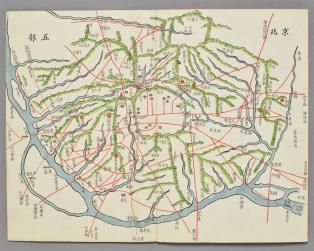
Hanseongbu officially emerged in 1395, when Hanyang-bu was renamed Hanseongbu. Until 1910, the name referred both to the administrative district of the Joseon capital and the governing office itself. Though it may resemble today’s Seoul City Hall in function, its role extended beyond local administration. Hanseongbu also operated as a central governmental institution, with its chief official, the Panyun, holding the high rank of senior second grade official. To govern the capital meant standing close to the core of state power.
Boundaries of the Capital
Hanseongbu did not refer only to the walled city. Hanyang was divided into the Five Districts (O-bu) and the Seongjeosimni, the ten-ri perimeter surrounding the capital. The Five Districts functioned similarly to modern administrative wards, subdivided further into smaller neighborhood units.
The boundaries themselves were not fixed lines in the modern sense. Jurisdiction continuously shifted according to population, land, military concerns, and institutional interests.
Among the exhibition’s notable artifacts is the Seongjeo O-ri Boundary Stone Marker, erected during the early Joseon period to indicate the territorial limits of Hanseongbu. Once designated as a historic site and later relocated to Gyeongbokgung Palace, the marker is being publicly displayed again through this exhibition. More than a stone monument, it serves as physical evidence of how administrative authority was inscribed onto the landscape.
In Joseon administration, responsibility varied depending on both the location and nature of an incident. Even animal carcasses and ordinary civil complaints fell within intricate systems of classification and jurisdiction.
What Did Hanseongbu Do?
A Joseon-era proverb compared chaotic crowds to “people rushing into Hanseongbu with split heads,” reflecting the overwhelming volume of petitions handled by the office. Citizens brought disputes over land, housing, status registration, lawsuits, and accidents directly to the institution.
Much of Hanseongbu’s work resembles modern urban governance. Officials managed household registers, conducted patrols, investigated deaths, regulated housing, processed complaints, and handled litigation. The city’s roads, homes, people, and records all fell within its jurisdiction.
Yet Hanseongbu carried symbolic authority beyond that of a modern city hall. Hanyang was the royal capital, and maintaining its dignity formed part of the institution’s mission. Hanseongbu oversaw roads during royal processions, supported diplomatic ceremonies, and helped preserve the order and prestige of the capital.
Its power was also rooted in documentation. Countless ledgers and administrative records reveal how the institution governed through paperwork — recording where people lived, how they were connected, and what disputes they were involved in.
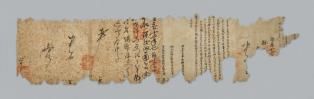
One of the exhibition’s central artifacts, the 1379 Hanyang-bu Sageup Ian, is considered the oldest surviving official verification document of its kind. Produced before the establishment of Hanseongbu itself, it demonstrates that the administrative foundations of Joseon’s capital were inherited from late Goryeo governance systems rather than created abruptly after the dynasty’s founding.
Also featured is the royal appointment document for Seong Seok-rin, the first Pan Hanseongbu-sa officially designated as a national treasure. A leading scholar-official of early Joseon, Seong embodied the political significance of governing the capital.
The People of Hanseongbu
Hanseongbu did not operate through institutions alone. Magistrates, clerks, and administrative officials processed documents and heard petitions on a daily basis. The exhibition’s third section, “People of Hanseongbu,” follows the lives and routines of these officials.
A glance at the names of former Panyun reveals the office’s importance. Figures such as Hwang Hui, Park Mun-su, Gwon Yul, and Min Yeong-hwan all served in the position. Governing the capital was closely tied to understanding and shaping the state itself.
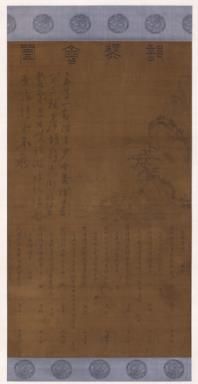
The daily lives of lower-ranking officials appear in O-bu Gyehoedo, a painting depicting a social gathering of district officials. Even bureaucrats of Joseon gathered after work, sharing poetry, conversation, and paintings as part of their collegial culture.
Interactive programs are also included for younger visitors and families. “Create Your Own Household Register” introduces audiences to the household registration system not merely as an old document format, but as an administrative mechanism that managed identity, family, and residence.
“This Is Hanseongbu” runs through July 12 at the special exhibition hall on the first floor of the Seoul Museum of History.
Reported by News Culture M.J._mj94070777@nc.press
Copyright ⓒ 뉴스컬처 무단 전재 및 재배포 금지


