As overlapping holiday periods approach across Korea, Japan, and China, expectations are rising within the tourism industry. Spanning late April to early May, the period is widely regarded as one of the peak travel seasons across Asia.
Korea enters a sequence of public holidays including Labor Day and Children’s Day, while Japan begins its Golden Week from Showa Day. China also moves into a multi-day Labor Day break. The alignment of these major holidays is expected to accelerate spring tourism demand across the region.
Inbound tourism to Korea, which began a clear recovery trend last year, continues to show steady growth in 2026. The synchronized holiday period across the three countries is seen as a key turning point that could further expand the market.
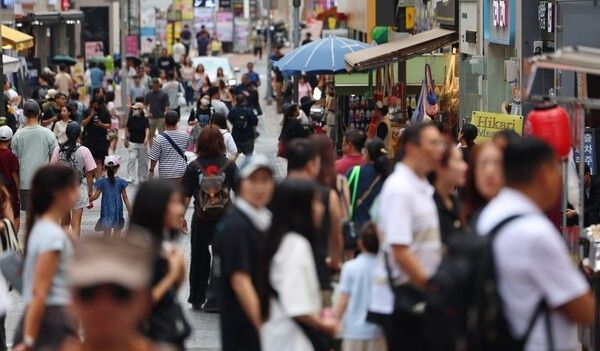
To capture this momentum, a range of welcoming initiatives has been introduced. Reception booths have been set up at major international airport arrival halls, while large-scale shopping festivals offering bundled discounts have launched in key commercial districts.
Local governments are also strengthening regional programs. By linking spring flower destinations, traditional cultural experiences, and regional food tours, they aim to guide foreign visitors beyond the capital region.
A central focus of this year’s strategy is the “2026 Family-Friendly Korea” campaign. The emphasis on family travelers is driven by clear economic rationale. Compared to individual travelers, families tend to stay longer and spend more across accommodation, dining, and attractions, creating stronger economic impact.
Family travelers are also less sensitive to short-term trends or exchange rate fluctuations. Once a positive experience is established, it is more likely to translate into repeat visits and sustained demand.
Tailored strategies targeting Japan and China are also underway. For Japanese visitors, who show high repeat travel rates, programs emphasize personalized experiences such as pop-up store visits, K-beauty treatments, and local food tours.
For Chinese visitors, the focus shifts toward family-oriented offerings. These include large-scale resort packages, shopping incentives linked to mobile payment platforms, and curated travel routes centered on Korean drama filming locations.
Despite global travel sentiment being dampened by geopolitical tensions and economic uncertainty, inbound tourism to Korea continues to show resilience. This is largely attributed to the country’s stable safety environment and the sustained appeal of K-content.
Industry observers stress the importance of qualitative growth moving forward. Enhancing multilingual services and addressing issues such as overcharging are seen as essential steps toward building a more sustainable tourism ecosystem.
Reported by News Culture M.J._mj94070777@nc.press
Copyright ⓒ 뉴스컬처 무단 전재 및 재배포 금지


