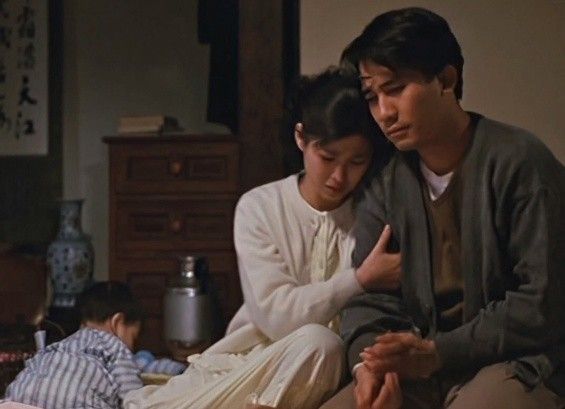
A City of Sadness, directed by Hou Hsiao-hsien, returns to theaters, revisiting one of the most painful chapters in Taiwan’s modern history through the story of a single family.
The film opens on August 15, 1945, as Japan announces its surrender in World War II and Taiwan is handed over to the Republic of China. In Jiufen, the Lin family welcomes a new child, holding onto hope for both their household and a new era.
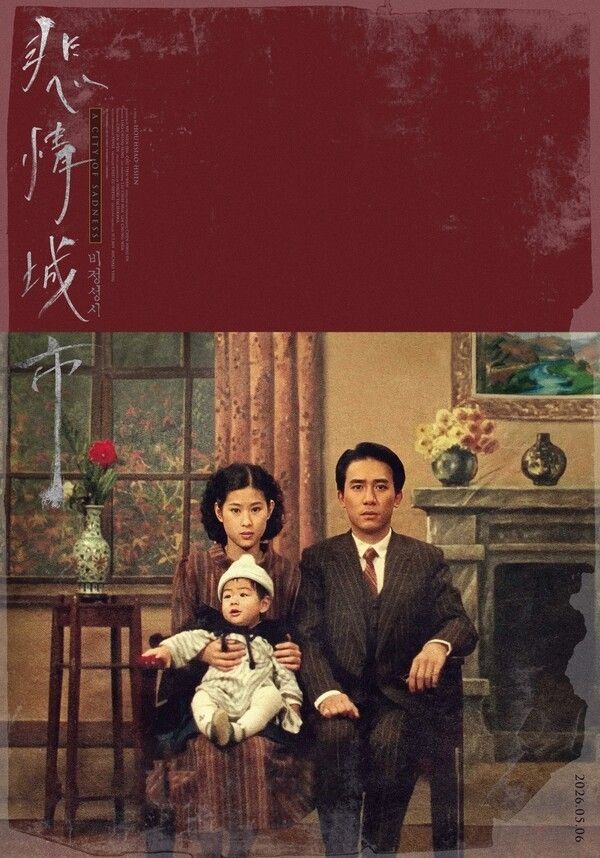
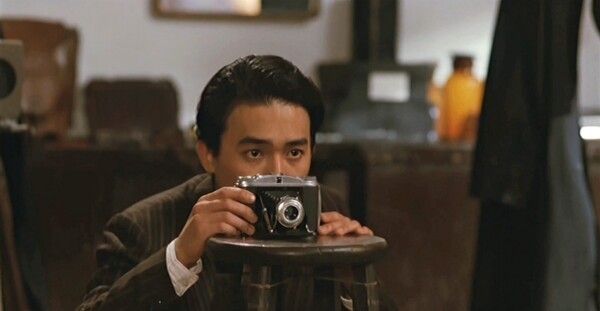
The brothers—Wen-heung, a businessman; Wen-shang, missing after conscription by Japan; Wen-liang, recovering after hardship abroad; and Wen-ching, a deaf-mute photographer—represent different trajectories within a society on the brink of transformation.
That hope soon collapses under the authoritarian rule and corruption of the incoming government. The film situates their lives within the “2.28 Incident,” a violent uprising and subsequent massacre that marked a turning point in Taiwanese history.

Through restrained storytelling and a quiet yet piercing gaze, the film traces how historical violence reshapes individual lives. Rather than dramatizing events, it observes the gradual encroachment of tragedy into everyday existence.
The film earned the Golden Lion at the Venice International Film Festival, marking a historic achievement for Asian cinema. It also became a pivotal work in the career of Tony Leung Chiu-wai, whose portrayal of Wen-ching captures isolation and inner turmoil through minimal dialogue and precise physical expression.
Originally released in Korea in 1990, the film suffered from heavy cuts—losing nearly 40 minutes—which contributed to its commercial failure at the time.
Now, 36 years later, the restored version returns to audiences. Hou Hsiao-hsien has described it as a turning point in his life, while Tony Leung has called it a work he hopes audiences can rediscover.
A City of Sadness will be re-released in Korea on May 6.
Reported by News Culture M.J._mj94070777@nc.press
Copyright ⓒ 뉴스컬처 무단 전재 및 재배포 금지


