
Antonio Vivaldi, a defining figure of the Baroque era known as the “Red Priest,” is reexamined in Primavera. Rather than reinforcing an established image, the film reconstructs the conditions and contradictions that shaped his legacy.
Set in Venice, the film frames the city not merely as a backdrop but as a force that shapes movement, perception, and hierarchy. The Pietà orphanage functions as both an educational institution and a closed system, where discipline and artistry coexist under constraint.

The narrative centers on Cecilia, a gifted orphan whose encounter with Vivaldi triggers both artistic awakening and internal conflict. Her trajectory reflects the structural limitations imposed on women, where talent alone cannot secure autonomy.
The film resists linear storytelling. Past and present, memory and reconstruction are layered rather than sequentially arranged, producing a fragmented narrative in which multiple perspectives coexist.
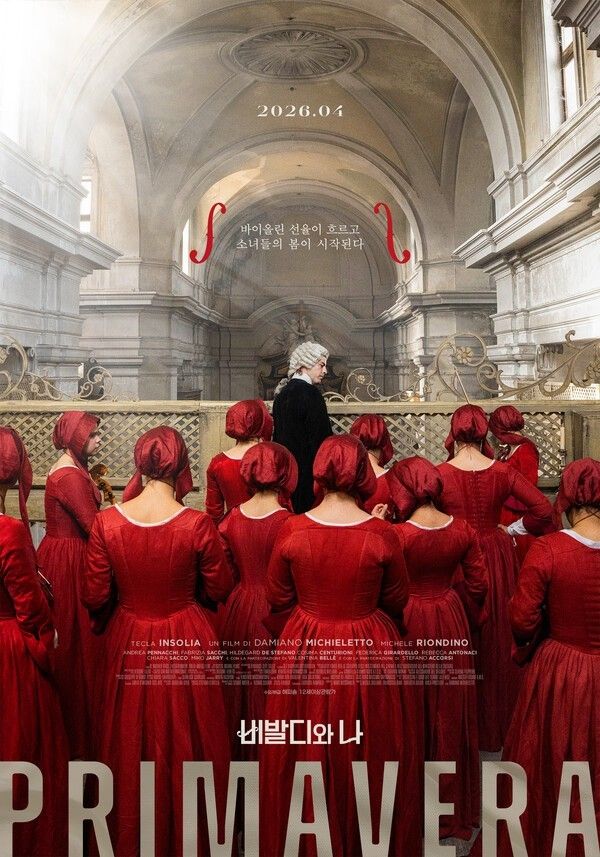
Music operates as a structural force rather than ornamentation. Compositions are not inserted as spectacle but function as extensions of emotion and narrative progression, reinforcing the tension between containment and expression.
The contrast between environments is sharply defined. The rigid, muted interior of the orphanage stands against moments of musical expansion, externalizing the psychological states of the characters.
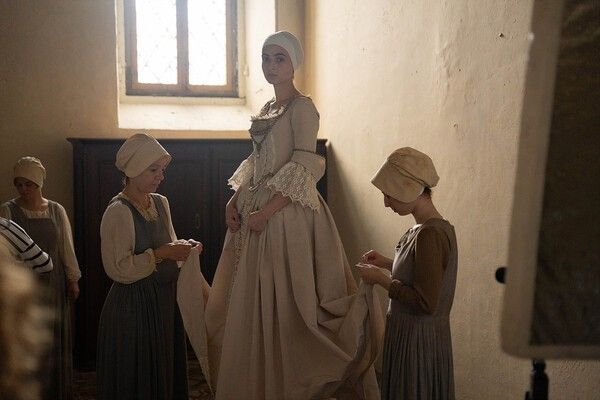
The relationship between Vivaldi and Cecilia forms the film’s core dynamic. Positioned as mentor and student, their interaction extends beyond instruction, shaping each other’s artistic direction and emotional landscape.
At the same time, the film foregrounds power structures embedded within institutional life. The orphanage is not simply a site of learning but a space where hierarchy, control, and dependency intersect.
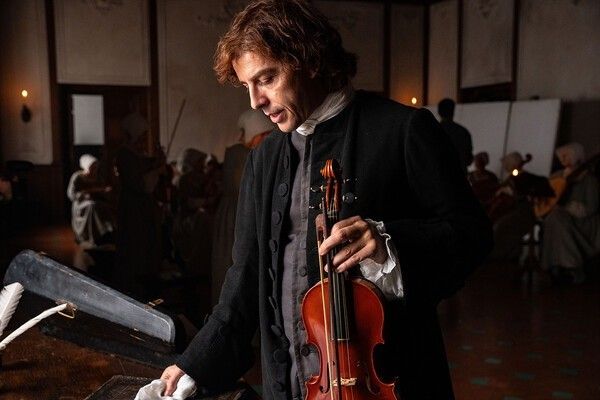
Performance remains restrained. Rather than overt expression, emotion is conveyed through subtle shifts in gaze and posture, aligning with the film’s overall tonal discipline.
Ultimately, Primavera does not present Vivaldi as a completed figure. Instead, it leaves him in a state of ongoing formation, emphasizing process over conclusion and reframing a familiar historical figure through a contemporary lens.
Reported by News Culture M.J._mj94070777@nc.press
Copyright ⓒ 뉴스컬처 무단 전재 및 재배포 금지


