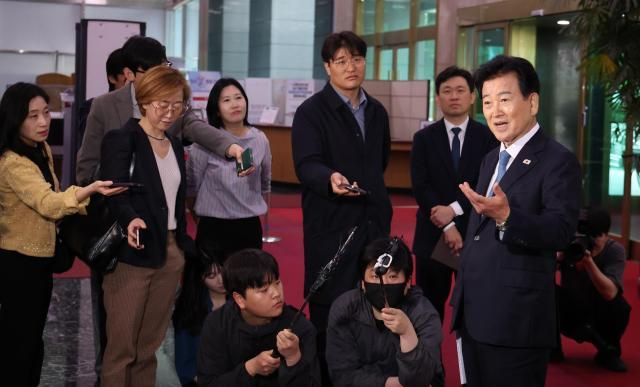
Instead, his remarks triggered a rare intelligence dispute with Washington, exposing deeper tensions within the U.S.–South Korea alliance.
According to multiple reports, Washington believed the remarks were based on sensitive intelligence it had shared with Seoul.
In response, it partially restricted intelligence sharing, including satellite-derived information on North Korea.
The Kusong controversy
At the heart of the dispute is Kusong, a location that had never been officially acknowledged at such a high level.
That is not to say it had not appeared in open-source analyses. Indeed, this was Chung's defense.
"This statement was based on publicly available sources, including reports by the Institute for Science and International Security and media reports," the minister said in a recent interview. "Framing this as a leak of classified information is deeply regrettable and raises questions about the motive."
A ministry spokesperson followed up by stating that "no such information was provided by any foreign government."
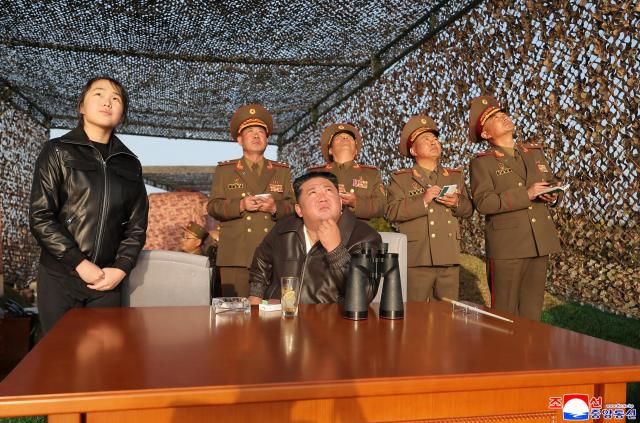
Despite these denials, U.S. concerns appear to center on perception rather than strict classification boundaries. Intelligence-sharing relationships depend not only on what is disclosed, but also on how it is publicly framed.
Victor Cha, Korea chair at the Center for Strategic and International Studies (CSIS), pushed back directly against Chung’s justification.
"We did not report on enrichment activities, which is the claim by the minister. We reported on high-explosive test triggers. Big difference," Cha wrote on X on Tuesday. "CSIS has never done a report on nuclear facilities at Kusong. Just setting the record straight."
This distinction is significant. While earlier research pointed to possible high-explosives testing in Kusong — relevant to nuclear detonation mechanisms — it did not confirm uranium enrichment activities. For U.S. officials, conflating the two could imply a higher level of certainty than the intelligence supports.
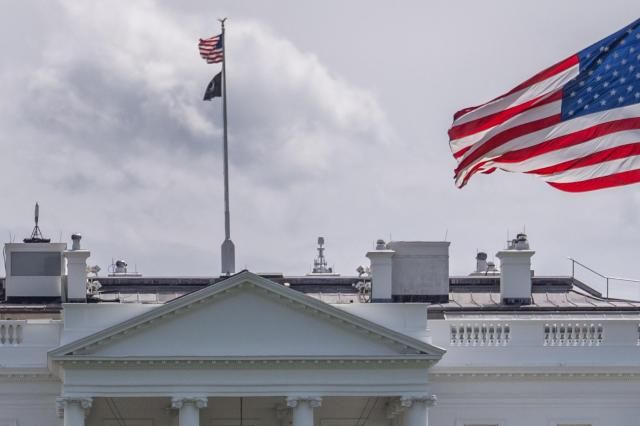
Analysts suggest that Washington's response reflects accumulated frustration over a range of issues rather than a single incident.
"It is possible that accumulated dissatisfaction between South Korea and the United States over North Korea and foreign policy has surfaced through the minister's remarks," said Hwang Jin-tae, a professor of North Korean studies at Dongguk University. "The United States may suspect that sensitive information it collected was used as the basis for the statement."
Recent flashpoints include South Korea's push for greater control over the Demilitarized Zone (DMZ), debates over joint military exercises, and disagreements over communication regarding U.S. Forces Korea operations.
Intelligence sharing and alliance trust
The reported restriction of intelligence sharing underscores how sensitive the issue has become.
"Reports say the United States has withheld 50 to 100 pages of North Korea-related intelligence per day for a week," People Power Party lawmaker Kim Gunn wrote on Facebook on Tuesday. "This is a serious issue that must be resolved quickly."
"In foreign and security affairs, remarks by senior officials are not personal opinions," Kim said. "They are strategic messages. Especially on sensitive issues like North Korea's nuclear program, government messaging must be precise and fact-based."
However, not everyone agrees with Washington's response.
"There is no doubt that the existence of nuclear-related facilities in Kusong had already been widely known through academic papers and media reports," President Lee Jae Myung wrote on X on Monday.
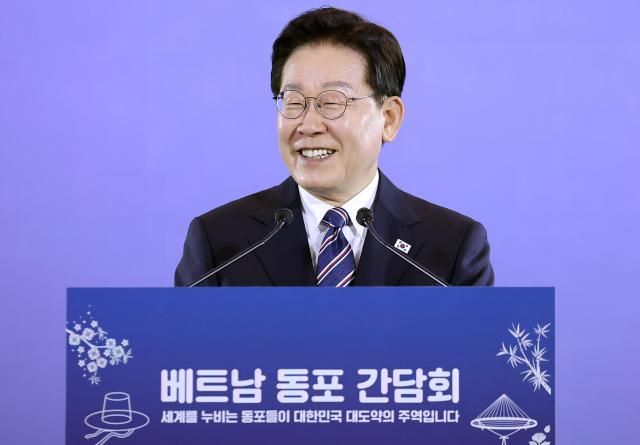
The controversy has quickly become politicized in Seoul. Conservative lawmakers have accused Chung of undermining trust, while progressives argue he has been unfairly targeted.
"Restricting information unilaterally when it is not classified violates the spirit of the alliance," said Yang Moo-jin, a professor at the University of North Korean Studies. "The Kusong uranium enrichment issue has already been disclosed publicly, so it is clearly not subject to protection."
"Amplifying this issue domestically does not help the U.S.–South Korea alliance," he added.
The underlying reality: North Korea's nuclear expansion
Beyond the political fallout lies the core concern that Pyongyang's nuclear program is expanding beyond known facilities.
Historically, Kusong has been associated with high-explosives testing. Identifying it as a uranium enrichment site marks a significant escalation in official rhetoric — one that carries strategic implications for both intelligence assessment and diplomacy.
A test of the alliance
Ultimately, the Kusong controversy is less about whether the information was technically classified and more about the fragile trust underpinning intelligence cooperation. Whether the two sides can manage these tensions without undermining cooperation remains an open question.
Copyright ⓒ Aju Business Daily 무단 전재 및 재배포 금지


