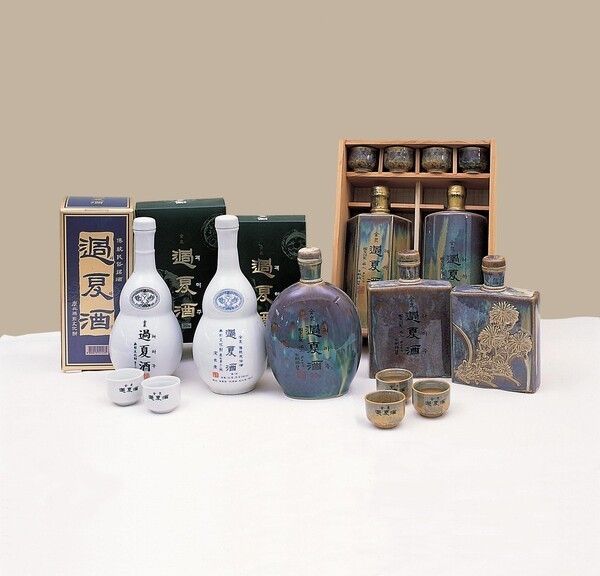
Gwahaju from Gimcheon originates from spring water. Brewed using water from Gwaha Stream in Namsan-dong, the liquor takes its name directly from the source. Unlike other varieties, Gimcheon Gwahaju does not rely on distilled spirits for preservation, yet maintains its stability well into the summer months. It presents a clear amber hue, layered with the aroma of glutinous rice, balanced sweetness, and acidity.
Historically, it was recognized alongside Yeosan Hosanchun, Hansan Sogokju, and Hongcheon Baekju as one of Joseon’s four great liquors. It was not confined to household consumption. Gwahaju was offered as a royal tribute and served to distinguished guests, establishing itself early as a commercially distributed regional specialty.
Water as the Origin of Flavor
The identity of Gimcheon Gwahaju is inseparable from Gwaha Stream. The spring, also known as Geumneung Jucheon or Geumji Stream, is deeply tied to the region’s name itself. The reputation of the liquor was rooted in the quality of this water.
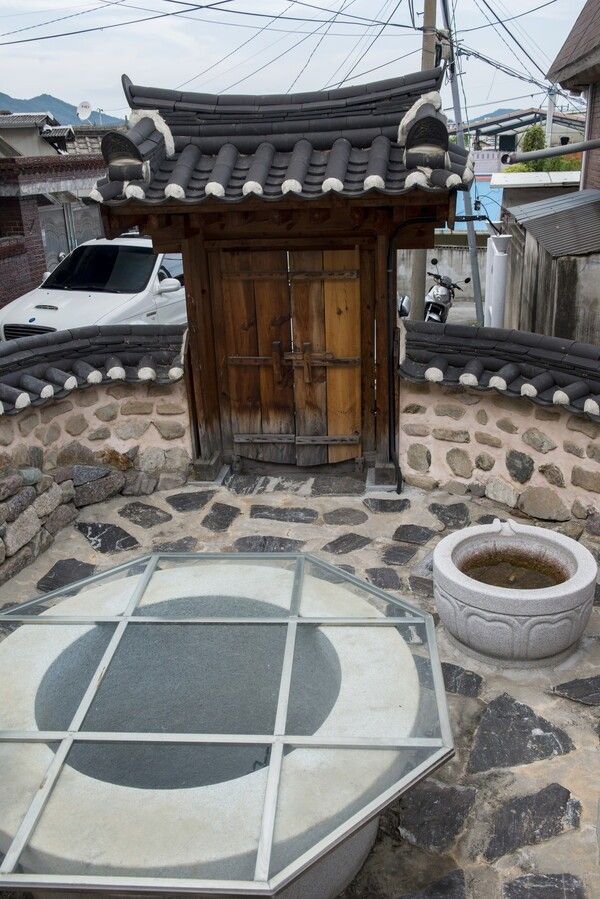
Historical records such as Geumneung Seungnam (1718) note that liquor brewed with this water possessed exceptional aroma and taste, unmatched even when techniques were replicated elsewhere. A widely circulated anecdote claims that Li Rusong compared the water to that of Geumneung in China during the Imjin War, though some scholars interpret this as a later embellishment.
Regardless of its origin, the conclusion remains consistent: Gwaha Stream has long been central to the identity of Gimcheon and its liquor.
Unlike other regional gwahaju varieties that mix distilled spirits with rice wine to improve summer preservation, Gimcheon Gwahaju is defined by its pure cheongju base made with spring water. Though sharing a name, its brewing lineage is distinct and must be understood independently.
From Royal Tribute to Commercial Industry
Gimcheon Gwahaju was commercial in nature from its early stages. Made primarily from glutinous rice, a high-value grain, it was closely regulated and often used for official tribute or elite hospitality. However, its production expanded to meet broader demand through skilled brewers.
The development of Gimcheon as a market hub, supported by transportation networks and local trade, enabled Gwahaju to circulate widely. The term “a liquor that endures the summer” reflects not only its brewing properties but also its role as a product distributed across regions.
During the Japanese colonial period, the establishment of the Gimcheon Nuruk Cooperative in 1926 and the Gimcheon Brewing Company in 1928 marked the peak of industrialization. With annual production exceeding 870,000 liters, the region became one of Korea’s largest alcohol production centers. Gwahaju was distributed nationwide and even exported to Japan.
This prosperity declined in the 1940s as wartime rice controls halted grain-based alcohol production. After liberation, continued instability prevented revival, and the brewing tradition disappeared for decades.
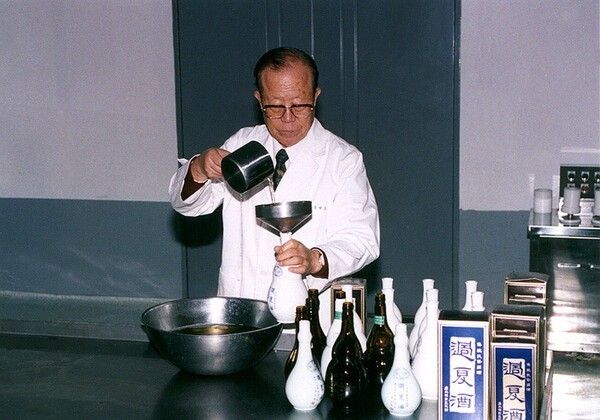
The revival began in the 1980s under the late Song Jae-seong, who reconstructed the method through historical research and experimental brewing. In 1987, Gimcheon Gwahaju was designated as Intangible Cultural Heritage No. 11 of North Gyeongsang Province. Today, the tradition continues under his son, Song Kang-ho, recognized as Korea Food Master No. 17.
A Labor-Intensive Brewing Method
The brewing process is notably intricate. Glutinous rice is soaked, steamed, and cooled on a bed layered with chrysanthemum, mugwort, and straw. Nuruk is dissolved in Gwaha water, and only the clear liquid is used.
Instead of simply mixing rice and water, the cooled rice is repeatedly pounded with the nuruk solution, forming a dough-like mass similar to injeolmi rice cake. This stage defines the unique character of the liquor.
The mixture is sealed in earthenware jars with hanji paper and aged in cool conditions. Fermentation periods vary by record, ranging from 40–45 days to as long as 80–90 days. The defining features remain consistent: equal proportions of rice and nuruk, no added water during pounding, and slow, low-temperature fermentation.
The resulting liquor carries a clear amber tone, a pronounced glutinous rice aroma, subtle sweetness, and a lingering acidity. Its texture is viscous, and its flavor deepens over time, maintaining stability even through summer heat.
Gimcheon Gwahaju is more than a regional liquor. It is the product of water, place, and persistence. Its legacy reflects not only a brewing tradition but also the endurance of cultural memory, preserved and passed through generations.
Reported by News Culture M.J._mj94070777@nc.press
Copyright ⓒ 뉴스컬처 무단 전재 및 재배포 금지


