Korea’s traditional furniture piece, the soban, is entering the global design discourse at full scale. An exhibition that fuses Seoul’s living heritage with contemporary design is being staged in Milan, positioning Korean craft within an international framework.
The Seoul Design Foundation will present the international exhibition “SEOUL LIFE 2026 MILAN: Heritage Reimagined, Soban” from April 20 to May 10 at the ADI Design Museum in Italy. The project centers on the soban, a traditional domestic object, using it as a lens to introduce Seoul’s lifestyle to a global audience.
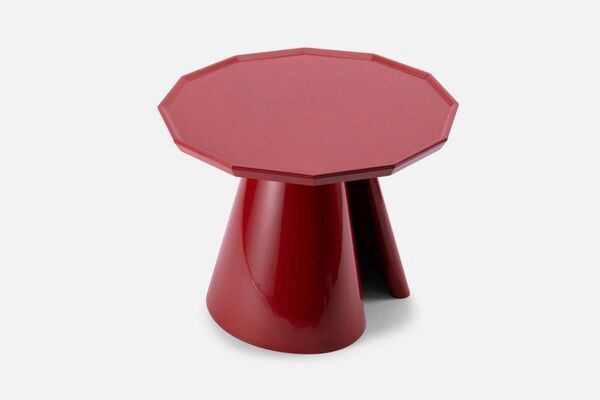
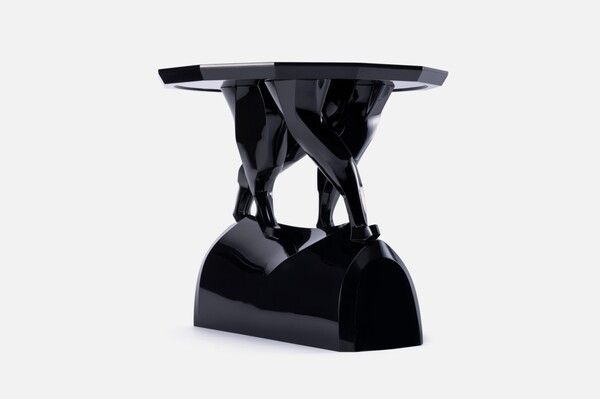
At the core of the exhibition is the soban, rooted in Korea’s floor-based living culture. Its low height, portability, balanced proportions, and curved legs exemplify a synthesis of utility and sculptural refinement. Regional craftsmanship is reflected through variations in joinery, lacquer techniques, and mother-of-pearl inlay, embedding both locality and artistic identity.
Seventeen designers and studios reinterpret the soban through contemporary design languages. By integrating traditional craft with 3D printing and AI-driven design processes, the exhibition moves beyond restoration toward transformation, positioning the soban as a contemporary design object rather than a historical artifact.
Participating designers include Kim Jin-sik, Son Dong-hoon, and Andi Njong, alongside globally recognized figures such as Stefano Giovannoni, Anna Gili, and Odile Decq. Their works expand the soban into a medium that conveys symbolism, relational meaning, and experiential value.
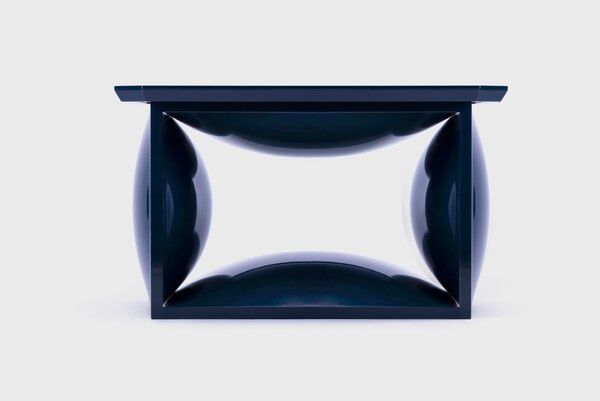
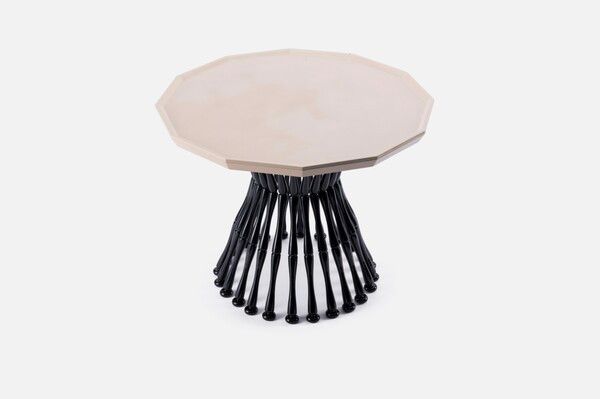
Key works highlight diverse interpretive strategies. Kim Jin-sik’s “Snail and a Walk” translates the brushwork and tonal gradation of East Asian ink painting into an organic structure. Son Dong-hoon’s “Swell series Soban” captures the rhythm of urban flow through form and light. Andi Njong combines transparent structures with lacquer to reinterpret the material weight of tradition.
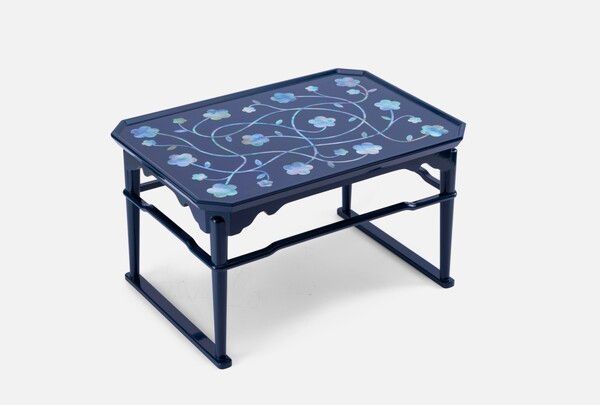
Giovannoni extends his signature approach of embedding humor and symbolism into everyday objects, redefining the soban as a platform for emotional and social interaction. Inspired by floral structures, his work articulates both individuality and communal identity. Gili, meanwhile, integrates soft forms with functional sensibility, bringing the soban into the sphere of contemporary daily life.
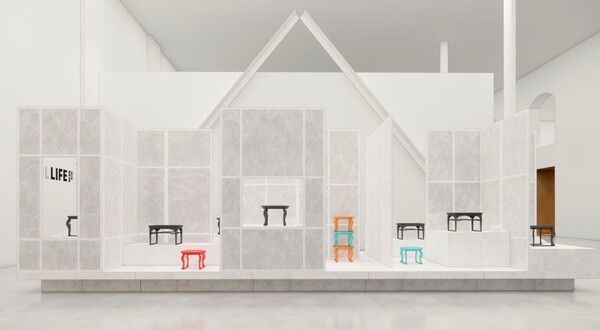
The exhibition design itself draws from the daecheong maru of traditional Korean houses. A central platform guides visitor movement, while hanji partitions and the concept of individual display tables present each soban as an autonomous object. The open spatial configuration allows for multi-angle observation of form and proportion.
The exhibition also features designer interview videos and soban products reflecting “Seoul Colors.” These pieces are made using recycled plastic, demonstrating both the scalability and sustainability of traditional design in a modern context.
This exhibition marks the first tangible outcome of collaboration between the Seoul Design Foundation and the ADI Design Museum. The partnership extends beyond knowledge exchange into joint curatorial practice.
The foundation has previously supported global expansion of Korean craft through platforms such as Maison & Objet and now broadens its scope to Milan Design Week. The exhibited works will later enter the collection of Dongdaemun Design Plaza (DDP) and be presented in follow-up exhibitions in Seoul.
Ultimately, the exhibition positions traditional craft not as a static heritage, but as a dynamic, adaptable design asset capable of evolving within future-oriented cultural frameworks.
Reported by News Culture M.J._mj94070777@nc.press
Copyright ⓒ 뉴스컬처 무단 전재 및 재배포 금지


