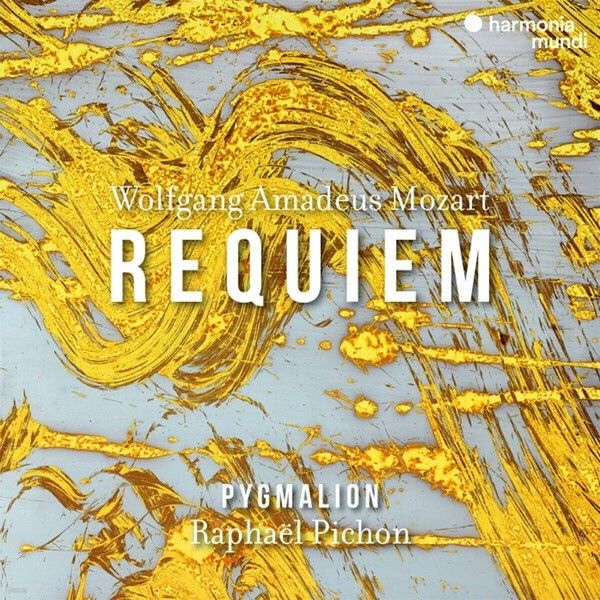
There are days when the mind collapses inward.
In moments of tragedy, or when pain consumes the body, it is often a mournful melody that reaches deepest into the chest and offers an unexpected form of consolation. When listening to Mozart’s Requiem, music ceases to be mere sound. It becomes something closer to a handkerchief, quietly wiping away tears.
In 1791, during the final season of his life, Wolfgang Amadeus Mozart sat at his desk with a single manuscript before him. Its title was simple, yet its resonance was anything but. Requiem—a mass for the dead. Music history has long asked a persistent question: for whom was this requiem truly written?
The origins of the work are shrouded in a well-known episode. One day, a mysterious “messenger in black” visited Mozart, delivering a commission on behalf of an anonymous patron. It was later revealed that the patron was Franz von Walsegg, an Austrian aristocrat mourning the loss of his wife, who intended to present the work as his own.
As his illness worsened, Mozart reportedly remarked, “I am writing my own funeral mass.” Whether a romantic exaggeration or not, the chilling tension within the music resists easy dismissal of the story.
The opening movement, Introitus, begins with low-lying strings and chorus. What emerges is not fear, but something more elusive—a sense of inward sinking. It is not terror of death, but the trembling awareness of a fate no human can escape.
Then comes Dies Irae, a completely different world. A storm of judgment and wrath surges forward with relentless rhythm and explosive choral force. It seems to draw out the deepest fears hidden within the human psyche. Yet Mozart’s music does not linger in chaos. Even in turmoil, the structure remains precise, the emotions meticulously shaped.
Mozart never completed the work. His student Franz Xaver Süssmayr finished it based on his teacher’s sketches. This has left the Requiem suspended between authorship and collaboration, raising the enduring question of whose work it truly is.
The later sections completed by Süssmayr can feel at times rough, at times disarmingly simple. Yet this simplicity, in contrast to Mozart’s intricate writing, introduces a profoundly human space within the composition. Imperfect, and therefore more truthful.
Mozart’s music is often described as divine. But Requiem resonates differently. It is less a hymn directed toward God than a record of what humans feel in the presence of the divine.
Fear, sorrow, resignation, and a fragile trace of hope—all coexist within this work.
Perhaps that is why, after listening to Requiem, we do not dwell on death. Instead, we turn back toward life—toward the fleeting nature of the present moment, and its quiet, undeniable value.
In December 1791, Mozart died at the age of thirty-five. It was a life cut short.
Yet Requiem remains. Not merely as sacred music, but as one of the most profound questions humanity has ever left behind—asked in the most beautiful form possible.
Reported by News Culture M.J._mj94070777@nc.press
Copyright ⓒ 뉴스컬처 무단 전재 및 재배포 금지


