Artificial intelligence is rapidly redrawing the boundaries of filmmaking, and at the center of that shift stands "The Man in Hanbok." Once confined to experimental projects, AI-generated visuals have now reached full theatrical release, signaling that structural transformation in the film industry is no longer theoretical.
The film first drew attention after winning the grand prize at the 2nd Korea Artificial Intelligence Film Festival, followed by official invitations to the Busan International AI Film Festival and the World AI Film Festival. Its selection as the closing film of the Buyeo International History Film Festival further cemented both its industry relevance and public appeal.
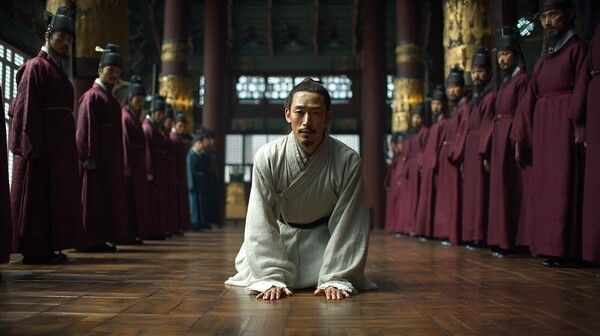
This trajectory points to more than technological adoption. It signals a fundamental shift in production paradigms. Where CG and VFX once served as auxiliary tools, AI now operates at the core of planning, directing, and post-production.
Director Lee Sang-hoon has been credited with elevating AI beyond automation into a form of directorial language. By grounding the film in his original novel, he addresses one of AI cinema’s most persistent criticisms: narrative weakness.
The production process itself highlights both the potential and limitations of current AI tools. Early stages relied on Midjourney, but inconsistencies in character continuity and scene cohesion exposed a major industry challenge.
A turning point came with the adoption of Nano Banana, which significantly improved lighting, detail, and compositing capabilities. The project effectively underwent a “technology generation shift” within its own production cycle.
For video generation, Kling and Veo were deployed. Meanwhile, ChatGPT and Gemini were used for prompt engineering, forming a collaborative AI workflow. This marks one of the first cases where a multi-AI pipeline has functioned cohesively in a feature-length production.
Unlike traditional linear workflows, AI-driven production operates in iterative cycles with rapid feedback loops. This structural difference opens the door to shorter production timelines and reduced costs.
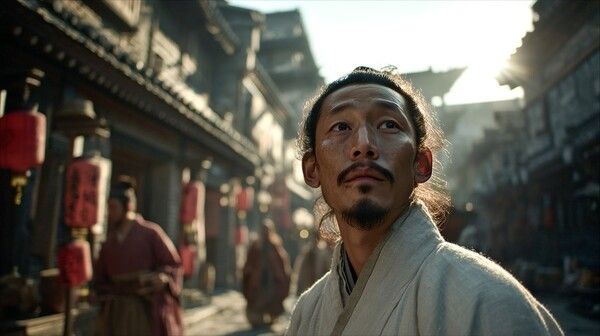
However, technological advancement does not automatically guarantee artistic quality. Industry consensus remains clear: AI is a tool, while direction remains fundamentally human. Even this project is widely seen as dependent on significant human intervention to reach its current level.
This is where prompt design emerges as a critical discipline. The ability to select the right tools and construct precise instructions directly shapes output quality, suggesting a shift toward a new role: the AI director.
Narratively, the film also pushes boundaries. It begins in the era of Jang Yeong-sil and King Sejong, then bridges to the works of Peter Paul Rubens and Leonardo da Vinci, constructing an alternative historical narrative. With temporal and spatial constraints removed, AI enables a more fluid fusion of history and imagination.

This flexibility is drawing attention globally. Overseas studios have reportedly expressed interest in collaboration and IP expansion, reflecting how visually driven AI content can transcend language barriers.
The production company Box Media has also strengthened its position by developing proprietary solutions for maintaining character consistency, one of the most persistent challenges in AI filmmaking. Such advancements could evolve into future industry standards.
At the same time, increasing reliance on advanced AI systems introduces new disparities. Access to cutting-edge models and technical expertise is becoming a decisive factor, reinforcing the equation: technological gap equals content gap.
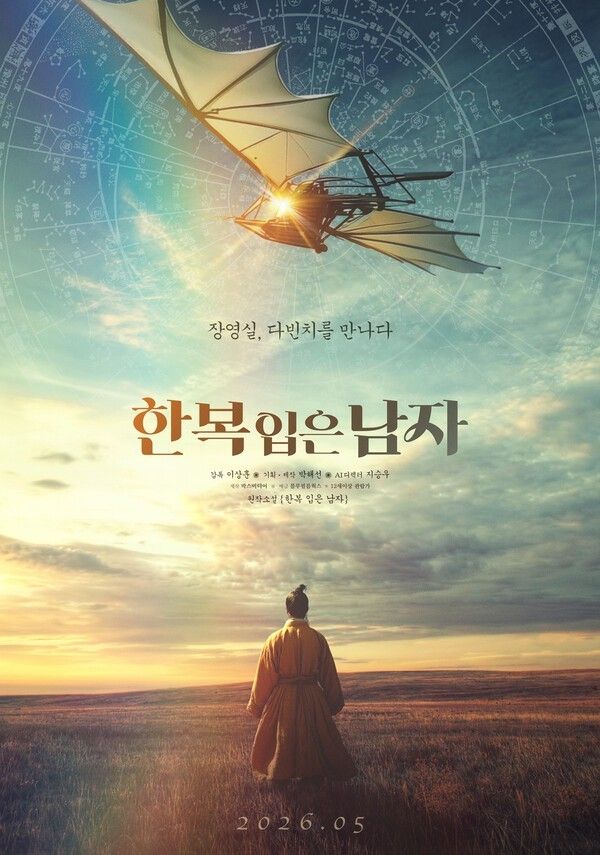
Set for theatrical release on May 21, "The Man in Hanbok" now stands as a critical test case. If its festival success translates into box office performance, AI cinema will move beyond possibility and establish itself as a viable industry sector.
Ultimately, AI is no longer just a production tool but an emerging cinematic form. The question is no longer whether it works, but how the industry will adapt to it.
Reported by News Culture M.J._mj94070777@nc.press
Copyright ⓒ 뉴스컬처 무단 전재 및 재배포 금지


