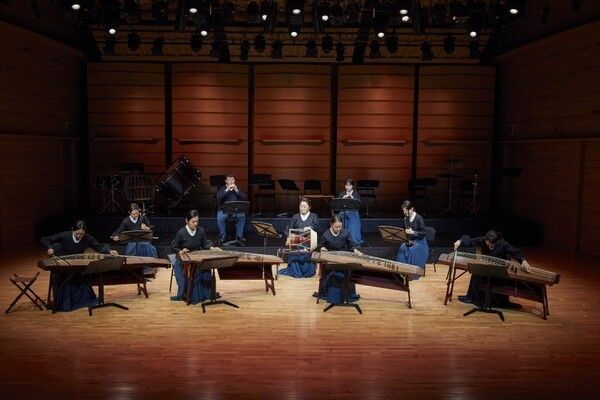
The names of traditional compositions endure across time. The National Gugak Center’s Creative Orchestra revisits those names, reshaping them into new sonic forms. On stage, seven newly commissioned chamber works—each based on the titles and alternate names (amyeong) of traditional repertoire—will be presented in world premiere.
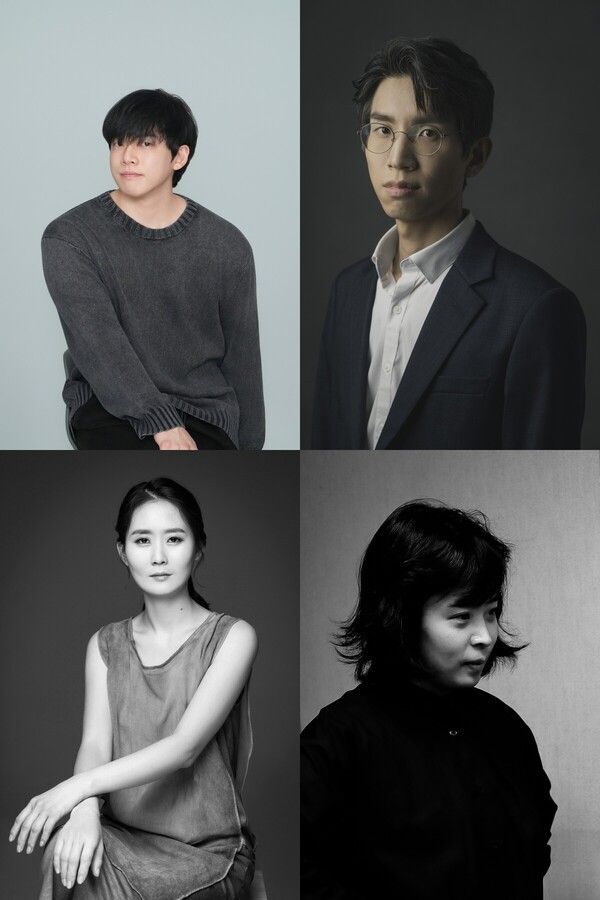
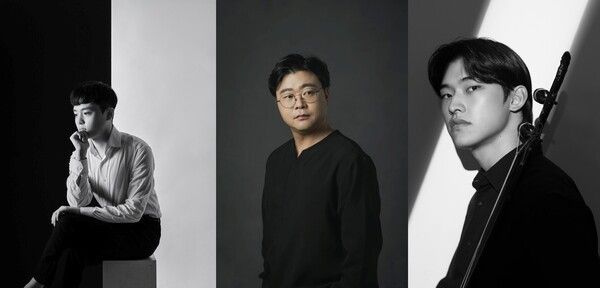
The starting point of the program Masterpieces II lies in these titles. In Korean music history, names often signaled a work’s character, atmosphere, and aesthetic standing. This production reexamines those meanings through a contemporary lens, translating the emotional layers and imagery embedded in the names into chamber music form. Seven composers—Kim Sang-wook, Kim Young-sang, Kim Jung-geun, Ra Ye-song, Lee Ye-jin, Lee Jae-jun, and Hwang Jae-in—participate, each bringing a distinct ensemble and approach.
A defining feature is instrumentation. The program incorporates aak (court ritual instruments) rarely used in contemporary compositions, alongside modified instruments developed by the National Gugak Center. The intent is clear: not to replicate tradition, but to reconfigure it as material for new expression.
Seven Premieres Rooted in Names
Kim Young-sang’s Blind Spot I: Agreed Silence is a quartet for daegeum, piri, haegeum, and daegeum ajaeng. It draws from Manpajeongsik, an alternate name of Chwita, meaning “to calm all waves.” Rather than surface tranquility, the work explores what remains beneath—unspoken words, unresolved emotions, and inaudible yet persistent movement.
Kim Sang-wook’s Jeolhwa (Cut Flower), for piri and 25-string gayageum, reinterprets the alternate title of the processional piece Gilgunak. The image of a severed flower becomes a meditation on culmination and loss. The work avoids overt grief, instead focusing on the quiet aftermath of separation.
Lee Ye-jin’s Manyeop Chiyo places five percussionists at the forefront. Derived from an alternate name of Yeominrakman, it evokes “a landscape where countless plants flourish.” The piece translates this into a sonic forest, structuring five scenes shaped by wind, birdsong, rain, sunlight, and shifting currents. Traditional rhythmic cycles are adapted to create an organic, ecological flow.
Ra Ye-song’s Doduri employs dansō, sanjo gayageum, janggu, and haegeum. The work examines the formal principle of repetition inherent in doduri, a genre rooted in court and chamber music traditions. Through recurring melodic structures, it traces how repetition subtly alters expression over time.
Tradition and Contemporary Tension
Lee Jae-jun’s Yeominrak – Broken Dopamine Receptors presents the most provocative title. Scored for seven performers handling 21 instruments, it juxtaposes the original meaning of Yeominrak—“enjoying together with the people”—against the overstimulated sensory landscape of contemporary society. Borrowing and fragmenting its opening melody, the piece critiques a culture driven by rapid and intense stimuli.
Kim Jung-geun’s Spring Dream is an octet for ajaeng and haegeum, based on Taepyeong Chunjigok, another alternate name linked to Yeominrakryeong. Rather than depicting a bright spring, the work unfolds slowly, capturing the moment of emergence—compressed energy released in subtle layers of vibrating string textures.
Hwang Jae-in’s Hwangha Cheong: Toward Clarity takes its inspiration from Boheosa. The concept of “clarity” (cheong) is expanded beyond purity, drawing from East Asian aesthetics of cheonggi—a clarity that is both refined and strangely unfamiliar. The composition unfolds as a journey toward this layered state.
Although each work opens a different pathway, the program shares a common thread: reexamining tradition not as a fixed form, but as a language embedded in names. The performance asks what remains when historical titles, with their accumulated resonance and distance, are translated into contemporary sound.
Park Sung-beom, director of the Creative Orchestra, noted that Masterpieces II seeks to reconnect audiences with the meanings embedded in traditional music through modern sensibilities. The goal is not preservation alone, but deeper engagement.
The program will be presented on April 23 at 7:30 p.m. at Umyeondang Hall, National Gugak Center.
Reported by News Culture M.J._mj94070777@nc.press
Copyright ⓒ 뉴스컬처 무단 전재 및 재배포 금지


