A 19th-century Joseon landscape painting, long held overseas in fragmented form, has been brought back to Korea for restoration, marking a rare case in which a major Western museum has entrusted the recovery of an artwork’s original structure to Korean conservation experts.
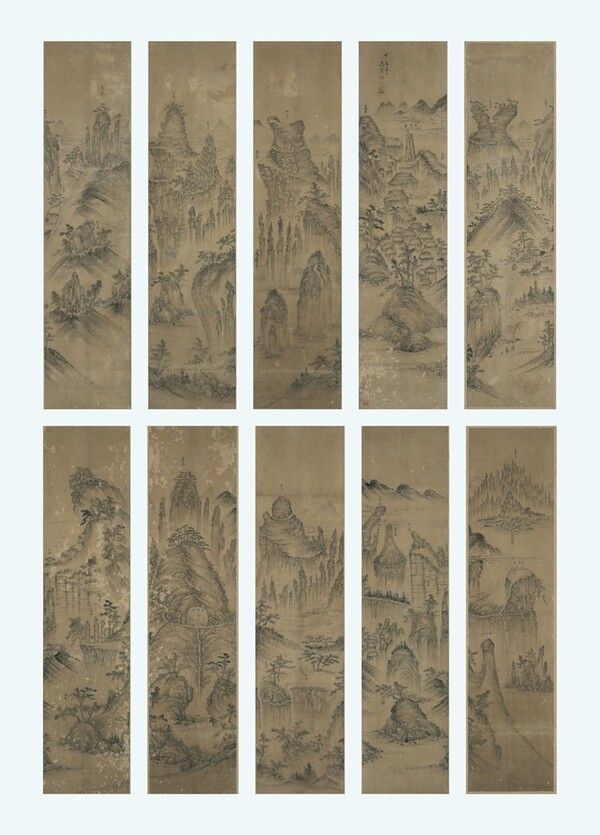
According to the Overseas Korean Cultural Heritage Foundation, the project is being carried out in collaboration with the Samsung Foundation of Culture. The painting, Chilbosando (Seven Treasures Mountain), part of the collection of The Metropolitan Museum of Art, has been transferred to the Leeum Museum of Art for comprehensive conservation treatment.
The decision reflects growing recognition of Korea’s expertise in the restoration of traditional East Asian paintings. Unlike Western works on canvas, Joseon paintings are constructed from layered materials such as hanji paper, silk, and natural adhesives, requiring specialized knowledge of traditional mounting techniques.
Chilbosando depicts the striking landscape of Mount Chilbo in northeastern Hamgyeong Province, known for its dramatic cliffs, deep valleys, and cascading waterfalls. The work reflects the late Joseon shift toward true-view landscape painting, in which artists moved beyond idealized imagery to capture real geographic scenery.
The painting’s journey to New York follows a broader historical pattern. During the late 19th and early 20th centuries, Western diplomats, missionaries, and collectors acquired Korean artworks, many of which later entered museum collections abroad. In this process, original formats were often altered or lost.
In the case of Chilbosando, the work entered the museum as ten separate scroll sheets. The central aim of the current project is to reassemble these fragments into the original ten-panel folding screen format, restoring not only the physical structure but also the visual continuity intended by the artist.
The Overseas Korean Cultural Heritage Foundation, established under the Cultural Heritage Administration, has supported similar conservation efforts since 2013. To date, dozens of Korean cultural properties held overseas have undergone preservation through such initiatives.
Ultimately, the restoration represents more than technical recovery. It is an effort to reconnect the artwork with its original form and meaning, reaffirming the cultural context in which it was created.
Reported by News Culture M.J._mj94070777@nc.press
Copyright ⓒ 뉴스컬처 무단 전재 및 재배포 금지


