Director Seo Eun-sun makes a striking entrance with her feature debut Wrangler, a psychological thriller that methodically tightens its grip around suppressed desire and emotional fracture. Ahead of its Korean theatrical release this May, the film has already secured attention across major international festivals including Vancouver, Moscow, and Gothenburg, positioning itself as a sharply controlled and psychologically incisive debut.
At its core, Wrangler is less about what happens than how it breaks. The film follows Ha-young, a high-profile dog trainer whose meticulously controlled life begins to destabilize with the return of her younger sister Sora, a former inmate convicted of murder. What unfolds is not a conventional suspense arc, but a slow-burn collision of affection and fear, protection and threat, exposing the volatile architecture of their relationship.
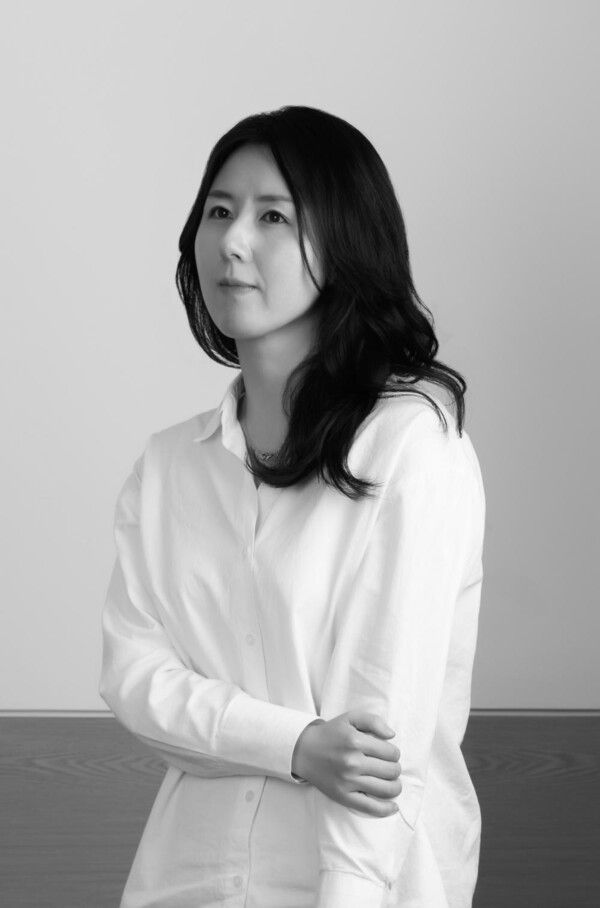
Seo’s direction operates with calculated restraint. Camera movement, spatial blocking, editing rhythm, and scene transitions are tightly synchronized with the characters’ psychological states. Rather than merely presenting events, the camera isolates micro-expressions and physical tension, turning internal rupture into visible form. The result is a sustained, low-frequency tension that permeates the film rather than erupting in isolated moments.
This focus is not new in Seo’s work. Her earlier short A Movie Out the Window (2012) explored unstable relationships within a chaotic film set, while Tropical Night (2015) examined female desire and emotional absence through everyday interactions, earning Best Screenplay at the Paris Korean Film Festival. These projects laid the conceptual groundwork for Wrangler, where psychological observation and genre mechanics converge with greater structural precision.

In Wrangler, that convergence becomes its defining strength. As Ha-young’s controlled environment fractures, suppressed impulses and unresolved trauma surface with increasing intensity. The film refuses to rely solely on plot-driven suspense, instead constructing tension through emotional instability, forcing the audience to inhabit the characters’ psychological disorientation.
International reception reinforces this reading. Premiering as the opening film of the “Spotlight on Korea” section at the 44th Vancouver International Film Festival, the film went on to secure invitations to Gothenburg’s “Thrill” section, the Madrid International Women’s Film Festival, and the Moscow International Film Festival. Critics have described it as “a delicate yet daring debut,” highlighting its ability to sustain both psychological depth and genre tension.

Performance is central to that tension. Choi Seung-yoon anchors the film as Ha-young with a performance defined by controlled precision, capturing the exact moment where composure fractures. Kim Seung-hwa, as Sora, delivers a layered portrayal of suppressed rage and emotional contradiction, making the sisters’ relationship feel both intimate and unstable.
Supporting performances from Jung Hwan and Joo Ye-rin further reinforce the film’s psychological density. Each interaction functions as a pressure point, escalating tension not through spectacle but through shifting emotional alignments.
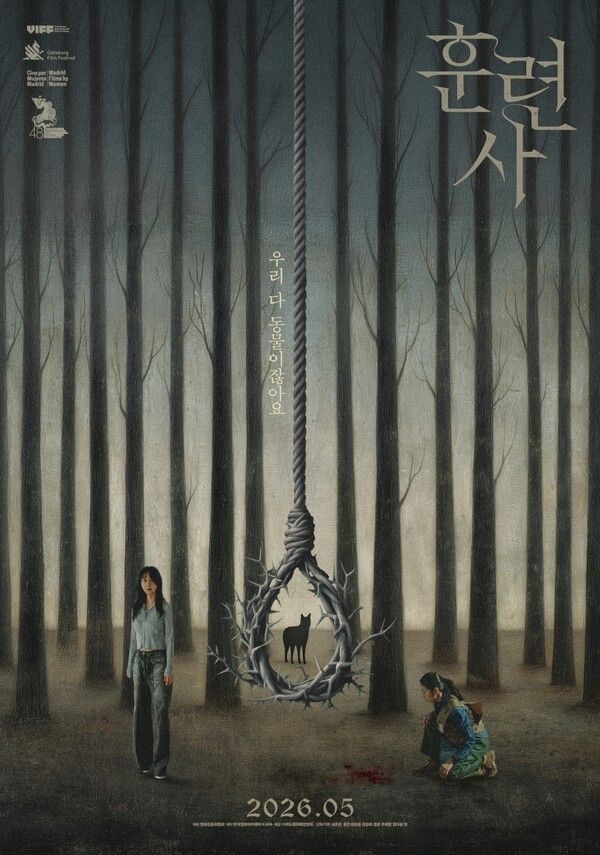
Ultimately, Wrangler is structured around duality. Love and hostility, protection and danger evolve in parallel, never resolving cleanly. Seo visualizes this instability through controlled lighting, confined spaces, and deliberate camera perspective, turning physical environments into extensions of psychological states.
As a debut, Wrangler does not simply announce a new director. It establishes a clear authorial framework. By aligning genre mechanics with rigorous psychological inquiry, Seo Eun-sun delivers a film that prioritizes immersion over shock, and tension over release, marking her as a filmmaker to watch within contemporary Korean cinema.
Reported by News Culture M.J._mj94070777@nc.press
Copyright ⓒ 뉴스컬처 무단 전재 및 재배포 금지


