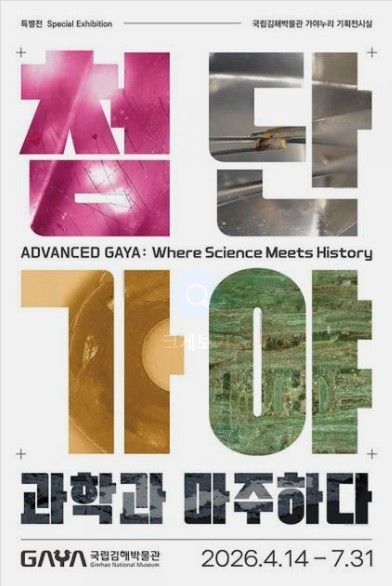
The Gimhae National Museum is bringing Gaya’s technological prowess back into focus, leveraging cutting-edge scientific analysis to uncover the hidden craftsmanship embedded within its artifacts.
According to the museum, the special exhibition “Advanced Gaya: Facing Science,” running from April 14 to July 31, reinterprets the ancient confederacy’s technology and daily life through a scientific lens.
Located across the Nakdong River basin, Gaya flourished as a maritime trade power from around 42 CE to 562 CE. Centered on iron production, the confederacy developed a network of states but ultimately fell to the expanding forces of Silla. Despite its political collapse, Gaya’s technological legacy endured at a level considered among the most advanced in East Asia at the time.
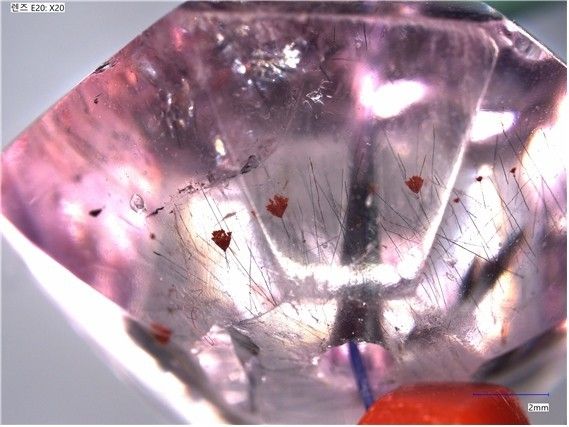
Gaya craftsmen mastered high-temperature metallurgy, producing iron weapons and armor with remarkable durability. Their grayish-blue stoneware, fired in sealed kilns exceeding 1,000°C, achieved a level of sophistication that would later influence Japan’s Sueki pottery.
The exhibition assembles 27 artifacts across 47 items, including the gilt-inlaid inscription sword excavated from Tomb No. 11 in Gyodong, Changnyeong. Notably, scientific analysis of plate armor from Tomb No. 13 in Dohang-ri, Haman has confirmed—for the first time—that Gaya employed steel-making techniques by adding carbon to pure iron.
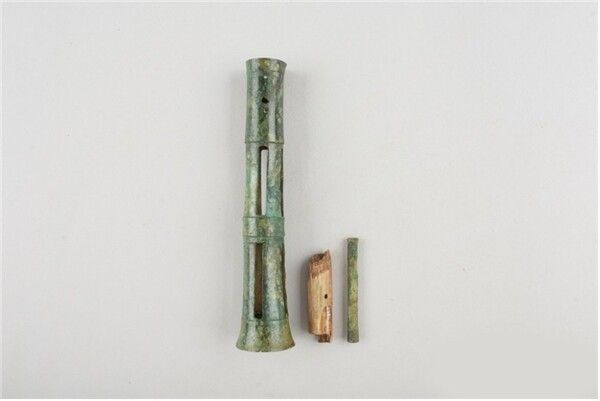
Even more striking is the application of 3D X-ray CT microscopy. Researchers identified the wooden shaft of a cylindrical bronze object from Tomb No. 18 in Daeseong-dong, Gimhae as chestnut wood, analyzing its cellular structure with unprecedented precision.
The exhibition also visualizes microscopic air bubbles trapped inside glass beads for over 1,500 years and reinterprets previously obscured inscriptions on a gilt-inlaid sword using advanced imaging technology, identifying the phrase “Sangbuseonin Gwisangdo” (上部先人貴常刀).
Multilingual support, including English and Chinese, further expands accessibility, positioning Gaya not merely as an ancient polity but as a civilization defined by technological ingenuity.
Over the years, the museum has curated major exhibitions such as “Gaya Tumuli,” “Gaya Across the Sea,” and “Crystal Gaya,” continuing its effort to reconstruct the legacy of a civilization long overshadowed by history.
Reported by News Culture M.J._mj94070777@nc.press
Copyright ⓒ 뉴스컬처 무단 전재 및 재배포 금지


