A short-form drama adaptation of Gorita’s webtoon is drawing attention for what it may reveal about the evolving language of storytelling. Father’s Home Cooking (WT) is positioned not merely as a screen adaptation, but as a reinterpretation that could transform a familiar narrative into a distinctly different viewing experience.
At its core, the original webtoon centers on family relationships explored through the everyday act of cooking. Its restrained pacing and emotional subtlety allowed readers to engage deeply with the characters’ gradual transformations. The dining table functioned as a narrative anchor, evoking accumulated memories and emotional bonds. Preserving this sensibility while translating it into a visual medium presents both an opportunity and a structural challenge.
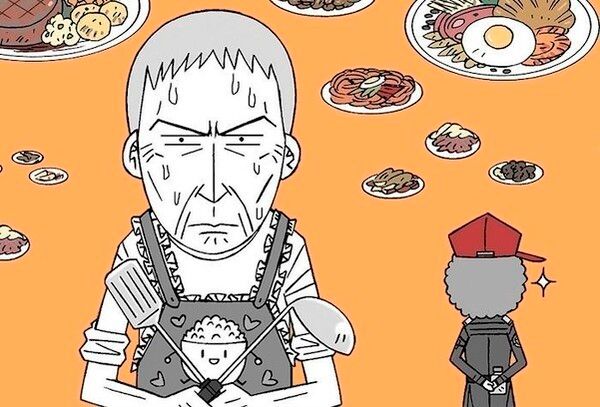
The transition from webtoon to drama inherently reshapes how a story is delivered. Narrative flow, emotional timing, and character emphasis must be recalibrated. The significance of Father’s Home Cooking (WT) lies precisely in this shift. The key question is not whether the story is faithfully reproduced, but how differently it can be experienced.
The short-form format intensifies this challenge. With limited runtime, narrative compression becomes essential. Each scene must carry greater emotional weight, relying less on exposition and more on immediacy. This structural constraint inevitably extends to directing, editing, and performance, requiring a more concentrated expressive approach.
The adaptation maintains the emotional foundation of the original while amplifying the density of character relationships. Its episode-driven structure allows each segment to resonate independently while remaining interconnected within the broader narrative. This design aims to sustain emotional continuity even within a shortened format.
One of the most defining elements is its use of a vertical frame. Unlike traditional horizontal compositions, the vertical format places heightened emphasis on faces, gaze, and subtle shifts in expression. This approach brings viewers closer to the characters’ internal states, offering a more direct and intimate mode of emotional engagement.
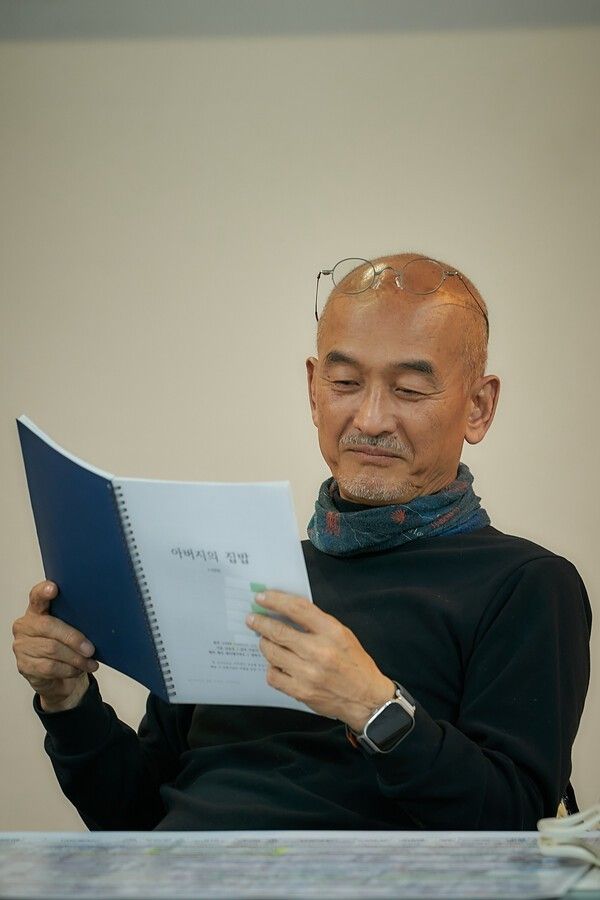
The involvement of Lee Joon-ik adds further weight to the project. Known for The King and the Clown, Dongju: The Portrait of a Poet, and The Book of Fish, Lee has consistently demonstrated a refined sensitivity toward character and historical nuance. This project demands a recalibration of that sensibility within a compressed narrative structure.
Lee’s approach reportedly focuses on distilling emotion within constrained time and space. Rather than relying on extended narrative arcs, the emphasis shifts toward the selection and arrangement of moments. This reflects a continuation of his thematic interests, while simultaneously exploring new expressive methods.
The cast plays a crucial role in differentiating the adaptation from its source. Jinyoung, Lee Jung-eun, and Byun Yo-han bring distinct acting styles that collectively deepen the emotional texture of the story.
Jinyoung’s portrayal of Ha-eung captures a man undergoing gradual transformation through unfamiliar domestic routines. Lee Jung-eun’s Soon-ae serves as the emotional catalyst, her sudden inability to cook disrupting the family’s equilibrium. Byun Yo-han’s Myeong-bok functions as an observer and mediator, grounding the narrative through his perspective on shifting family dynamics.
Food, as a central motif, gains a heightened sensory presence in the visual medium. Cooking processes, table settings, and the physical interaction with meals are rendered with immediacy, transforming what was once symbolic into a tangible, experiential element.
As the short-form drama market continues to expand, Father’s Home Cooking (WT) stands as a potential benchmark. It raises a fundamental question: can narrative depth and emotional resonance be sustained within a condensed format?
Ultimately, the project’s success will hinge on how effectively it reconfigures familiarity. For those already acquainted with the original, it must offer reinterpretation. For new audiences, it must function as a complete and compelling narrative in its own right.
Father’s Home Cooking (WT) attempts to tell the same story differently, seeking new emotional resonance through formal transformation. The extent of that resonance, and its lasting impact, remains to be seen.
Reported by News Culture M.J._mj94070777@nc.press
Copyright ⓒ 뉴스컬처 무단 전재 및 재배포 금지


