Located in the heart of Hanok Village in Jeonju, Gyeonggijeon Shrine enshrines the portrait of Yi Seong-gye, the founding king of the Joseon Dynasty. Tucked within its grounds, the Jeonju Archive stands as the site that ultimately changed the fate of the Annals. Though modest in scale, the decisions made here ensured the continuity of one of Korea’s most important historical records.
During the Joseon era, the Annals were distributed across four repositories: the Chunchugwan in Hanyang, as well as archives in Chungju, Seongju, and Jeonju. This decentralized system was designed to safeguard records against disasters such as war and fire. However, with the outbreak of the Imjin War in 1592, the system collapsed. The archives in Hanyang, Chungju, and Seongju were destroyed, placing the survival of the Annals in grave jeopardy.
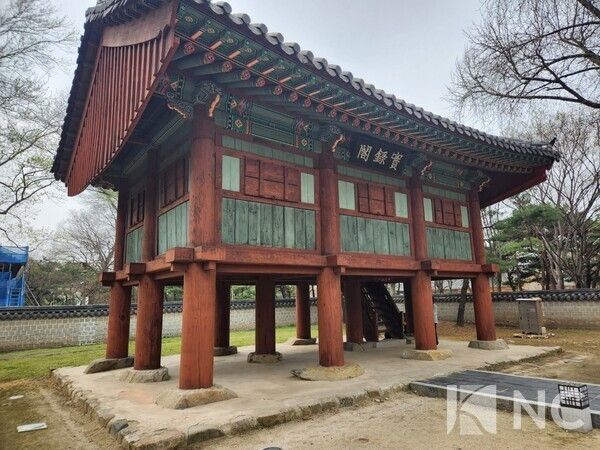
The only surviving version was the Jeonju Archive edition. Beyond the Annals, the archive also housed key historical texts such as the Goryeosa, along with various official documents. It functioned as a central repository for the state’s historical and administrative records.
As the war intensified, local officials and Confucian scholars in Jeonju made a swift decision to relocate the records. Stored within Gyeonggijeon, the documents were packed into chests and urgently transported deep into the mountains of Naejangsan. The arduous journey through rugged terrain was a highly organized effort to preserve the records. The materials were later moved again to even safer locations, guarded day and night under strict secrecy.
After the war, the surviving Annals and documents were recopied and reprinted, then redistributed to multiple archives. This experience led to the establishment of a more secure mountain-based archival system in the late Joseon period. The Jeonju Archive thus became more than a storage site. It marked the starting point for a redesigned system of record preservation.
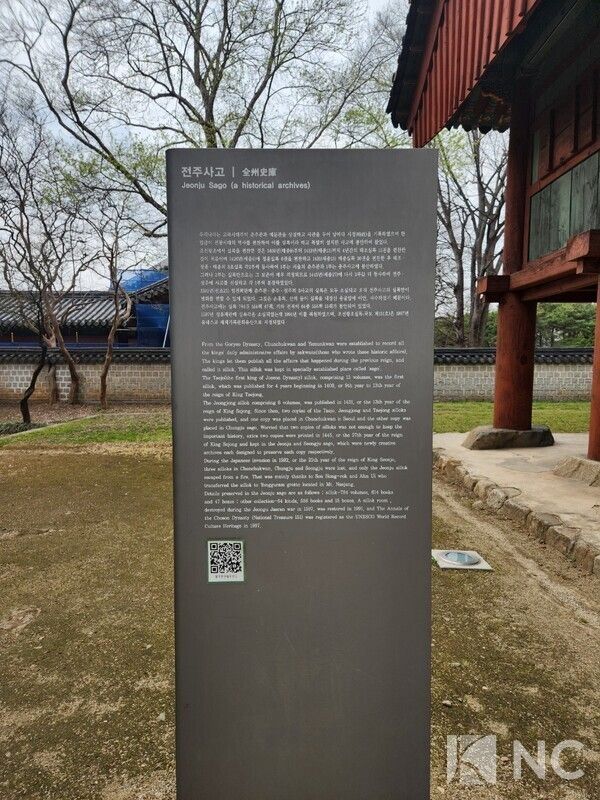
The Annals Hall, where the Jeonju edition had been kept, was reconstructed in 1991. Although restored, its layout and circulation reflect the original principles of protection: a secluded location, controlled access, and fire-conscious architectural design. Walking through the site, one can still sense the caution and urgency that once defined those who safeguarded these records.
Unlike other parts of Gyeonggijeon that are crowded with visitors, the Jeonju Archive remains relatively quiet. There are no elaborate exhibitions or decorative displays. Instead, the weight of time and preservation fills the space. The Jeonju Archive is not merely a place of “remaining records,” but of “protected records.” The Annals, which survived the devastation of war, began their journey here and continue to endure today.
Reported by News Culture M.J._mj94070777@nc.press
Copyright ⓒ 뉴스컬처 무단 전재 및 재배포 금지


