An independent short film, The Simple Truths About You, distills subtle emotional shifts within a concise 25-minute runtime. Set against the warmth of early summer, the story unfolds around a long-awaited reunion between two characters, Sumin and Chaeyoung. What once lingered unnoticed in everyday life emerges here as a quiet but unmistakable fracture of emotion.
The film employs a deliberate contrast between black-and-white and color imagery to articulate its emotional landscape. Monochrome sequences convey distance and internal tension with restraint, while color scenes mark moments of emotional expansion and reconnection. This visual duality allows the audience not only to follow the narrative but to intuitively inhabit the characters’ inner states.
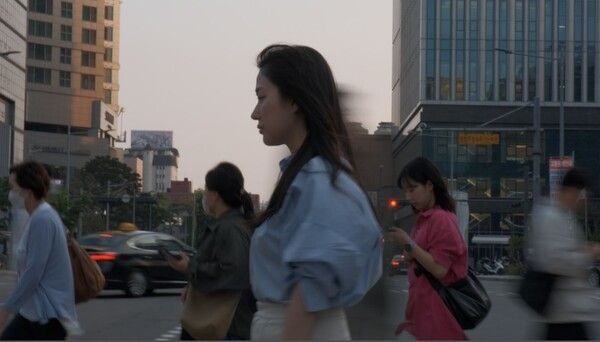
Director Kim Yong-moon has stated that the film seeks to capture fragile, easily overlooked moments in daily life, along with the quiet presence that sustains them. While human relationships have grown increasingly complex, the film underscores that small gestures of comfort and courage remain fundamental forces that shape one’s life. This work succeeds in rendering those fleeting moments with notable density and clarity.
A particularly striking device lies in scenes where Sumin and Chaeyoung reenact moments within the film itself. This process transcends mere performance; it becomes a medium through which emotions are exchanged and barriers gradually dissolve. Without overt declaration, the film suggests the possibility of reconciliation while preserving the delicacy of lived experience.
The rhythm of the production environment and rehearsal process also plays a crucial role. Given the demands of short-form storytelling, the film relies on swift transitions and sustained focus. Within this framework, the actors’ breathing, timing, and subtle facial expressions remain vividly perceptible. Seo Sumin and Jung Chaeyoung, in particular, navigate shifts between intimacy and tension, awkwardness and ease, lending dimensionality to their characters within a limited timeframe.

Kim’s body of work further contextualizes this film. From Paper Sticker (2015) to Breaking Up Immediately (2022), he has consistently explored the fine textures of human relationships and emotional narratives. This latest piece continues that trajectory, combining a precise observation of emotional truth with a refined directorial approach.
The use of time and space is equally noteworthy. Despite its brevity, the seasonal backdrop of early summer and the careful selection of locations align organically with the characters’ psychological states. Variations in sunlight and shadow subtly amplify emotional movement, drawing the viewer into a quiet yet immersive experience.
The film articulates comfort and courage through both visual and narrative language, presenting the rediscovery of connection through the acts of performance and filmmaking itself. The seasonal sensibility of summer further deepens its emotional resonance.
Rather than offering immediate narrative gratification, The Simple Truths About You invites emotional engagement. Within its limited runtime, the film arranges moments of psychological change and relational recovery with precision, allowing each scene to accumulate into a broader resonance. In this sense, it functions less as a conventional story and more as an exploration of cinema as an experiential medium.
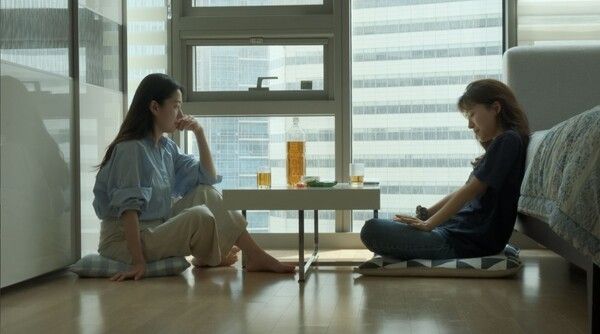
As an independent production, the film benefits from creative autonomy. Freed from commercial constraints, Kim experiments with color, sound, and pacing to deliver a distinct sensory experience. The interplay between monochrome and color stands as the film’s most defining aesthetic strategy.
Ultimately, the film offers a quiet reflection on modern isolation and vulnerability. It reminds viewers that even in moments of exhaustion and emotional strain, the presence of another person can hold transformative power. In doing so, it reaffirms the enduring value of comfort, courage, and the seemingly insignificant moments that shape human connection.
In the end, The Simple Truths About You leaves a lasting impression far beyond its runtime. Long after the screen fades, the emotional echoes of its characters continue to circulate in the viewer’s memory, gently reaffirming the strength found in shared existence. It is a compact yet resonant example of the emotional potential inherent in short-form cinema.
Reported by News Culture M.J._mj94070777@nc.press
Copyright ⓒ 뉴스컬처 무단 전재 및 재배포 금지


