Aegibong in Gimpo, Gyeonggi Province, is drawing renewed attention for more than its views. At the intersection of nature, history, and art, traditional minhwa paintings are meeting visitors in a contemporary setting.
The Gimpo Cultural Foundation is hosting a special minhwa exhibition at the Aegibong Peace Ecological Park exhibition hall through June 30. Titled “Warm Wishes, Blooming into Peace,” the showcase gently layers the hopes of past generations onto today’s landscape.
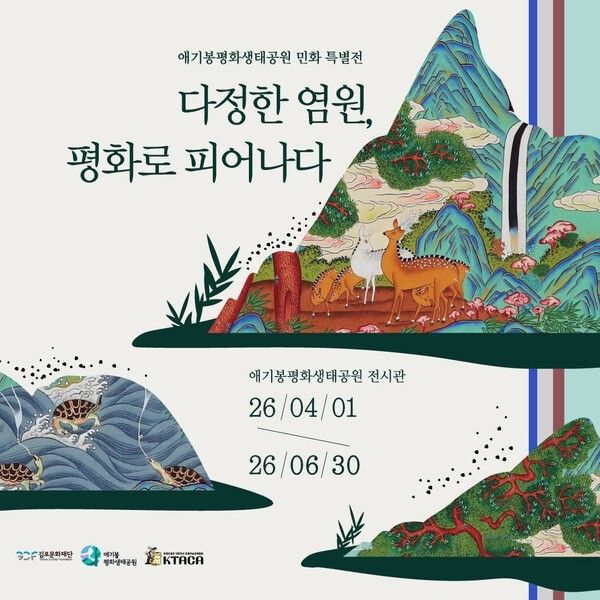
Minhwa is more than decorative imagery. Peonies symbolize prosperity, while the Ten Symbols of Longevity represent wishes for a long life, forming a visual language of hope. The exhibition is designed to help visitors intuitively engage with these symbolic elements of Korean aesthetics. For international audiences, it provides a clear and accessible introduction to Korea’s visual culture.
One standout work is artist Lee Ji-young’s “Aegibong Peace Ecological Park,” a contemporary reinterpretation of the traditional royal painting Irworobongdo. By combining Aegibong’s real landscape with a classical composition, the piece creates a sense of both familiarity and contrast. The imagery of coexistence between nature and people, layered with the symbolism of a site facing North Korea, leaves a measured but lasting impression.
Aegibong has quickly become a destination for both domestic and international visitors. With cumulative attendance approaching one million, the number of foreign visitors continues to rise. The site is increasingly seen not just as an observatory, but as a place to experience culture.
In that context, the exhibition gains additional weight. It speaks of peace not through confrontation, but through imagery. Instead of grand statements, it delivers its message through quiet, symbolic storytelling.
A spring visit to Aegibong now offers more than scenery—it offers perspective.
Reported by News Culture M.J._mj94070777@nc.press
Copyright ⓒ 뉴스컬처 무단 전재 및 재배포 금지


