Across the gentle ridgelines of Geumseong-myeon in Uiseong, North Gyeongsang Province, a chain of massive burial mounds stretches quietly under the spring sky. These are the resting places of kings and elites from Jomun-guk, an ancient polity that once dominated the inland Yeongnam region. Today, the Uiseong Jomun-guk Museum and nearby tumuli site offer a rare opportunity to encounter the lingering presence of a largely forgotten kingdom, where textual records and archaeological remains converge to illuminate its independent cultural identity beyond Silla’s shadow.
The identification of Jomun-guk with present-day Uiseong is rooted in a passage from the Samguk Sagi, which notes that “Munso-gun was originally Jomun-guk, renamed during the reign of King Gyeongdeok.” Local oral traditions further preserved the legacy of its last ruler, King Gyeongdeok, echoing through generations.
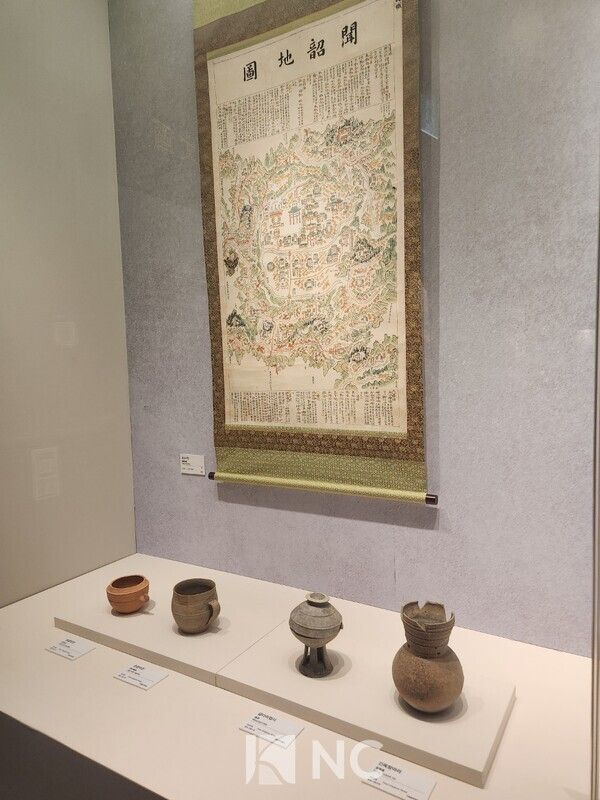
Scholars generally agree that Jomun-guk emerged in the late 2nd century BCE alongside the appearance of wooden coffin tombs, developing into a regional power until it was annexed by Silla under King Beolhyu in 185 CE. Even after integration, its ruling class appears to have retained considerable prestige. The burial mounds in Daeri-ri and Tapri-ri rival those of Gyeongju in both scale and grave goods.
One of the most striking features is the so-called “Uiseong-style” burial system. While influenced by Silla’s stone mound tombs, it adopted a modified structure using broken stones instead of river stones. The practice of secondary burials within a single mound further reflects a tightly knit kinship-based community and a distinctive funerary tradition.
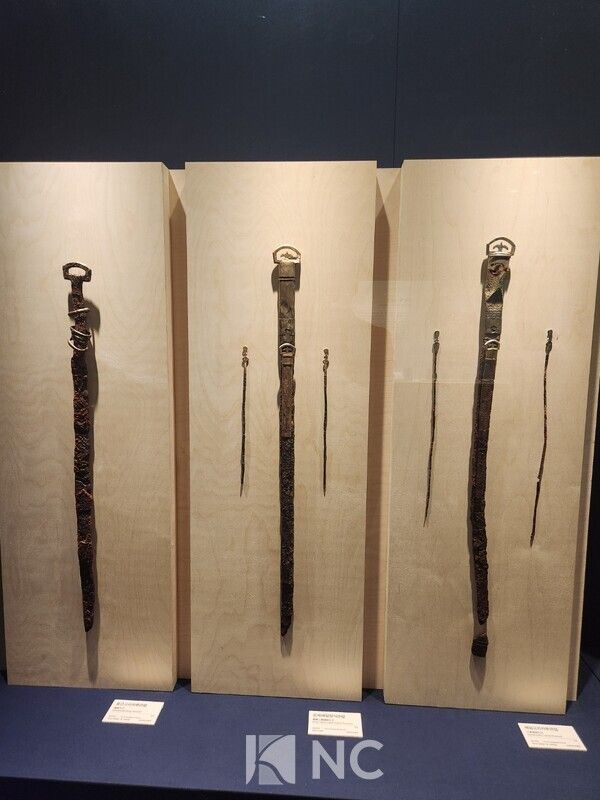
Artifacts displayed in the museum suggest that Jomun-guk was not merely a subordinate entity but a region that maintained a significant relationship with the Silla court. Gilt-bronze crowns, silver belts, and elaborately decorated swords are interpreted as prestige goods granted by Silla royalty to influential local leaders, indicating a system of indirect governance that preserved existing authority structures.
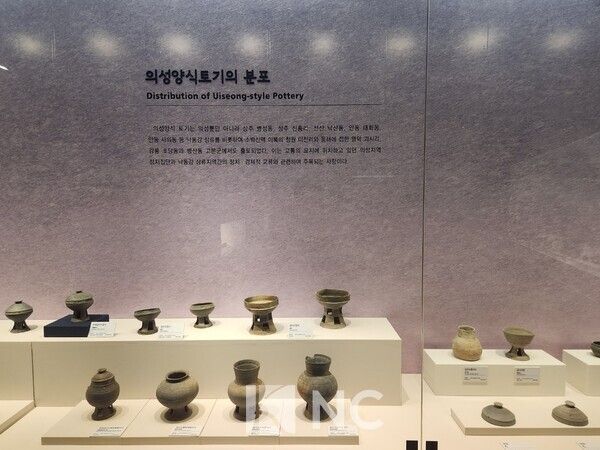
Among the most visually compelling relics is the “Uiseong-style pottery.” Characterized by alternating perforations in pedestal dishes and a strong emphasis on linear aesthetics, these ceramics reflect a unique regional sensibility. Large jars found around tombs are believed to be remnants of ritual offerings, offering insight into beliefs about the afterlife.
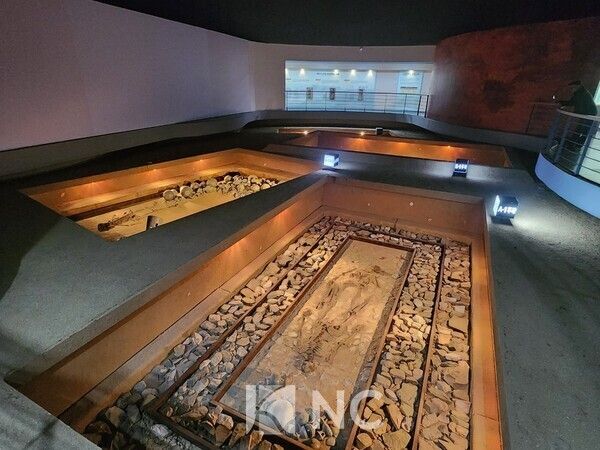
Approximately 1.7 kilometers from the museum, a dedicated tomb exhibition hall presents evidence of sacrificial burial practices. The discovery of multiple human remains within a single tomb points to a rigid hierarchical order. These burials are categorized into three types based on arrangement, including reversed head positioning and parallel placement. In some cases, multiple individuals were interred alongside pottery, suggesting that the afterlife was perceived as a continuation of earthly existence.
Nearby stands the tomb believed to belong to King Gyeongdeok, the last ruler of Jomun-guk. Recorded even in Joseon-era geography texts, the site carries enduring local reverence. Folklore recounts grave robbers being rebuked in dreams, reinforcing the perception of the tomb as a sacred space rather than a mere archaeological site.
Though ultimately absorbed into the Silla kingdom, Jomun-guk’s vast burial complexes and distinctive artifacts continue to pose questions about how cultural identity persists and transforms over time. Walking along the slopes of Geumseong Mountain, one can almost sense the quiet presence of those who lived here two millennia ago.
Reported by News Culture M.J._mj94070777@nc.press
Copyright ⓒ 뉴스컬처 무단 전재 및 재배포 금지


