WASHINGTON, March 25 (Yonhap) – The Trump administration is moving ahead with plans to raise U.S. global tariffs from 10% to 15% despite mounting concerns over inflationary pressure from surging oil prices driven by escalating tensions with Iran, White House trade adviser Peter Navarro indicated on Tuesday.
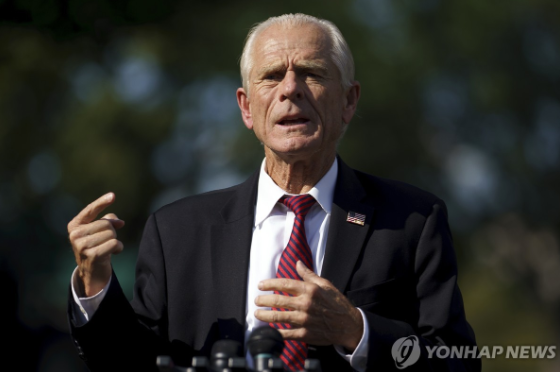
Navarro, President Donald Trump’s key architect on tariff policy, said at a Politico event in Washington that the increase in across‑the‑board tariffs is effectively underway.
“It’s already been implemented, or at least it’s in the implementation phase,” Navarro said when asked about the status of the planned hike in global tariffs, according to Politico.
His comments suggest the White House has no intention of backing away from its tariff strategy even as higher crude prices linked to the Iran conflict are feeding through to noticeably more expensive gasoline at U.S. pumps, heightening political sensitivity around any move that could further lift consumer prices.
The global tariff plan emerged after the U.S. Supreme Court struck down the administration’s use of the International Emergency Economic Powers Act (IEEPA) to levy country‑specific “reciprocal tariffs,” ruling that approach illegal. In response, Trump vowed to impose a uniform 10% tariff on all countries under Section 122 of the Trade Act and later raise that rate to 15%.
Navarro framed the court’s decision as a qualified win for the administration, arguing it effectively validated other legal bases the White House has used to impose duties.
“Even though we lost the lawsuit regarding tariffs under IEEPA, it was the best outcome because the justices acknowledged and confirmed the application of all the other laws we have been using to impose tariffs,” he said, reiterating the administration’s broader justification for aggressive tariff use.
His remarks come amid skepticism among economists and some officials over the timing of any immediate move to 15%, given the risk of compounding price pressures already building from the Middle East crisis. A higher blanket tariff would raise costs on a wide range of imported goods, potentially feeding into headline inflation at a politically sensitive moment.
Treasury Secretary Scott Besant earlier signaled that the administration was preparing to act soon. In a media interview on March 4, Besant said global tariffs were expected to rise from 10% to 15%, adding that the timing would be “probably sometime this week.”
Despite that guidance, the White House has yet to issue the executive order or presidential proclamation required to formally raise the global tariff rate to 15%. Navarro’s suggestion that the measure is in an “implementation phase” could indicate that internal preparations are largely complete and that a formal announcement may be imminent, though no specific date has been disclosed.
The prospective hike underscores Trump’s continued reliance on tariffs as a central tool of economic and foreign policy, even as critics warn that broad‑based levies function as a tax on U.S. consumers and businesses. With oil markets on edge over the Iran confrontation and gasoline prices already climbing, any additional upward shock to import costs is likely to intensify the domestic debate over the administration’s trade strategy.
Copyright ⓒ 뉴스로드 무단 전재 및 재배포 금지


