SEOUL, March 26 (AJP) -The latest U.S.-Iran war is no longer just another geopolitical flare-up. It is rapidly taking on the contours of a systemic shock — one that is already pushing oil prices higher and exposing vulnerabilities across the global economy.
President Donald Trump, who once unsettled markets with tariff threats, is now presiding over a far more destabilizing development. Damage to key oil facilities in the Middle East and disruptions in the Strait of Hormuz have revived fears of a supply shock, with consequences that extend well beyond the region.
The roots of this instability run deep. A century of unresolved tensions — from borders drawn without regard to ethnic and religious realities to the enduring fallout of Iran’s 1978 Islamic Revolution — has left the region structurally fragile.
Layered onto this are geopolitical rivalries that pit pro-U.S. and anti-U.S. blocs against one another, with energy sitting at the center of the fault line.
History offers a clear warning. The oil shocks of the 1970s reshaped the global economy, driving inflation, slowing growth and forcing structural adjustments. Today, there is a growing case that the world may be entering a third such episode.
This time, however, the impact is likely to be broader. Oil is no longer confined to power generation; it is embedded across transportation, manufacturing and petrochemicals. A disruption in supply now transmits more quickly and more widely through the global system.
Few countries are as exposed as South Korea. More than 70 percent of its crude oil imports come from the Middle East, and roughly 700 million barrels annually pass through the Strait of Hormuz. Even a temporary disruption would reverberate through the economy.
Yet supply itself is not the most immediate risk.
South Korea maintains significant strategic reserves and retains flexibility to diversify imports, including from the United States. Even in the event of a short-term disruption, the country’s supply position appears manageable.
The more pressing concern is price.
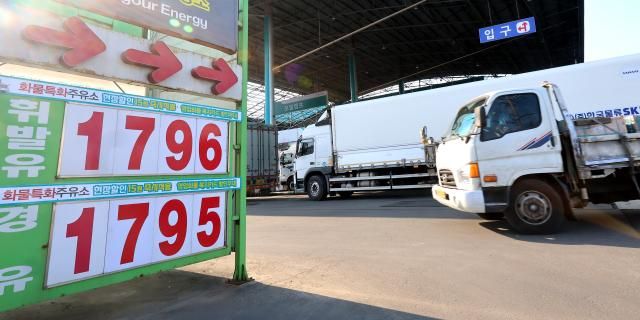
As gasoline prices surged past 2,000 won per liter, the government responded with a price cap on petroleum products. The move reflects the political and social urgency that accompanies rising fuel costs. But it also raises deeper concerns about market function and policy direction.
Price signals serve a purpose. When prices rise, demand adjusts. Suppressing that mechanism risks distorting consumption patterns and prolonging imbalances. Europe’s experience during the Russia-Ukraine war is instructive: while price caps were discussed, most countries ultimately refrained from enforcing them, recognizing the importance of preserving market dynamics.
There are also questions of fairness and efficiency. Compensating refiners for losses through public funds effectively redistributes resources — often from those who rely on public transportation to those who consume fuel. It also introduces administrative complexity, requiring the government to verify costs and determine compensation, with inevitable disputes over transparency and accuracy.
The implications extend beyond gasoline. Applying similar mechanisms to power generation could create distortions across the broader energy system, raising difficult questions about equity among different energy sources.
More fundamentally, the policy risks reversing decades of progress. South Korea liberalized its energy pricing system to enhance efficiency and transparency. Reintroducing direct government intervention, even temporarily, risks entrenching expectations that are difficult to unwind.
For that reason, the current price cap should be treated as strictly temporary — and lifted as early as conditions allow, even ahead of preset thresholds, depending on how the conflict evolves.
That does not mean the status quo is without flaws.
The current episode has drawn renewed attention to the structure of Korea’s refining sector, where four companies dominate the market and price domestic products in line with international benchmarks such as Singapore spot prices.
This practice can result in domestic prices rising in tandem with global markets, even when input costs have not increased proportionately.
Addressing such structural issues requires transparency and competition — not blunt administrative controls.
Each time energy prices spike, pressure mounts for government intervention. Yet without a clearly defined framework, such interventions risk becoming ad hoc and politically driven.
This moment presents an opportunity to set clearer boundaries. A coherent framework for energy pricing — spanning petroleum, electricity and gas — is needed to define both the role and the limits of government action.
Failing to do so would leave South Korea vulnerable not only to external shocks, but also to repeated cycles of policy overreach.
The next crisis, when it comes, should not find the system unprepared.

[Lee Hak-no, emeritus professor at Dongguk University (international trade)]
Copyright ⓒ Aju Business Daily 무단 전재 및 재배포 금지


