Fandom has long been a driving force behind the growth of Korea’s pop music industry. Today, K-pop has become a global cultural phenomenon supported by massive fan communities across the world. Yet its roots can be traced back to the mid-1990s, when idol culture first emerged alongside a unique style of fan support. At the time, colorful balloons filling concert halls and television studios became the most visible symbol of fandom. The light sticks and digital fan activities seen today can be understood as an extension of that early culture.
In the late 1990s, the Korean pop music market entered a new phase with the rise of idol groups. Popular music consumption expanded beyond simply listening to songs, gradually evolving into a participatory culture where fans actively supported their favorite artists. Fans invested time, passion, and energy into the idols they loved, and collective fan communities naturally began to take shape. The sight of fans gathering outside concert venues and broadcasting stations soon became a cultural phenomenon of its own.

One of the most distinctive fan traditions of the era was the balloon culture. Fans attended concerts and live music broadcasts holding balloons in colors representing the artists they supported. When thousands of balloons of the same color filled a venue, it created a powerful visual symbol of fandom unity. From a distance, the sea of color immediately revealed which fandom occupied each section of the audience.
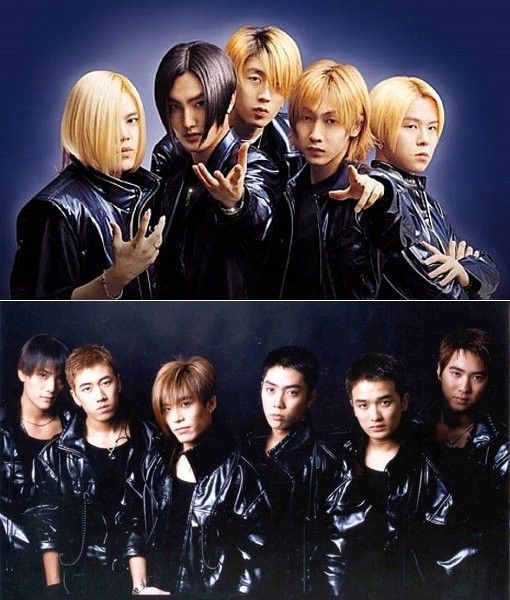
One iconic example was the white balloons of H.O.T. At concerts and music show recordings, thousands of white balloons waving in unison became one of the most memorable images of 1990s idol culture. Fans raised the balloons while chanting the group’s name, transforming the entire venue into a moving wave of white.
At the same time, another color emerged as a rival. Fans of Sechs Kies, who were active during the same period and formed a fierce rivalry with H.O.T., carried yellow balloons. At music show recordings and concerts, sections filled with white and yellow balloons stood in contrast, symbolizing the intense competition between the two fandoms.
Balloon colors carried strong symbolic meaning for fans. Each color represented the artist they supported and the community they belonged to. Fans holding the same colored balloons naturally gathered together in venues, recognizing one another and sharing the excitement of cheering as a collective.

Music program recordings were particularly important spaces where fandom culture became most visible. Fans often waited outside broadcasting stations for hours before entering. Once the recording began, they waved balloons and shouted the names of their favorite artists. Combined with the waves of color filling the audience, the cheering created an electrifying atmosphere inside the venue.
Within concert halls, cheering sections were sometimes divided according to color. The number of fans gathered in each area naturally drew comparison, quietly fueling rivalry between fandoms. Fans shouted louder and waved more balloons to show their devotion, reflecting the passionate energy of idol fandom at the time.
Conflicts over balloon colors also became part of the culture. If a color had already been established as the symbol of a particular group, fans sometimes protested when a new group attempted to adopt the same color. Protecting those colors meant protecting the identity of their favorite artists, and in the process, informal rules began to form within fandom communities.
Through these experiences, fandom gradually evolved into a cultural community. Fans supported their favorite artists not only through concerts and broadcasts but also through various collective activities. They shared magazine articles and broadcast schedules, and it was common to see fans organizing group efforts to attend programs featuring their idols.
Entertainment agencies soon recognized the power of these communities. Official fan clubs were established and designated cheering colors were assigned to strengthen fandom unity. At concerts, thousands of balloons in a single color filled arenas in spectacular scenes, creating a performance culture built jointly by artists and fans.
Girl group fandoms followed similar patterns. Fans of S.E.S., for example, also demonstrated their presence through coordinated cheering colors and chants at concerts. As more idol groups debuted, a wider variety of colors and cheering traditions appeared, turning concert venues into waves of vibrant color.
Balloon cheering also served as a visible indicator of fandom size. The number of balloons of a particular color filling a venue often reflected a group’s popularity and the unity of its supporters. Fans took pride in these moments, and the scenes they created were frequently highlighted in media coverage.
Over time, however, the tools of fandom evolved. Balloons gradually gave way to official light sticks and LED cheering devices, transforming the visual landscape of concerts. As technology advanced, cheering styles became more elaborate and visually synchronized.
Today, K-pop fandom operates on a global scale through social media platforms and online communities. Fans support artists through streaming campaigns, online voting, and worldwide digital networks. What once centered on physical venues has expanded into a global digital ecosystem.
Even so, the balloon culture of the 1990s remains one of the most memorable chapters in the history of Korean pop music. The colorful balloons that once filled concert halls represented a unique cultural moment created by the passion of early fans.
The sight of fans holding different colored balloons while cheering toward the same stage symbolized the very beginning of the K-pop industry. The global fandom culture seen today has grown upon the enthusiasm of those fans who once turned concert halls into oceans of color.
Reported by News Culture M.J._mj94070777@nc.press
Copyright ⓒ 뉴스컬처 무단 전재 및 재배포 금지


