The Korean government has unveiled a new tourism policy aimed at ushering in an era of 30 million foreign visitors.
At the National Tourism Strategy Meeting held on Feb. 25, the government announced a plan titled “A Major Transformation of Inbound Tourism and a Leap Forward for Regional Tourism.” The initiative positions tourism as a key pillar of national economic growth. Riding the global expansion of K-culture and the recovery of international travel demand, the government hopes to significantly expand the scale of Korea’s tourism industry.
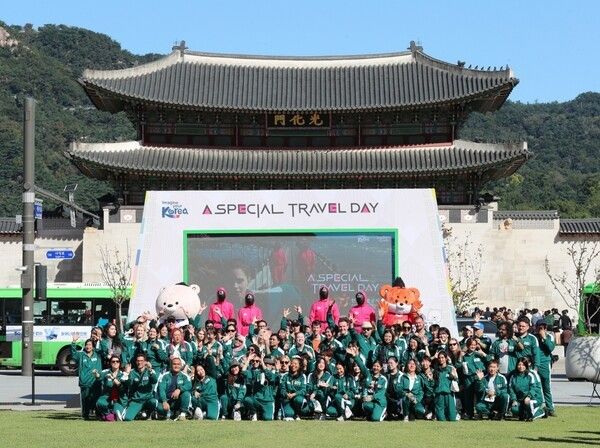
The policy focuses on two major goals: boosting inbound tourism and expanding regional travel. Measures include easing visa regulations, expanding international routes at regional airports, improving cruise tourism systems, and launching regional travel support programs. The direction is clear: lower entry barriers for foreign visitors and encourage travel beyond Seoul. Yet from the perspective of the travel industry, the policy appears far more focused on increasing visitor numbers than on fundamentally reshaping the tourism system itself.
■ A Clear Goal but a Strategy Focused on Numbers
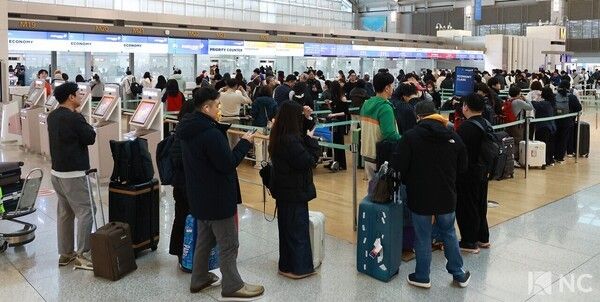
The government plans to introduce a visa-free pilot program for Indonesian group tourists and expand five-year multiple-entry visas for citizens of 11 countries in Southeast Asia and China. It is also considering issuing ten-year multiple-entry visas to residents of major cities. Immigration procedures will be simplified by expanding automated entry systems and increasing the number of inspection counters.
Such measures can certainly increase visitor arrivals. Many Asian tourism destinations have boosted tourist inflows simply by relaxing visa requirements. But more visitors do not automatically mean a stronger tourism industry.
Korea’s tourism sector has long faced structural challenges. Foreign visitors tend to stay for relatively short periods, travel routes remain heavily concentrated in the Seoul metropolitan area, and per-capita tourist spending is not particularly high compared with other major tourism destinations. Unless these structural issues change, a rise in visitor numbers alone will not generate the economic impact policymakers expect.
■ Expanding Regional Airports May Not Be Enough
Another core pillar of the policy is to develop regional airports as hubs for inbound tourism. The government plans to expand international routes at regional airports, reduce airport facility charges, increase available flight slots, and strengthen transportation networks linking Incheon International Airport with regional cities. The intention is to distribute tourist flows more evenly across the country.
However, real travel patterns suggest the strategy may face significant limitations. Tourists do not choose destinations based on airport access alone. Accessibility must be matched by compelling experiences.
Many foreign visitors to Korea still structure their trips around Seoul, often visiting regional areas only as short day trips. In this context, expanding airport routes alone will not automatically bring tourists to regional destinations. What matters more is creating strong local tourism content that encourages visitors to stay longer outside the capital region. Without such attractions, expanded routes could end up functioning merely as short-term incentive policies for airlines.
■ Half-Price Travel Programs May Offer Only Temporary Effects
Another initiative scheduled for April is the “half-price travel” pilot program. Visitors traveling to regions facing population decline will receive refunds covering half of their travel expenses. The policy clearly aims to redirect tourism demand toward regional areas.
Yet whether such incentives can create sustained tourism demand remains uncertain. Similar programs implemented by local governments in the past often produced temporary spikes in visitor numbers during promotional periods, followed by sharp declines once the programs ended.
An increase in tourist numbers during short campaigns is very different from building a sustainable regional tourism ecosystem.

■ The Future of Tourism Lies in Experience-Based Content
One promising aspect of the new policy is its emphasis on experiential tourism content. The government plans to expand tourism products centered on everyday cultural experiences such as K-food, K-beauty, and hiking culture.
Global tourism trends are shifting rapidly from landmark-based sightseeing toward immersive local experiences. Today’s travelers increasingly value time spent within local culture rather than simply visiting famous attractions. Given the global influence of K-culture, Korea has considerable potential to transform these cultural strengths into tourism products.
However, turning this vision into a functioning industry will require both regional content development and active participation from private tourism businesses. If these policies remain confined to government documents without evolving into real market products, experiential tourism could remain little more than a slogan.
The policy package also includes measures aimed at restoring trust in the tourism market. Authorities will strengthen penalties against businesses that fail to display prices or violate posted prices. Regulations will address unilateral accommodation cancellations, while taxi overcharging will face stricter sanctions, including immediate license suspension. These measures may appear basic, but they are essential foundations for improving tourism competitiveness. In many cases, the quality of the travel experience matters more than promotional campaigns.

■ Tourism Needs a Strategy Built on Quality
Korea’s tourism industry is clearly facing a moment of opportunity. The global influence of K-pop, television dramas, and Korean cuisine has generated growing international interest in visiting the country.
But if tourism policy remains focused primarily on increasing visitor numbers, it will be difficult to translate that opportunity into meaningful structural change.
A true tourism powerhouse is not defined simply by the number of visitors it attracts. The length of visitor stays, the scale of tourism spending, balanced regional development, and the overall quality of the travel experience must grow together.
The goal of 30 million foreign visitors is ultimately just a symbolic figure. The real challenge facing Korea is deciding what kind of tourism industry it wants to build behind that number.
Reported by News Culture M.J._mj94070777@nc.press
Copyright ⓒ 뉴스컬처 무단 전재 및 재배포 금지


