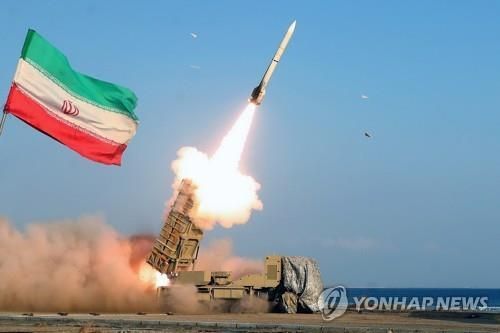
SEOUL, Feb 28 (Yonhap) – The U.S. and Israel’s decision to abandon talks and move to a military option against Iran is stoking anxiety over a potential shock to the global economy and security order, with markets focused on the risk of a supply squeeze and surging volatility in financial assets.
For small, trade‑dependent economies such as South Korea, which rely heavily on imported energy and overseas demand for exports, the key concern is whether the conflict will drive up crude prices and trigger renewed turbulence in currency and equity markets.
The worst‑case scenario for investors is a complete closure of the Strait of Hormuz, the world’s most important chokepoint for seaborne oil shipments and the main export route for producers including Iran, Saudi Arabia, Iraq and the United Arab Emirates. Between 20% and 30% of global seaborne crude flows through the narrow waterway.
Global investment banks and economic think‑tanks, including JPMorgan, have previously estimated that a full blockade of Hormuz combined with an escalation in military confrontation could push international oil prices above $120–$130 a barrel, more than 70% higher than the current level of around $70.
Such a spike would immediately squeeze energy‑importing nations, raising costs for oil refiners, petrochemical producers, airlines and shipping firms, and feeding through to broader inflation. A sustained rise in prices could in turn dampen expectations for interest‑rate cuts, weigh on consumption and lift corporate funding costs, creating a feedback loop of weaker growth and tighter financial conditions.
A sharp escalation could also unleash a classic “flight to safety” in global markets, driving investors into havens such as the U.S. dollar and gold. That would likely push the won sharply lower against the dollar and put renewed pressure on South Korea’s stock market, which has repeatedly suffered foreign outflows whenever tensions in the Middle East have flared.
Seoul’s markets reacted nervously during last June’s “12‑Day War,” when U.S. and Israeli strikes on Iran briefly halted and reversed an upward trend in local share prices and the Korean currency. Similar patterns are expected if the current operation broadens or drags on.
Beyond immediate price and market moves, analysts are increasingly focused on the geopolitical architecture underpinning the confrontation. Iran, the target of the latest strikes, has deepened military and economic cooperation with Russia and China in recent years, raising fears that the conflict could harden into a broader contest between a U.S.‑led West and an opposing China‑Russia‑Iran axis.
The most destabilising scenario would be open, direct or indirect support from Moscow and Beijing for Tehran in response to U.S. and Israeli actions, potentially transforming a regional clash into a wider struggle for global influence. In such a bloc‑to‑bloc confrontation, supply chains could fragment along geopolitical lines, embedding long‑term uncertainty into the outlook for export‑oriented economies.
For now, however, most observers judge that Russia and China are unlikely to intervene militarily. Russia’s capacity to deploy additional forces is constrained by its ongoing war in Ukraine, while China lacks a clear strategic incentive to be drawn into a confrontation that would sharply heighten tensions with Washington. Both countries also remained largely passive when the United States moved against Venezuela and President Nicolas Maduro.
U.S. and Israeli reports suggest the current joint operation is initially planned to last about four days. If Washington and Tel Aviv avoid further escalation and Iran’s retaliation remains limited, some analysts believe the economic fallout could resemble last year’s brief conflict rather than a prolonged crisis.
Political calculations in Washington may also act as a brake. With U.S. midterm elections looming in November, there is skepticism that President Donald Trump would choose a course of action that risks inflicting significant damage on the domestic economy through a sustained oil shock or deep market turmoil.
Copyright ⓒ 뉴스로드 무단 전재 및 재배포 금지


