As high-profile security incidents continue to recur, the public conversation is shifting from the question of whether systems can block intrusions to whether organizations can anticipate risk, prevent incidents, and sustain security operations over time. Repeated breaches have exposed not only technical weaknesses, but also gaps in day-to-day governance—how security is deployed, maintained, and treated as an operational responsibility rather than a one-time installation.
In this interview, Kim Jung-pil, CEO of XCURENET, argues that effective security must extend beyond post-incident response. He describes the company’s focus on field-ready AI, low false-positive performance, and long-term maintenance as core elements of what he calls the “last line of defense.”
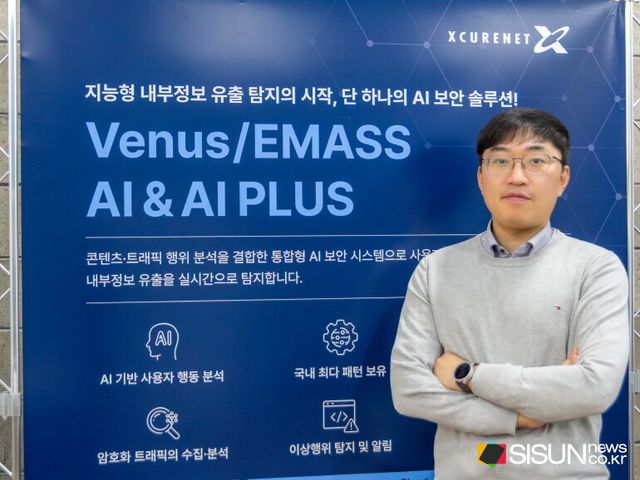
Q. How would you describe XCURENET and its core mission today?
A. XCURENET is a solution company focused on AI-based security and disaster-safety technologies that detect and respond to risks before incidents occur. Beyond prevention, we also aim to provide reliable foundations for post-incident analysis—so organizations can understand what happened, why it happened, and what should change afterward.
Since our founding in 1999, we have stayed in the security domain. We’ve focused not only on blocking attacks coming from outside, but also on preventing sensitive information and risk factors from leaking outward from within. From the perspective of companies and institutions, that internal control layer is often the final barrier—what I would describe as the last line of defense.
Q. How has your management philosophy evolved as the company has grown?
A. In the early days, technical sophistication itself felt like the most important objective. The goal was to build more precise, more advanced capabilities—almost at any cost.
Over time, that view changed. Experience taught us that even strong technology can fail if it doesn’t work reliably in the field, or if it can’t be maintained after deployment. Today, our philosophy extends beyond development to include how a solution behaves inside a customer’s operating environment, how it is sustained, and what kind of responsibility it carries once it becomes part of daily operations.

Q. What are the main business areas XCURENET is currently focused on?
A. We center our work on AI-driven security and disaster-safety solutions deployed across public institutions and industrial sites. We collect and analyze a wide range of signals—network data, as well as voice and video—because real incidents often leave traces across multiple channels.
Our focus is early anomaly detection and risk prediction. But we also believe security must be able to explain context. It’s not enough to say, “something happened.” Systems should help operators understand whether a pattern is normal operational activity or a sign of escalating risk—and why it should be treated as dangerous.
Q. What roles do your key solutions—EMASS AI, EMASS AI PLUS, and LARS—play?
A. EMASS AI focuses on visualizing on-site data and analyzing patterns that are meaningful from a security perspective. It helps operators see what is happening and identify signals that would otherwise be buried in volume and complexity.
EMASS AI PLUS is designed around full packet collection and analysis. By monitoring all flows at the network level, the goal is to reduce blind spots—especially in the internal layer where data can move outward through channels that may appear legitimate at first glance.
LARS aggregates and analyzes voice and recorded data generated during disasters or incidents. It is built to support real decision-making in the field by providing integrated analysis that can be referenced quickly—so response teams can make more informed judgments under pressure.

Q. What do you see as XCURENET’s strongest point of differentiation?
A. Our ability to design AI models tailored to real operating environments, maintain low false-positive rates, and carry solutions through to sustained operation. Security environments generate enormous volumes of data every day. In many cases, traditional rule-based or signature-based approaches struggle to distinguish normal business processes from anomalous behavior.
We use AI to filter data that human operators cannot realistically review at scale, and to narrow down the areas that require closer scrutiny. The point is not to replace people, but to help them focus—by reducing noise and surfacing the most meaningful signals.
Q. Where do you think existing security solutions have fallen short?
A. Many conventional solutions stop at notifying users that an event has occurred. But in practice, operators need more than an alert. They need to understand whether an event is part of normal operations or whether it indicates intentional data leakage or a developing incident.
One of the most difficult cases is internal misuse by people who already have legitimate access. If those behaviors are not detected, the final stage of security is effectively left empty—because the activity can look “authorized” on paper while being harmful in reality. That gap is where we believe many serious incidents begin.

Q. What is the most pressing issue in the current security and disaster-safety market?
A. Many sites still rely heavily on post-incident response systems. Technologies for prediction and prevention have advanced, but operational attention remains concentrated on external threats such as intrusions and ransomware.
By contrast, monitoring for internal data leakage is often weaker. In many cases, sensitive information is exfiltrated quietly and continuously over extended periods. If organizations underestimate that risk—or treat internal monitoring as secondary—those patterns can accumulate into major breaches, including large-scale personal data exposure.
Q. Governments are increasingly strengthening accountability around security incidents. How do you view this trend?
A. Speaking carefully, major incidents can become a turning point for security companies. But more importantly, these moments should push organizations to treat security as a governance issue—one tied to budgets, operational responsibility, and decision-making, not just technology procurement.
In that context, we are working more proactively to propose security frameworks that align with real conditions on the ground—systems that can be deployed, maintained, and actually used over time, rather than appearing strong only on paper.
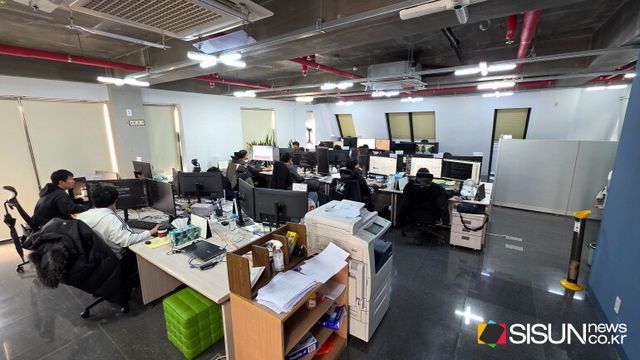
Q. You often emphasize trust. How does that translate into organizational culture?
A. Like any company, we were not perfect from the beginning. There were times when security could be pushed down the priority list because development speed or convenience felt more urgent.
Today, we treat security principles as a baseline across the development process. We do not accept weakening security simply because it seems to improve productivity. Security is not optional; it is a prerequisite. If a security company cannot hold itself to that standard internally, it is difficult to expect customers to trust its systems.
Q. You’ve mentioned that even everyday practices like greetings matter internally. How does that relate to security?
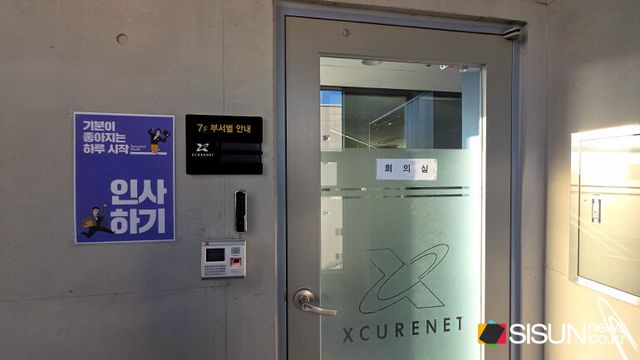
A. Even in smaller organizations, not knowing who is who can itself become a security vulnerability. The most dangerous situation is when an outsider can enter and be treated as an insider without question.
By encouraging people to greet one another, we ensure a basic level of recognition—knowing who belongs to which team and who does not. To us, greetings are not just etiquette; they are a simple but meaningful mechanism for identifying internal members and reducing avoidable blind spots.
Q. Why do you place such emphasis on maintenance and customer support?
A. Security is not something you build once and leave untouched. If maintenance is weak, gaps inevitably form—regardless of how well a solution was designed.
Security must be sustained through continuous refinement and adaptation to each customer’s environment, including customization when necessary. We see that as part of completing security, not an optional add-on. Many of our customers maintain long-term support relationships for that reason: security needs continuity, not one-time delivery.
Q. What is XCURENET’s long-term goal?
A. Our goal is to become a trusted standard in AI-based safety and security—recognized not only for technology, but also for operational capability. We want to be known as a company that runs systems reliably over long periods in real environments.

Domestically, we aim to establish ourselves as a leading provider of field-oriented AI security solutions. Internationally, we hope to demonstrate that Korean-developed disaster and security AI technologies can compete globally—by proving performance, reliability, and practical value in the places where security matters most.
Copyright ⓒ 시선뉴스 무단 전재 및 재배포 금지