The Ministry of Climate, Energy and Environment’s National Institute of Biological Resources has published a report titled “27 Years of Changes and Conservation Strategies for Korea’s Wintering Waterbirds,” compiling long-term ecological changes observed in Korea’s winter migratory birds.
The report is the first nationwide integrated analysis based on the “Winter Bird Synchronous Census,” conducted annually since 1999 across major rivers, lakes, estuaries, and farmlands. It quantitatively assesses population fluctuations, distribution characteristics, and habitat transition trends of 43 species across 13 taxonomic groups, including geese, swans, and ducks.
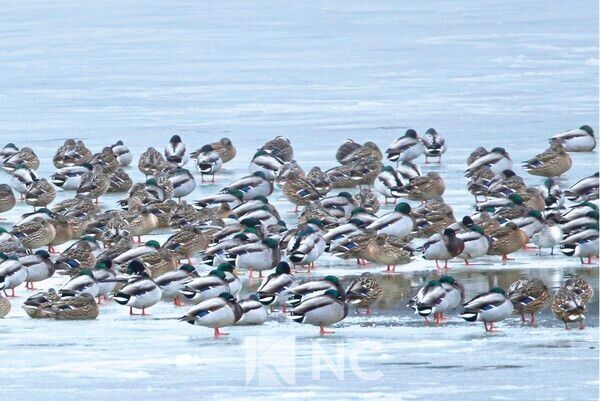
According to the analysis, environmental changes such as shifts in rice-farming methods, river maintenance, and nationwide wetland loss have contributed to the decline of dabbling duck species. Mallards dropped from approximately 340,000 individuals in 1999 to 140,000 in 2025, and spot-billed ducks decreased from 100,000 to 90,000 during the same period. In contrast, species such as common coots and great cormorants significantly increased as they expanded their habitats to urban wetlands and large lakes and reservoirs.
The report interprets these trends in connection with large-scale habitat transformations and long-term environmental factors such as climate change, offering foundational data for a nationwide understanding of winter bird ecology. The report is publicly available on the National Institute of Biological Resources website.
Yu Ho, director of the National Institute of Biological Resources, stated, “This report holds high value across various policy and academic fields, including highly pathogenic avian influenza response, environmental impact assessment, and international waterbird population estimation,” adding, “We will continue building the foundation for biodiversity conservation through consistent data accumulation and detailed analysis.”
Reported by News Culture M.J._mj94070777@nc.press
Copyright ⓒ 뉴스컬처 무단 전재 및 재배포 금지


