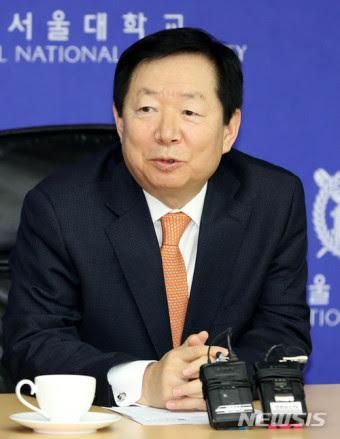
[Former Seoul National University President Sung Nak-in]
South Korea’s path to democracy has been anything but smooth. From 1948 to 1987, the country went through nine constitutions. The current constitutional order, established in 1987, has endured longer than any previous system. The public’s resolute response to the declaration of martial law demonstrated the resilience of Korea’s democratic institutions, ultimately leading to its repeal.
What followed was the impeachment and removal of President Yoon—an extraordinary moment in the nation’s constitutional history. The swift action taken by the National Assembly, coupled with widespread public resistance, underscored the power of collective civic action in defending democratic norms.
This episode stood in stark contrast to President Yoon’s repeated emphasis on “freedom,” a central theme of his inauguration speech in 2022. The declaration of martial law exposed a fundamental contradiction between rhetoric and action, raising serious questions about the failure of institutional checks on presidential power.
In the aftermath, Lee Jae Myung was elected president on June 4, 2025, campaigning on the principle of “people’s sovereignty.” Legal accountability for those involved in the martial law episode is now being pursued through four separate special investigations. These probes have already resulted in the unprecedented arrest of a former president and a first lady.
At the same time, the investigations themselves have drawn criticism, with concerns raised over possible bias and excessive prosecutorial reach. The controversy has reignited debate over the appropriate scope of special prosecutors and the delicate balance of power within the constitutional system.
Further concerns have emerged over judicial independence, as proposals for new legislation risk undermining the separation of powers. The ongoing political turbulence serves as a reminder that democratic consolidation requires restraint as much as resolve.
As South Korea moves forward, it must resist the temptation to remain trapped in cycles of retribution. The task ahead is to reconcile freedom with democratic accountability, and to channel the lessons of this crisis toward building a more united, stable and just republic.
Author's Background
▷ Ph.D. in Law from Paris 2 University ▷ Former President of the Korean Public Law Association ▷ Former President of the Korean Association of Law Professors ▷ Former Chairman of the National Assembly Public Officials Ethics Committee ▷ Chairman of the East Asian Research Universities Association ▷ 26th President of Seoul National University ▷ Honorary Professor at Seoul National University
* This article, published by Aju Business Daily, was translated by AI and edited by AJP.
Copyright ⓒ Aju Business Daily 무단 전재 및 재배포 금지