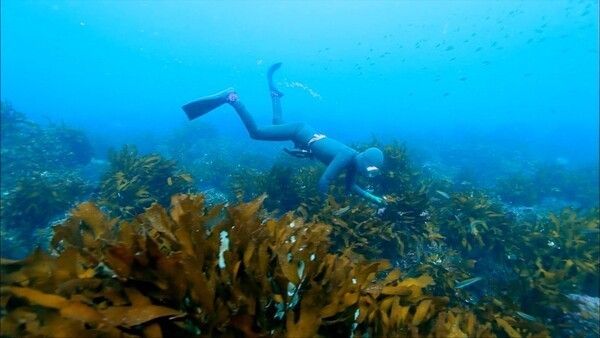
[News Culture] The sea off Jeju still looks much the same from the shore. Beneath the surface, almost everything has changed.
Abalone have become scarce. Familiar seaweed beds are thinning out. Warmer currents are bringing unfamiliar marine life closer to the island. At the same time, the women who have worked these waters for generations are growing older, with fewer divers left to follow them into the sea.
KBS1’s DOCU INSIGHT revisits that transformation in “Jomnyeo’s Badang: A 16-Year Record,” airing Aug. 6 at 10 p.m. The documentary brings together footage from 2010 and 2026 to show how environmental decline, demographic change and economic pressure have reshaped one of Jeju’s most enduring ways of life.
“Jomnyeo” is the Jeju word for female divers, while “badang” means sea. The program is not simply a portrait of the haenyeo. It is a record of what happens when an entire culture must adapt to an ocean that no longer behaves as it once did.
Fewer Divers, Quieter Shores

Jeju once had more than 10,000 haenyeo. Today, only a few thousand remain, and the decline is visible in fishing villages across the island.
In Beophwan-dong, the local cooperative has lost dozens of divers. Similar losses elsewhere have left communities smaller, older and increasingly concerned about whether the knowledge passed down through generations can survive.
The disappearance of each diver carries a wider cost. Haenyeo culture depends not only on individual skill, but also on shared routines, collective judgment and the trust built among women who enter dangerous waters together.
Still, the line has not been completely broken.
A small number of younger women have moved to Jeju, learned the work and joined local cooperatives. Some have already reached sanggun level, the highest rank among haenyeo. Their presence has brought new energy to communities that had begun to fear there would be no one left to take their place.
The sound of sumbisori, the sharp whistle a diver makes after resurfacing, may be fading along Jeju’s coast. It has not disappeared.
When the Catch Disappears
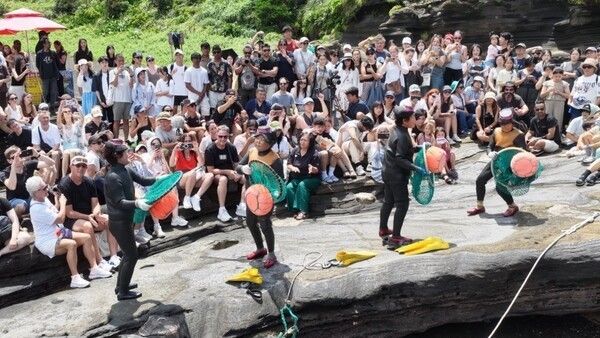
The greater threat may be the sea itself.
Veteran divers remember a time when abalone could be found without an exhausting search. Now, they may return with little or nothing. Conch harvesting has become more reliable only in carefully managed areas, while sea urchins are often too poorly developed to sell.
Even the seaweed that once supplemented a diver’s income is becoming harder to find. Gamtae and hijiki, once part of the rhythm of seasonal work, are no longer dependable resources.
These losses have altered the economics of diving. A difficult profession that once offered a measure of stability has become increasingly unpredictable.
Rising water temperatures are also changing what the divers encounter below. New species are appearing, old habitats are shifting and underwater conditions have become harder to read. For women whose safety depends on intimate knowledge of the seabed, that uncertainty adds another layer of risk to every dive.
The contrast with 2010 is stark. The earlier footage captures a sea that was physically demanding but still productive. By 2026, the work has become less about harvesting abundance and more about enduring decline.
Choosing the Water Anyway
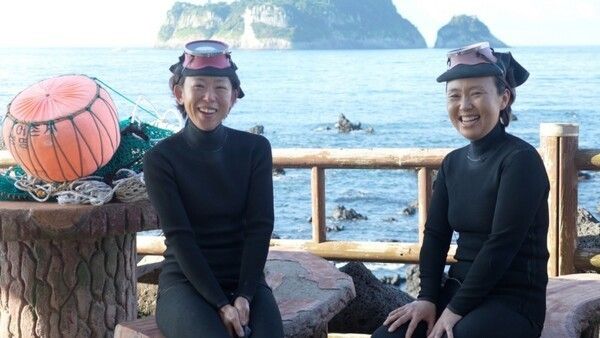
The younger women entering the profession are not inheriting the sea their predecessors knew.
They understand that the catches are smaller, the income less secure and the environmental pressures more severe. Yet they still choose to dive.
For some, the appeal lies in a life shaped by nature rather than the clock. For others, it is the sense of belonging found within the haenyeo community. Their decision is not driven by nostalgia. It is an attempt to carry the tradition forward under conditions that demand an entirely different kind of resilience.
That is where the documentary finds its central tension. The future of the haenyeo will not look like their past. Survival may depend not on preserving every custom unchanged, but on finding new ways to remain connected to the sea while accepting that the sea itself has already moved on.
“Jomnyeo’s Badang: A 16-Year Record” captures what Jeju has lost over the past 16 years. More importantly, it asks what may still be saved before the sumbisori grows quieter still.
Reported by News Culture M.J._mj94070777@nc.press
Copyright ⓒ 뉴스컬처 무단 전재 및 재배포 금지
본 콘텐츠는 뉴스픽 파트너스에서 공유된 콘텐츠입니다.


