Translated from GameY(게임와이), published June 26, 2026. By reporter Lee Jae-deok.
Leaf through NCSoft's "NC ESG Playbook 2025" and one page stops you cold. Right in the middle of the Social chapter — the one about diversity and inclusion — sits Cinder City, an open-world tactical shooter in which you sweep through a collapsed Seoul, gun in hand, listed as a "Case." Branding a ruined Gangnam under the banner of "diversity" reads, depending on your angle, as either a gamble or an opportunity.

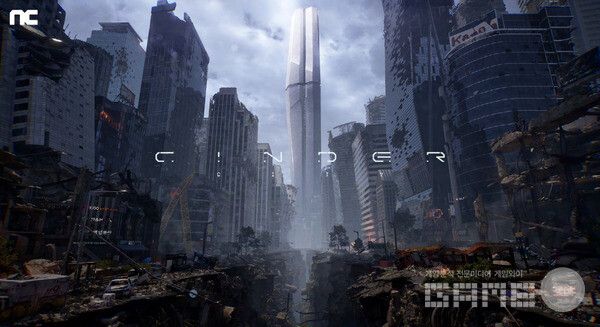
Start with the opportunity. For Cinder City, NC photographed and scanned the actual terrain and architecture of Seoul districts like Samseong-dong and Nonhyeon-dong on location, then reinterpreted them as a future city. It's an attempt to elevate a distinctly Korean urban backdrop — something rarely seen in the shooter genre — into a point of differentiation that can immerse global players even in unfamiliar surroundings.
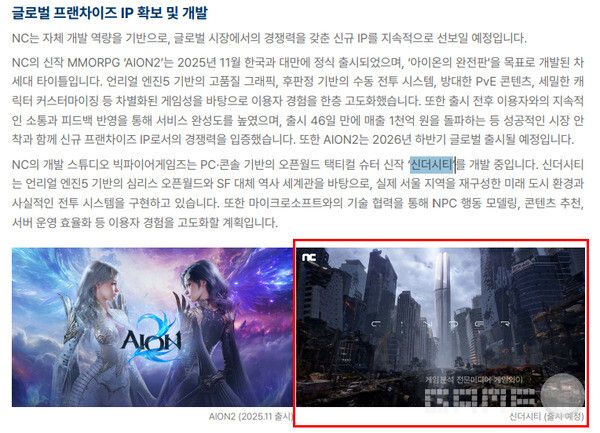
There's a reasonable logic to filing this under "building a gameplay environment that embraces diversity." The same chapter places it alongside Mistbound, which developed identification colors and a dedicated font for colorblind players, and the localization of Lineage 2M tailored to Southeast Asian players' conditions. Accessibility, localization, and foregrounding a non-Western setting can all be read as one thread: an effort to widen the global player base. For an NC that has long leaned on MMORPGs and Lineage, Cinder City is also a clear growth card in its bid to broaden both genre and IP.
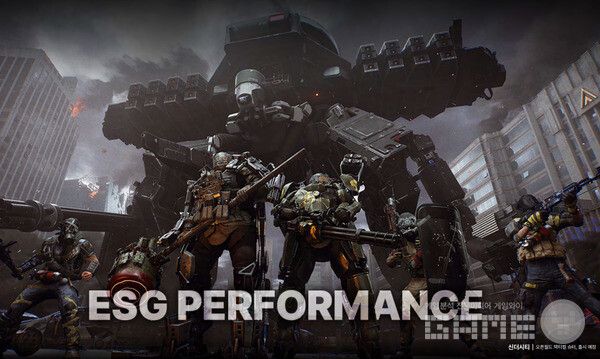
Now the gamble. NC has never once landed a successful global shooter. The Western live-service shooter market is brutal terrain, where even big-budget titles backed by proven IP have vanished without a sound shortly after launch. Choosing a Focus Group Test (FGT) with North American shooter players as its proving ground is a straight-ahead approach mindful of the home turf's standards — but it's equally a sign of just how high the stakes are. Keywords like a technical partnership with Microsoft and an Unreal Engine 5 seamless open world are dazzling, yet there's still no signal that the essence of a shooter — the feel of the gunplay — and its live-service staying power have been validated.
Go one step deeper and the telltale vocabulary of an ESG report comes into view. Cinder City shows up not only under "embracing diversity" but again as a case under the Governance heading — "responsible use of reality-based 3D data assets (portrait rights and personal information)" — and yet again as a growth engine for "global challenge." A single commercial new release is being marshaled simultaneously into three separate narratives: diversity, responsibility, and going global.
Recasting the ordinary events of product development in social and ethical language and displaying them as "achievements" is a familiar grammar of ESG reporting. The problem is that it blurs the line between "what was newly done well" and "what simply had to be done in the first place." It's also true that gameplay quality — and the long-running controversy over NC's monetization model — gets pushed outside the report's field of view. At this point the "diversity" nameplate begs the question: is it the result of genuine inclusion, or just well-crafted marketing language?
Cinder City has no announced release date yet. The visual of a ruined Seoul is striking, and the technical ambition of transplanting an entire city is unmistakable. Whether it becomes the "opportunity" that changes NC's makeup, or ends as a "gamble" in an unfamiliar genre, will ultimately be decided not on the display shelf of a report but in players' hands after launch.
One thing, though, can be said even now: the name "diversity" can be a spotlight that makes a game shine, or a curtain that obscures the judgment of it. What Cinder City must prove first isn't the graphics of a fallen Seoul — it's substance worthy of the name.
Copyright ⓒ 게임와이 무단 전재 및 재배포 금지
본 콘텐츠는 뉴스픽 파트너스에서 공유된 콘텐츠입니다.


