In traditional Korean society, gut rituals were performed not only to pray for communal well-being but also to heal emotional wounds and console unsettled spirits. Though often dismissed as superstition during the modernization era, the music, dance, oral storytelling, and ritual structure preserved within these ceremonies remain deeply layered cultural archives containing the emotional history of the Korean people.
From June 4 to 6, the National Namdo Gugak Center will host the 2026 Gut Music Festival at Jinak Hall and Cheolma Square in Jindo-eup. Centered on the theme of Afterlife Wedding Rituals, the festival explores three regional ceremonial traditions that honor and guide the spirits of the deceased.
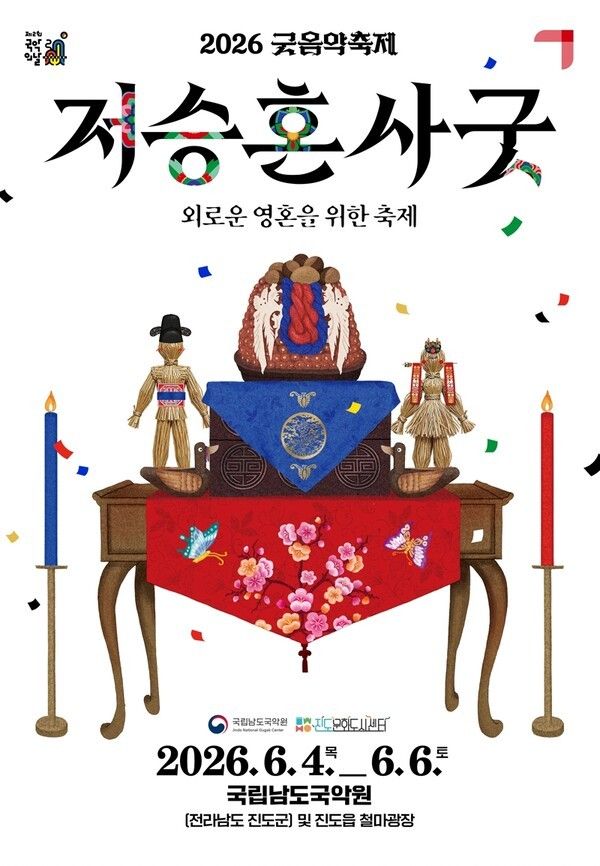
At the heart of the festival are performances by intangible heritage groups representing different Korean regions and ritual traditions. On June 4 at 7 p.m., Jindo's Jeoseung Honsagut will be performed, a cleansing rite intended to console unmarried spirits who died at sea or passed away before marriage. The ceremony symbolically unites the spirits in death so they may release unresolved sorrow and depart peacefully from this world.
On June 5 at 7 p.m., the East Coast Mangja Honryegut follows with a more explosive atmosphere. Decorated with elaborate paper flowers, the ritual combines the powerful sounds of kkwaenggwari, janggu, jing, and taepyeongso to create a forceful and emotionally charged form of consolation.
The festival concludes on June 6 at 3 p.m. with Jeju's Sahongut, a large-scale ritual traditionally lasting seven to eight days for the benefit of the deceased family. In this ceremony, both families gather to conduct a solemn wedding ritual for the dead, formally connecting relationships beyond death itself.
Additional programs throughout the festival include academic conferences examining gut rituals from archaeological and anthropological perspectives, artist talks, and interactive experiences such as tarot and traditional fortune readings.
The festival's closing collaborative event, Good Day, will take place at Cheolma Square in Jindo-eup beginning at 4 p.m. on the final day. Reinterpreting traditional rituals through a contemporary lens, the event combines LED performances, food trucks, and participatory cultural programming in an open public setting.
The festival ultimately positions gut not simply as ritual practice but as an artistic system preserving rhythms, gestures, oral narratives, and collective memory. Passed down through voice and movement rather than written records, these ceremonies contain traces of ordinary lives, grief, separation, and communal healing accumulated across generations.
By documenting and preserving the distinctive rhythms, dances, and ceremonial structures of these traditions, the festival also expands the boundaries of Korean performing arts while protecting an important layer of cultural identity.
Visitors encountering the festival will witness a worldview that does not approach death solely through fear or separation, but through ritualized care for those who have departed. The performances reveal how earlier generations transformed grief into communal art, turning sorrow into rhythm, movement, and spiritual consolation.
Reported by News Culture M.J._mj94070777@nc.press
Copyright ⓒ 뉴스컬처 무단 전재 및 재배포 금지
본 콘텐츠는 뉴스픽 파트너스에서 공유된 콘텐츠입니다.


