Along Korea’s southern coast, few places leave as deep and lasting an impression as Taegjongdae. Here, the sea, cliffs, forest paths, and open sky blend into a single sweeping panorama. More than a tourist destination, it feels like a natural observatory carved by time and tide.
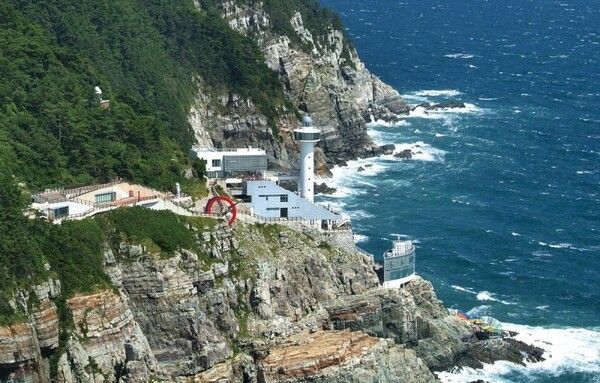
Located at the southern tip of Yeongdo in Busan, Taegjongdae sits where the city gradually dissolves into the open sea. As visitors step away from the urban rhythm and follow the road toward the shoreline, their gaze naturally drifts to the horizon. The towering cliffs meeting the vast ocean reveal why the site has long been recognized as one of Busan’s most celebrated natural landmarks.
The name Taegjongdae itself carries echoes of history. According to legend, King Taejong Muyeol of the Silla Kingdom once visited this coastal promontory and practiced archery while overlooking the sea. The view that unfolded before the king centuries ago is likely not so different from what visitors see today. Time may pass, but the grandeur of nature here remains remarkably constant.
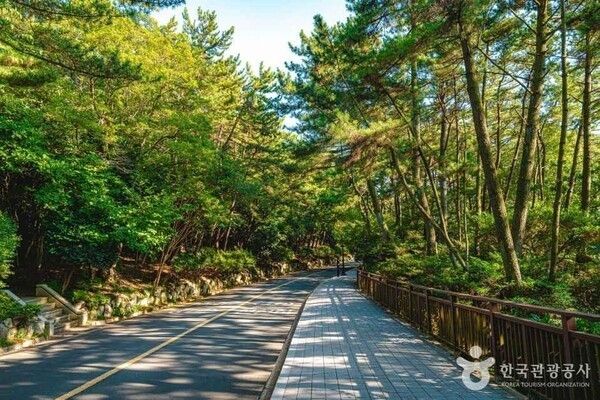
One of Taegjongdae’s most distinctive qualities is that it offers more than simply a scenic view. It invites visitors to experience what might best be described as a “landscape in motion.” Trails tracing the coastline move between forest and sea, continually shifting the traveler’s perspective. Sunlight filtering through dense pine groves and the cool sea breeze drifting inland create a sensory experience rarely found within the city.
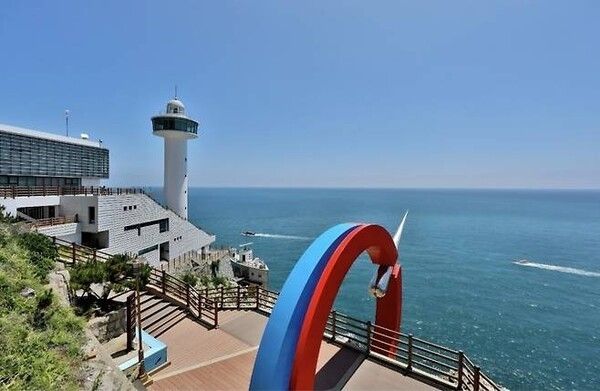
Along these winding paths, visitors encounter several lookout points. The most iconic among them is Yeongdo Lighthouse. Perched on the edge of a dramatic cliff, the white lighthouse overlooks an immense stretch of ocean. On clear days, the distant outline of Tsushima Island can sometimes be seen faintly on the horizon.
The waves surging toward the cliffs and breaking against the rocks form the rhythm of Taegjongdae’s landscape. The rugged shoreline, shaped by centuries of wind and tide, resembles a natural sculpture. It is also why the area is recognized as one of the notable geological sites overlooking the Korea Strait.
Yet the sea is only part of Taegjongdae’s story. The surrounding forest carries an equally strong presence. Rows of coastal pine trees, hardened by decades of ocean winds, line the walking trails like silent guardians protecting the cliffs.
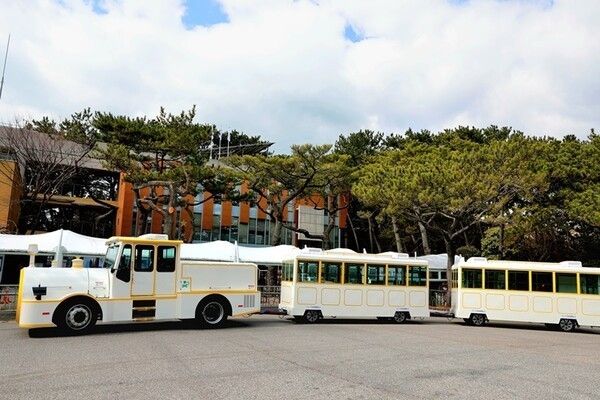
For those who prefer a slower and easier journey, Taegjongdae offers another way to explore. The Danubi Train, a sightseeing shuttle that circulates within the park, connects major viewpoints throughout the area. Watching the scenery unfold gradually from the train provides a different but equally memorable perspective.
As the train glides along its route, the windows frame a sequence of sea, forest, cliffs, and lighthouse. The ride itself feels almost cinematic, as if passing through scenes from a nature documentary.
Taegjongdae reveals a different character with each season. In spring, fresh green leaves brighten the forest paths. Summer brings vivid contrasts between the deep blue sea and lush pine groves. Autumn softens the landscape with gentle sunlight filtering through the trees, while winter’s clear air sharpens the color of the ocean.
At sunset, the scenery transforms once again. The fading light spreads across the sea, tinting the cliffs and waves with shades of red and gold. In those quiet moments, Taegjongdae resembles an immense living painting, drawing photographers who wait patiently for the perfect frame.
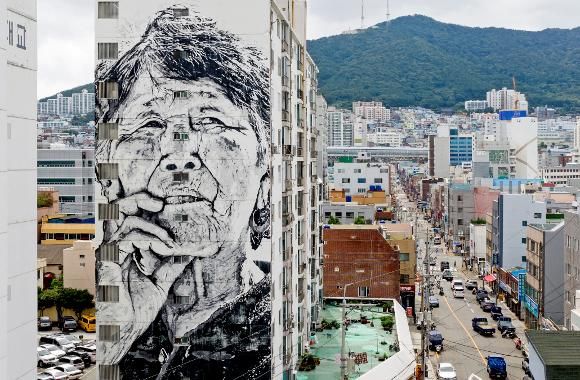
A visit to Taegjongdae often leads travelers further into the surrounding district of Yeongdo. The area still carries traces of Busan’s maritime past and everyday harbor life. Nearby, Kangkangi Art Village offers another layer to the journey, where industrial heritage and artistic creativity coexist in a vibrant cultural space.
In many ways, Taegjongdae is more than a scenic attraction. It is a place where nature, history, and local culture quietly intersect. The emotion of gazing out across the sea, the calm rhythm of walking along forest trails, and the stories embedded in a port city’s landscape come together to shape a deeper travel experience.
Perhaps that is why Taegjongdae is so often described as a place every visitor to Busan should see. Away from the glitter of the city, it offers a rare opportunity to encounter nature in its most elemental form.
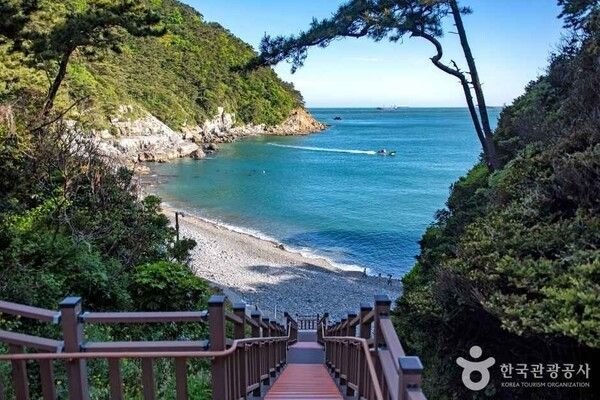
Travel, at its core, often reveals itself in quiet moments. A pause beside the sea. The sound of wind moving through pine trees. A solitary walk along a cliffside path. Taegjongdae is a place where such moments come naturally.
Standing before the vast ocean and the rugged cliffs, travelers may find themselves asking a simple question: in this landscape where land meets sea, what memories will they carry home?
Reported by News Culture M.J._mj94070777@nc.press
Copyright ⓒ 뉴스컬처 무단 전재 및 재배포 금지
본 콘텐츠는 뉴스픽 파트너스에서 공유된 콘텐츠입니다.


