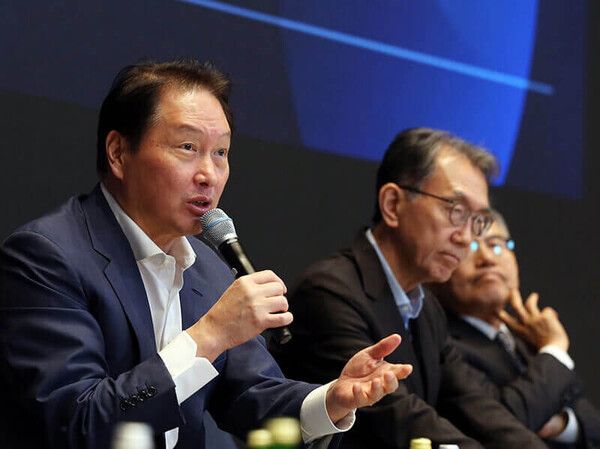
[CEONEWS = Reporter Jo Sung-il] Among the leaders of Korea's top four conglomerates, SK Group Chairman Chey Tae-won is arguably the busiest outside of corporate responsibilities. This is partly because he also serves as Chairman of the Korea Chamber of Commerce and Industry, a comprehensive economic organization. Adding to this is his high-profile divorce case, dubbed the "divorce of the century." Recently, Chey described the current state of SK Group as facing its biggest "crisis" since the 1997 Asian financial crisis. His solution? Fundamental innovation. Chey, known for turning crises into opportunities for growth, is once again betting on his instincts. Let’s explore Chey Tae-won’s journey and strategy.
Becoming Chairman at 38, Leading Through Crisis
“Will you pursue Deep Change or face a Slow Death?”
This was the question posed by Chey when he took over as SK Group Chairman in 1998. These words remain a guiding principle for the growth and development of SK Group.
Chey’s ascent to leadership came unexpectedly following the sudden passing of his father, the late Chairman Chey Jong-hyun. With no explicit succession plan left by his father, tradition might have favored the eldest son of the founding family, Chey Yoon-won, to succeed. However, Chey Yoon-won, now Chairman of SK Chemicals, recommended Chey Tae-won for his exceptional capabilities, leading to unanimous support.
Thus, at the age of 38, Chey Tae-won became the head of SK Group, then ranked fifth among Korean conglomerates. His appointment coincided with the 1997 Asian financial crisis, presenting a bleak business environment with survival, rather than growth, as the primary goal. His first statement as chairman emphasized "innovative change."
Overcoming the Sovereign Crisis
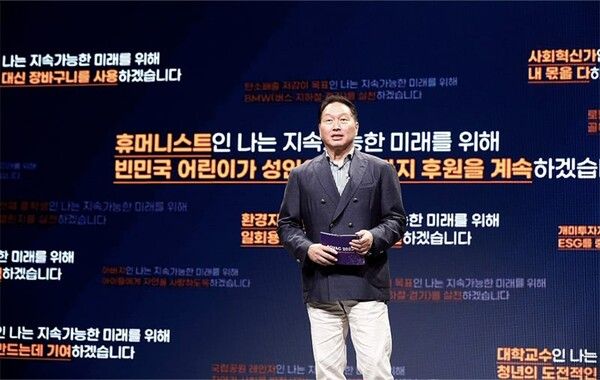
Chey’s commitment to overcoming crises became evident in 2002 with the so-called "Jeju Declaration" during an SK Group CEO seminar. He boldly declared, “We will liquidate affiliates without survival capabilities, even if they are profitable.”
At the time, such a move seemed counterintuitive. Many would have opted to keep profitable companies afloat, even temporarily. However, Chey believed that sustainability was essential for any enterprise’s future.
He established three survival criteria for affiliates:
Securing competitive business models.
Achieving operational efficiency on par with global standards.
Generating positive economic value-added (EVA).
Before the effects of these measures could fully materialize, SK faced its largest crisis: the Sovereign case. In 2003, Monaco-based investment fund Sovereign Asset Management acquired a significant stake in SK Corporation, threatening a hostile takeover. With the help of friendly allies and minority shareholders, SK managed to retain control.
The incident was a turning point for Chey, leading him to spearhead corporate governance reforms and adopt transparent, board-centered management practices.
The Masterstroke: Acquiring Hynix
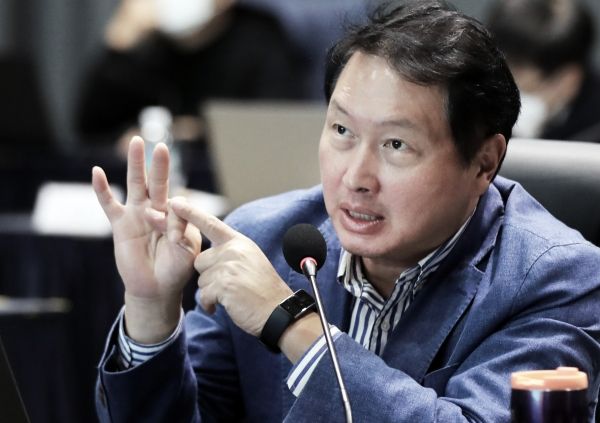
One of Chey’s most notable strategic decisions was SK Group’s acquisition of Hynix Semiconductor, now SK Hynix.
Originally part of Hyundai Group, Hynix had struggled with financial difficulties and was eventually put up for sale. Many speculated about potential buyers, including foreign companies and Hyundai affiliates.
Chey, however, saw the acquisition as an opportunity to diversify SK’s portfolio, which had traditionally focused on energy, chemicals, and telecommunications. Despite concerns about the high acquisition cost potentially endangering SK’s financial stability, Chey pushed forward.
In November 2011, SK acquired Hynix. Critics warned of the "winner’s curse," where the victor of a bidding war suffers financial losses. But Chey countered by investing aggressively in technology and facilities, pouring nearly 5 trillion KRW into Hynix.
The gamble paid off. As the semiconductor market rebounded, Hynix saw its sales quadruple and operating profit increase 34-fold within a decade. This success propelled SK Group to become the second-largest conglomerate in Korea, transforming it into an export-driven industrial giant.
"Back to Basics" and Rebalancing for Survival
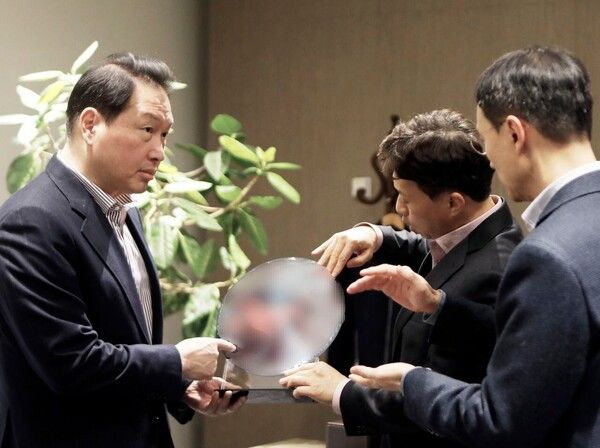
Chey believes that corporations should pursue not only economic value but also social value. Under this philosophy, he introduced SK Group’s “Financial Story,” a system for measuring the social impact of the group’s businesses, encompassing areas such as the environment, labor, and markets. Through this initiative, SK created 20 trillion KRW in social value.
However, external challenges such as high interest rates and a global economic slowdown revealed inefficiencies, including competition and redundancy among affiliates. Chey warned of the risks of "sudden death" for companies and launched a "Back to Basics" campaign. This involved large-scale rebalancing to enhance investment efficiency, consolidate resources, and streamline the group’s operations.
Despite these challenges, Chey is doubling down on his semiconductor investments, announcing plans to invest 103 trillion KRW over five years. He aims to expand demand in global markets and strategically invest in areas with future growth potential.
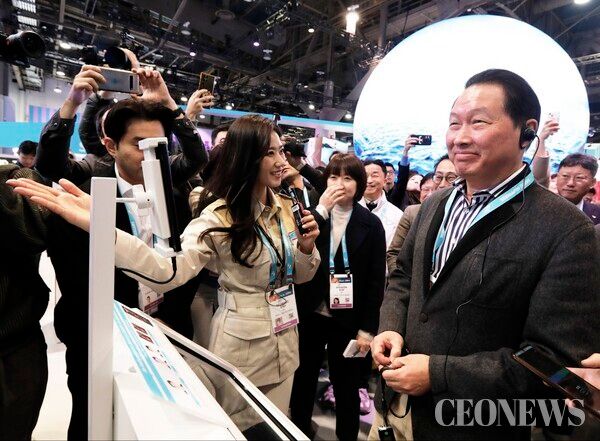
A Visionary’s New Bet
Chey Tae-won has repeatedly demonstrated his ability to turn adversity into opportunity. His bold leadership, from overcoming the Sovereign crisis to transforming Hynix into a global semiconductor leader, has solidified SK Group’s status as an industrial powerhouse. As he navigates the current challenges, the world watches to see if his latest gambles will once again pay off.
Copyright ⓒ CEONEWS 무단 전재 및 재배포 금지
본 콘텐츠는 뉴스픽 파트너스에서 공유된 콘텐츠입니다.


