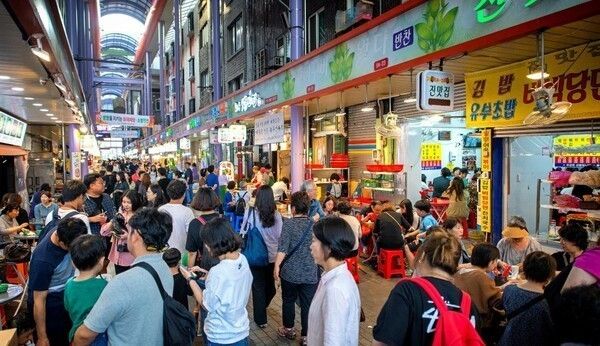
Bupyeong Kkangtong Market, located in Jung-gu, Busan, stands alongside Gukje Market and Jagalchi Market as one of the city's defining traditional market districts.
Situated at 32 Junggu-ro 39beon-gil, the market contains more than 1,100 stores across approximately 30,597 square meters. Imported goods and Busan fish cakes remain among its signature products, while dishes such as bibim dangmyeon and yubu jeongol have become inseparable from the market's identity.
In 2013, the market gained national attention by launching Korea's first permanent night market, helping reshape Busan's nighttime street-food culture.
◇ A Public Market Born From the Port City of Busan
The origins of the market trace back to the transformation of Busan following the opening of the port in 1876 under the Treaty of Ganghwa.
As the city's commercial center shifted toward the Jung-gu area, Japanese settlers increasingly moved into districts such as Bupyeong-dong, Gwangbok-dong, Nampo-dong, and Sinchang-dong. Marshlands and open fields gradually developed into urban commercial streets.
An earlier marketplace known as Sageori Market once occupied the area. As Japanese residency expanded during the colonial period, merchants catering to Japanese customers increased, and permanent shops began to appear.
In 1909, a private market called Ilhan Market opened. The name reflected the mixed commercial environment shared by Japanese and Korean merchants during the colonial era.
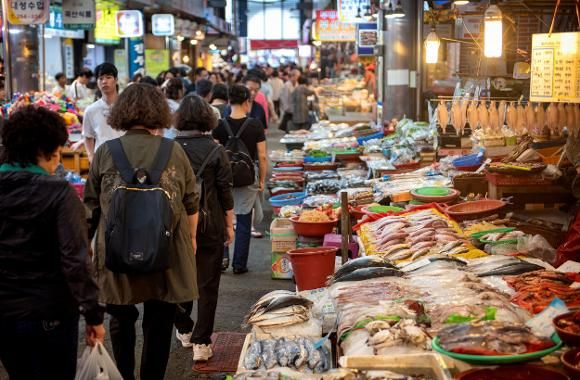
By 1915, the market had been reorganized as a public market operated by Busan authorities and renamed Bupyeongjeong Market, becoming Korea's first officially established public market.
Initially focused on supplying food and daily necessities to Japanese residents, the market expanded rapidly as Busan grew throughout the 1920s and 1930s. Rice, soybeans, salt, vegetables, seafood, textiles, and seaweed were actively traded, transforming the market into one of Busan's major commercial centers.
Following Korea's liberation from Japanese colonial rule, the market became known as Bupyeong Market.
Although located near Gukje Market, the two developed through different historical paths. While Gukje Market expanded around goods left behind after Japanese residents departed Korea, Bupyeong Market had already developed as a permanent commercial district during the colonial period.
The evolution of Busan fish cakes also reflects these shifts. Originally sold largely to Japanese consumers, fish cakes eventually became one of Busan's most recognizable local foods.
◇ How Military Supplies and Imported Goods Created the Name "Kkangtong Market"
The name "Kkangtong Market," meaning "Can Market," emerged after the Korean War.
As refugees flooded Busan during the war, the city's population surged from roughly 400,000 to nearly 880,000 people. Demand for food and daily necessities exploded, and black markets and temporary trading districts spread across the city.
Bupyeong Market became a major destination for surplus goods flowing out of nearby U.S. military bases. Canned foods, snacks, military supplies, and imported products filled the market's alleys, leading locals to nickname it "Kkangtong Market."
What began as a nickname eventually became the market's defining identity.
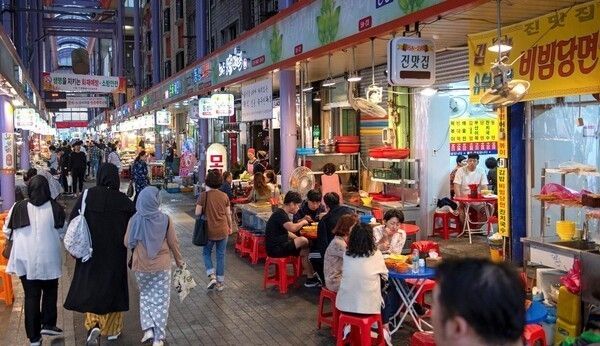
During the years immediately following the war, imported canned goods represented both rare foreign products and essential survival items.
The Vietnam War era further expanded the market. Korean soldiers returning from Vietnam brought military rations and foreign goods into Busan, while the reopening of ferry routes between Busan and Shimonoseki in Japan fueled a growing trade economy carried by small-scale merchants.
At the time, Bupyeong Kkangtong Market became one of Korea's best-known destinations for imported electronics, liquor, cigarettes, food products, and household goods.
Before modern distribution systems fully developed, the market functioned as a gateway through which ordinary consumers encountered products from abroad.
As import liberalization and modern retail systems expanded, however, the market's identity began to change once again. Foreign products could now be purchased at department stores, supermarkets, and online platforms.
Bupyeong Kkangtong Market gradually shifted from an import-centered marketplace into a destination built around food culture, tourism, and nighttime experiences.
◇ Reviving the Market Through Night Markets and Busan Street Food
The turning point came with the launch of the night market in October 2013.
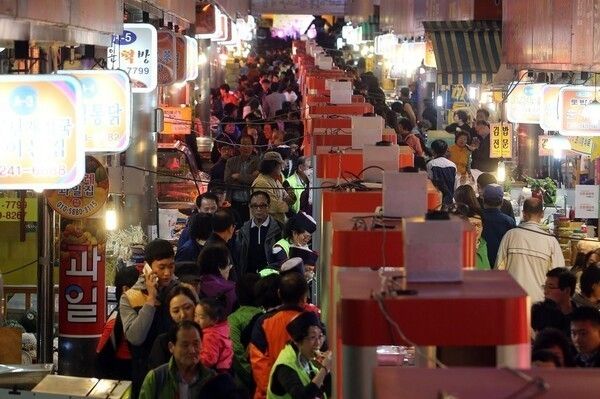
As evening falls, lights illuminate the narrow alleyways while international street foods and local specialties draw crowds deep into the market. If Kkangtong Market once sold foreign goods, the night market now brings global food culture directly into Busan's streets.
The market evolved into a lively urban space combining food stalls, handmade crafts, accessories, health products, folk games, and street performances. By day, it remains a traditional market. By night, it transforms into one of Busan's most recognizable tourism destinations.
Food remains central to the market's popularity.
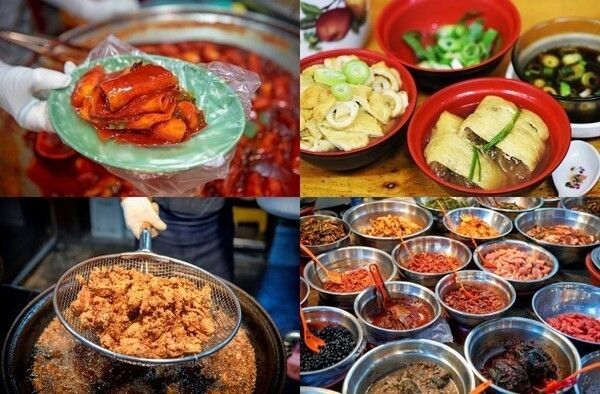
Bibim dangmyeon, made with glass noodles, fish cake, and spicy sauce, began as a simple meal created to satisfy hungry merchants. Today, it has become one of Busan's signature market dishes.
Yubu jeongol, featuring tofu pockets stuffed with japchae and simmered in anchovy broth, is another beloved specialty reflecting the warmth and handmade character of traditional market food.
Busan fish cakes continue to appear throughout the market's alleyways.
The market's Jukjip Alley also preserves memories of war and displacement.
During the Korean War, refugees surviving in Busan created porridge shops using leftover ingredients gathered from U.S. military bases. Known at the time as "UN stew" or "pig soup," the meals provided affordable sustenance for displaced families and struggling merchants.
Today, the alley offers a wider variety of porridges, noodles, soups, and comfort foods while preserving traces of its difficult origins.
Bupyeong Kkangtong Market also connects naturally to many of Busan's major tourism routes, including Yongdusan Park, Bosu-dong Book Street, Nampo-dong, Gamcheon Culture Village, and Songdo Beach.
Over the decades, the market has passed through the eras of colonial trade, wartime survival, imported goods commerce, and modern night-market culture.
Its name still carries memories of the canned goods that once defined postwar Busan, while its alleyways remain filled with the smells of bibim dangmyeon, fish cakes, warm broth, and street food.
Today, Bupyeong Kkangtong Market stands as a living intersection of Busan's history, food culture, and urban life.
Reported by News Culture M.J._mj94070777@nc.press
Copyright ⓒ 뉴스컬처 무단 전재 및 재배포 금지


