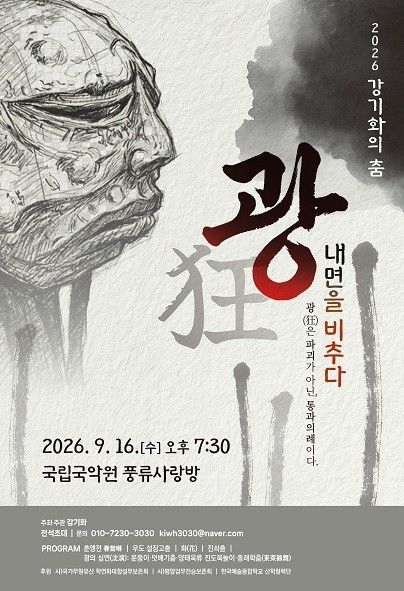
[News Culture] Kang Gi-hwa’s “Gwang (狂) – Reflecting the Inner Self” is built on a meaning of gwang far removed from simple frenzy or madness.
Its point of departure is gwangjajinchu (狂者進取) from the Analects—the idea of setting one’s sights forward and advancing with conviction. Here, gwang becomes an inner condition where vitality and emotional intensity collide with discipline and composure.
Set for Sept. 16 at 7:30 p.m. at Pungnyusarangbang at the National Gugak Center, the 40-minute performance brings together Kang Gi-hwa, Shin Geun-cheol, Kim Dong-hyun and Song Ju-gwang across seven works rooted in court dance, nongak percussion, Gyeonggi shamanic traditions, Yeongnam masked dance, Jindo drumming and the Dongnae Crane Dance.
Rather than presenting them as a simple showcase of traditional forms, Kang arranges the works as an emotional progression: restraint gives way to eruption, introspection, controlled exhilaration and finally a descent into—and emergence from—the deeper reaches of gwang.
Restraint begins on a single woven mat
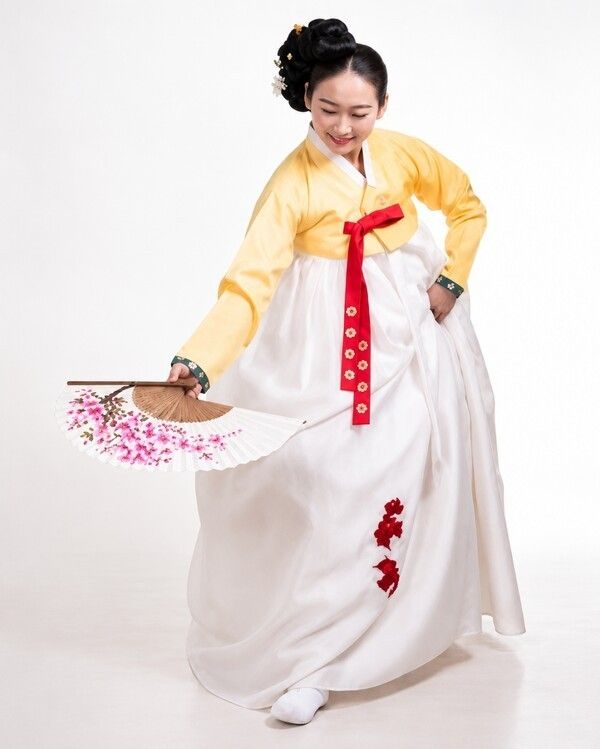
Kang opens the evening with “The Beginning of Restraint – Chunaengjeon.”
Created in 1828 during the reign of King Sunjo and closely associated with Crown Prince Hyomyeong, Chunaengjeon is one of the most refined works in the Korean court-dance repertoire. Its image of an oriole is embodied through the dancer’s yellow robe, floral headpiece, red sash and long white sleeves.
The physical space is deliberately small. On a woven mat barely large enough for a single dancer, the slightest shift matters: the transfer of weight between the feet, the flexion of the knees, the direction of the torso and the angle of the sleeves.
As the musical breathing moves through Sangnyeongsan, Doduri and Taryeong, movements including hwajeontae, hoeran, jeoangsu, taptapgo, nakhwayusu and gwagyoseon turn restraint itself into virtuosity.
By placing the evening’s most controlled dance first, Kang establishes the central tension of the program: before the body can reach gwang, how completely can it first master itself?
When the janggu becomes part of the body
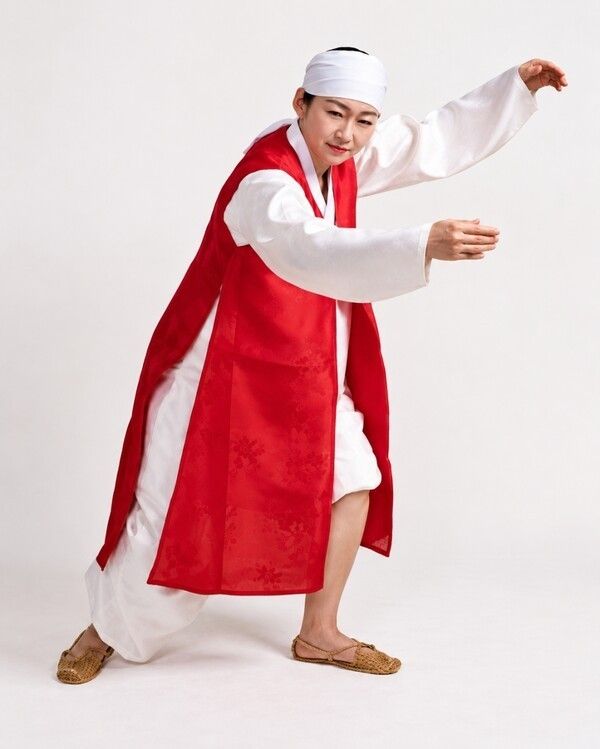
That containment breaks open with Shin Geun-cheol’s “Explosion of Spirit – Udo Seoljanggo Dance.”
Shin, who trained in the Udo seoljanggu lineage of Shin Man-jong and studied Lee Busan’s percussion technique, wears the janggu directly against his body. The instrument is not treated as something separate from the dancer but as part of the dancer’s physical mechanism.
The pleasure of the piece comes from the fusion of sound and movement: the exact contact of the sticks, turns of the torso around the drum, bends of the knees and accents driven through the feet all operate as one kinetic unit.
The energy then turns inward.
Kang’s original work **“Metaphor of Emotion – Hwa (Flower)”** uses the life cycle of a flower—its emergence, bloom and disappearance—as an image of human feeling. Positioned between inherited traditional dances, the piece shifts the focus from collective performance language toward an individual interior world.
Kang has spent years researching both Dongnae Crane Dance and Confucian aesthetics while working as a research professor at the Korean Arts Research Institute of Korea National University of Arts. In Hwa, that scholarly inquiry enters the choreography without turning the stage into an academic demonstration.
Kim Dong-hyun then takes over with “Measured Exhilaration – Jinsoe Dance.”
Rooted in Gyeonggi dodanggut and the male jaein performance tradition, the dance is performed with a small gong in hand. Its metallic sound is produced and controlled simultaneously with the movement of the body.
Where the preceding seoljanggo dance allows energy to burst outward, Jinsoe Dance reins that excitement back in, reorganizing exhilaration through timing, sonic control and form.
Into the abyss of gwang
The latter half of the program is grouped under “The Abyss of Gwang,” a three-part sequence that moves from liberation to purification and, finally, transcendence.
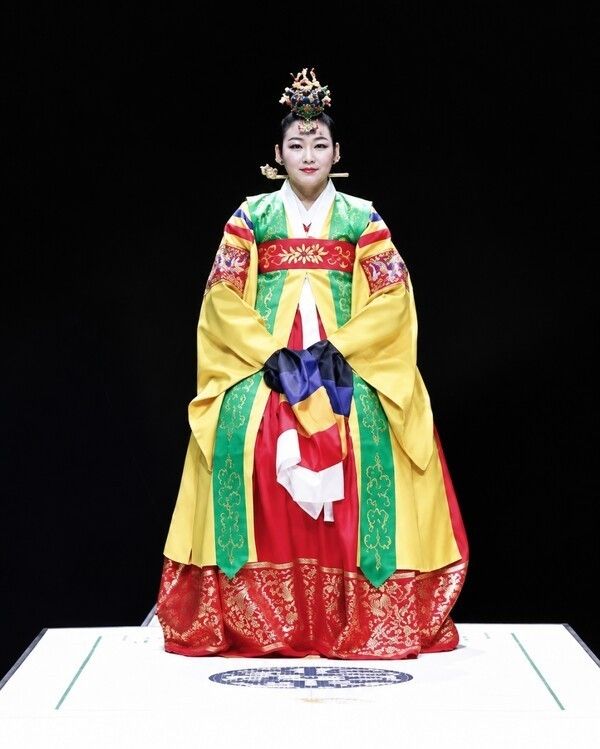
The first work, “Liberation of Madness – Mundungi and Deotbaegi Dance,” draws on the world of Yeongnam ogwangdae masked theater.
Its emotional structure grows from the figure of the leper, whose suffering is transformed through dance into a strange mixture of tragedy, humor and exhilaration. Rhythmic languages associated with traditions such as Goseong Ogwangdae and Tongyeong Ogwangdae push the character beyond pain toward cathartic release.
Here, gwang is no longer something that needs to be suppressed. It becomes the very force through which suffering can be broken open.
Song Ju-gwang follows with “Purifying Exhilaration – Yang Tae-ok-style Jindo Drum Dance.”
Among the lineages of Jindo Buknori, designated an intangible cultural heritage of South Jeolla Province in 1987, the Yang Tae-ok style is particularly known for its elaborate two-stick technique, with rapid ornamental patterns moving across both sides of the drum.
Song completed a master’s thesis in 2021 examining the current state and future development of the Yang Tae-ok tradition. Onstage, however, research is converted back into physical rhythm. The force released in the preceding masked dance is washed through percussion, creating a bridge from emotional excess toward equilibrium.
Kang returns for the final work, “Calm and Transcendence – Dongnae Crane Dance.”
Designated as a Busan intangible cultural heritage in 1972, the dance combines the deotbaegi movement vocabulary of the Dongnae region with the cultivated poise associated with the hanryang, the traditional gentleman of leisure.
For Kang, it is also the culmination of nearly 20 years of research.
Her study of the form stretches from a 2006 master’s thesis through later work on its aesthetic characteristics, the Confucian ideas of balance and harmony, the sense of vital movement embodied in its leaps, and, most recently, its relationship to Confucian moral cultivation.
That intellectual history is ultimately absorbed into the body.
Movements such as iljasawi, hwalgaetjit ttwimsawi and sokurisawi evoke the bearing of a crane while drawing on ideals of serenity, weightless freedom and classical dignity. The ending does not seek another explosion of energy. Instead, it allows the body to rise above the turmoil that came before.
Across seven works in 40 minutes, “Gwang (狂) – Reflecting the Inner Self” sets restraint, eruption, purification and transcendence against one another with unusual intensity.
The performance ultimately brings two sides of Kang Gi-hwa’s practice into the same frame: the dancer who carries inherited movement through the body and the researcher who has spent decades asking what those movements mean.
Under the philosophical idea of gwangjajinchu, the two become inseparable.
Reported by News Culture M.J._mj94070777@nc.press
Copyright ⓒ 뉴스컬처 무단 전재 및 재배포 금지


