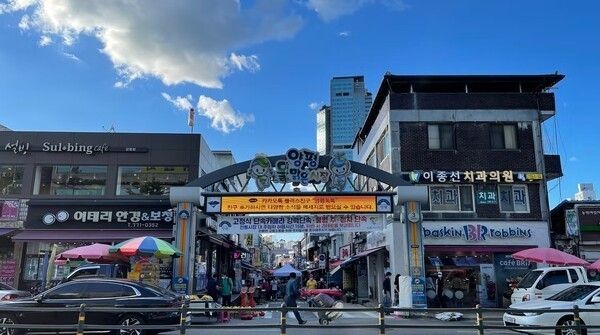
In Yangpyeong-eup, Yangpyeong-gun, Gyeonggi Province, Yangpyeong Mulmalgeun Market stands as a traditional market where a permanent market and a five-day market operate side by side. Around 398 stores normally open for business, while approximately 200 additional street vendors fill the riverside parking area on market days ending in 3 and 8 each month. The market spans roughly 39,692㎡.
Its easy accessibility from Yangpyeong Station is considered one of the market’s major strengths. Located near the Namhangang River, the market naturally draws not only local residents but also visitors heading to nearby attractions such as Dumulmeori, Semiwon Garden, and Yongmunsan Mountain.
Yangpyeong Mulmalgeun Market is widely known as a culture-tourism market connecting local produce, regional food culture, and travel routes. The name “Mulmalgeun,” meaning “clear water,” reflects Yangpyeong’s identity as a region shaped by the Namhangang River and eco-friendly agriculture. The official market name was selected through a public naming contest in 2014.
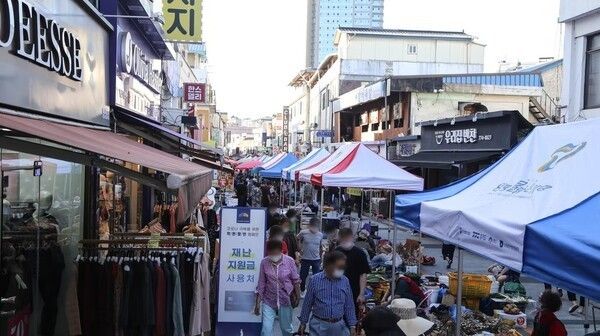
◇ A Marketplace Born Along the Waterways of Galsan Ferry
Yangpyeong historically served as a transportation hub built around the Namhangang waterway. Goods traveling from Gangwon Province and eastern Gyeonggi regions toward Hanyang naturally passed through Yangpyeong Ferry, creating the conditions for a thriving marketplace. During the Joseon Dynasty, “Galsanjang” became the foundation of what is now Yangpyeong Mulmalgeun Market.
Records from 1909 mention two “gaekju,” or merchant brokers, operating within Yangpyeong Market. At the time, the market traded textiles, dried pollack, seaweed, salt, yeast starters, and earthenware alongside various daily necessities and imported goods. During the peak of river transportation, Yangpyeong served as one of eastern Gyeonggi’s key distribution centers.
However, the market’s prominence declined during the Japanese colonial period as road transportation expanded. Economic hardships following liberation and the Korean War further weakened the local economy. A major turning point arrived in 1980 when the market transitioned into a permanent market. Buildings were constructed on former rice paddies, and by 1982 the market had grown to around 400 stores.
◇ Reborn as an Eco-Friendly Agricultural Market
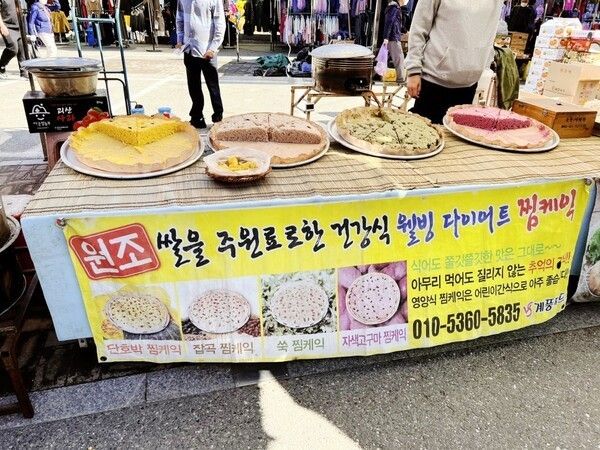
The market’s primary products evolved alongside changing times. While livestock and grain once dominated transactions, eco-friendly agricultural goods and regional specialties now form the market’s core identity. After Yangpyeong-gun declared itself Korea’s first eco-friendly agricultural district in 1997, the market actively expanded sales of environmentally friendly produce.
Visitors can find seasonal vegetables, fruits, wild greens, rice cakes, sauces, fermented products, and processed foods throughout the market. Wild greens from the Yongmunsan area, including chamnamul, deodeok, chwinamul, and gosari, are considered signature local specialties.
Despite being an inland market, seafood stores remain a defining feature. The tradition traces back to historical records showing Yangpyeong merchants trading dried pollack, seaweed, and salt through the market’s waterway distribution system.
◇ From Yangpyeong Haejangguk to the Saturday Night Market
Yangpyeong Haejangguk is considered the region’s signature dish. The spicy soup combines blood sausage, beef intestines, bean sprouts, and chili oil, reflecting the market’s historical ties to cattle trading. “Doraechang,” a grilled pork diaphragm specialty, is another local favorite found within the market.
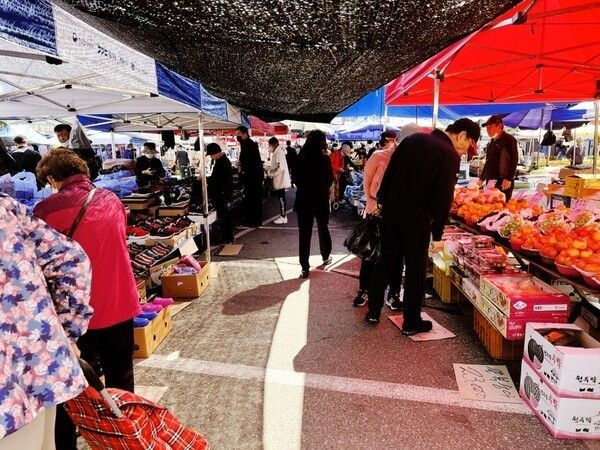
After being designated as a culture-tourism market in 2014, Yangpyeong Mulmalgeun Market also launched a Saturday night market. Train-themed booths, flea markets, craft experiences, and live performances transformed the traditional marketplace into a weekend festival destination.
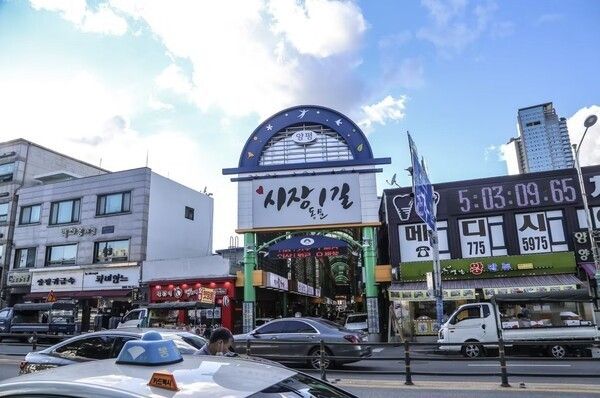
Nearby attractions including Dumulmeori, Semiwon Garden, Yongmunsan Mountain, and the Yangpyeong Rail Bike further strengthen the market’s tourism appeal. Today, Yangpyeong Mulmalgeun Market has evolved into a multifaceted traditional market where permanent shops, five-day markets, local food stores, night markets, and regional tourism all move together as one interconnected space.
Reported by News Culture Lee Sang-wan prizewan2@nc.press
Copyright ⓒ 뉴스컬처 무단 전재 및 재배포 금지


