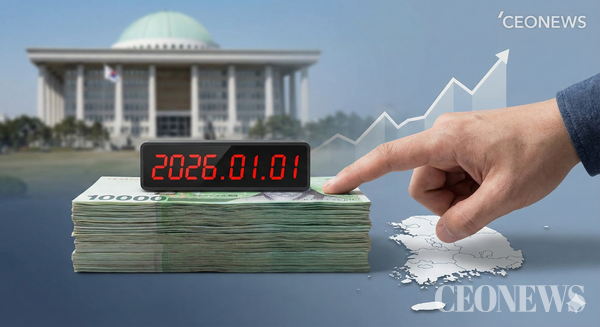
[CEONEWS=Bae Jun-cheol] The South Korean government's budget bill for 2026 has crossed the threshold of the National Assembly after many twists and turns. The total expenditure stands at 728 trillion won ($500+ billion). This represents an 8.1% increase compared to this year’s main budget and marks the first "Super Budget" in South Korean constitutional history to open the era of 700 trillion won.
On the night of December 2nd, ruling and opposition parties held a plenary session at the National Assembly and dramatically processed the 2026 budget bill. Following 2014 and 2020, this marks only the third time since the introduction of the National Assembly Advancement Act—and the first time in five years—that the legal deadline was observed, showcasing rare bipartisan cooperation. This is interpreted as a result of a desperate consensus within the political sphere to prioritize stabilizing people's livelihoods and to swiftly settle the social chaos and economic shock caused by last year's sudden emergency martial law crisis.
In particular, this budget holds significant symbolism as the first main budget of the "Lee Jae-myung Administration." Unlike the previous administration, which maintained a "sound fiscal stance," the current government has clearly demonstrated its will to overcome the waves of economic recession through bold "expansionary fiscal policy." With the budget confirmed, the government and the ruling party are fleshing out plans to ignite the spark of economic stimulus through immediate early execution of funds at the beginning of next year.
■ Where Will the 728 Trillion Won Flow?
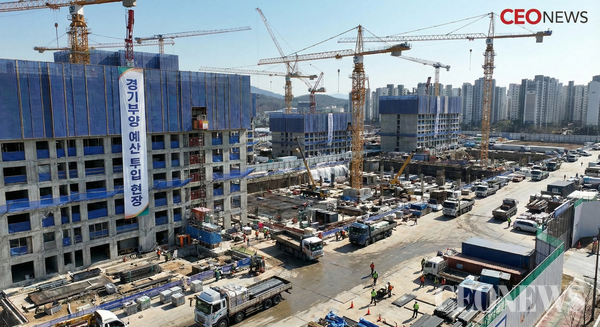
The core of this budget bill lies in the strategy to catch two rabbits at once: "Livelihood Recovery" and "Securing Future Growth Engines."
The budget for supporting the issuance of "Local Love Gift Certificates" (local currency), which President Lee Jae-myung has emphasized since his time in the opposition, was confirmed at the original proposal of 1.15 trillion won. This is expected to serve as a catalyst for revitalizing alleyway commercial districts and local economies. Additionally, the 1 trillion won "National Growth Fund" was also reflected without reduction, adding force to the government-led economic growth drive.
On the other hand, checks by the opposition party (People Power Party), concerned about fiscal soundness, were partially reflected. Projects for AI support, various policy funds, and reserve funds saw some cuts compared to the government proposal. Instead, livelihood-focused budgets demanded by the People Power Party—such as support for urban gas supply pipe installation, increased honor allowances for war veterans, and expanded national scholarship support—were increased. It can be seen as a result of cooperative governance where both sides exchanged core demands to secure "practical gains."
A point of note is the plan for expanding tax revenue. To support expansionary finance, the ruling and opposition parties agreed to amend the Corporate Tax Act and the Education Tax Act.
Corporate Tax: Rates will be raised by a flat 1 percentage point across all tax brackets.
Education Tax: The rate applied to giant financial and insurance companies with profits exceeding 1 trillion won will double from the current 0.5% to 1.0%.
Dividend Tax: The Special Tax Treatment Control Act, adjusting the maximum separate taxation rate on dividend income for high-dividend companies to 30%, was also passed.
These measures reflect the current government's philosophy of securing fiscal room and enhancing tax equity through so-called "taxes on the wealthy."
■ The Golden Time for Stimulus Depends on 'Early Execution'
With the first hurdle of budget confirmation cleared, the government’s gaze is now fixed on "Execution." Typically, when concerns about economic recession are high, the government increases the budget allocation ratio in the first half of the year to release funds early. This 728 trillion won Super Budget is also likely to be concentrated in the first half of next year, particularly in the first quarter.
According to government officials, the Ministry of Economy and Finance is reviewing a plan to set the early execution target for next year's budget at an all-time high of 70–75% for the first half. This is interpreted as an intention to send a strong signal for economic stimulus to the market, going beyond simple capital supply. Early budget execution is the most direct and immediately effective policy tool the government can choose during an economic downturn.
The top targets for early execution are boosting domestic consumption and revitalizing the construction sector.
Consumption: Early allocation of the Local Love Gift Certificate budget could act as a detonator to melt frozen consumer sentiment, coinciding with the Lunar New Year holiday early in the year. It is a point where small business owners and the self-employed can expect tangible sales increases.
Construction: The strategy is to resolve the liquidity crisis in construction and related industries by rushing the orders for increased SOC (Social Overhead Capital) and infrastructure projects, such as the National Information Resources Service disaster recovery system and the fostering of distributed power grid industries.
Economic experts unanimously state, "Since the martial law crisis last year, uncertainty has increased, causing corporate investment to shrink and household consumption to slow down," adding, "How speedily the government injects the confirmed budget into the real economy will be the key variable in defending next year's economic growth rate." Indeed, with the Bank of Korea and major economic research institutes lowering their 2026 economic growth outlook to the mid-to-high 1% range, the role of fiscal policy has become more important than ever.
■ Warnings Against 'Fiscal Universalism' and Fears of Tax Hike Backlash
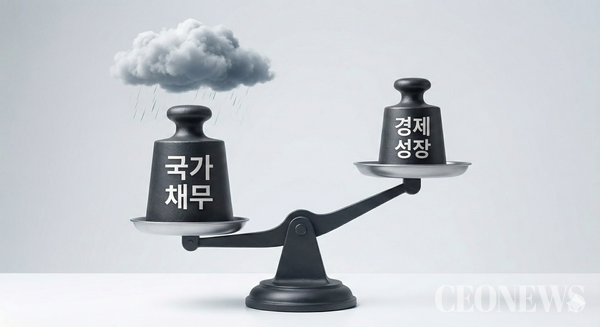
However, the outlook is not entirely rosy. Concerns about side effects arising from releasing an astronomical sum of 728 trillion won are significant. Experts, the business community, and some in the political sphere are raising their voices to warn against "Fiscal Universalism."
First is the potential to stimulate inflation. If massive liquidity is released into the market, prices that were barely finding stability could rise again. In particular, critics point out that if the large-scale distribution of local currency stimulates inflation psychology, the real purchasing power of common people could actually decrease. With the Bank of Korea weighing the timing for a base interest rate cut, policy coordination between fiscal expansion and monetary policy has become more critical than ever.
Second is the decline in corporate vitality due to corporate tax hikes. The business community is strongly objecting, stating, "In a situation where the export environment has deteriorated due to the global economic recession, raising corporate taxes could be a 'self-inflicted wound' that breaks companies' will to invest." There is criticism that this runs counter to the international trend where major advanced nations are competing to lower corporate tax rates to attract businesses. Specifically, concerns are rising that the education tax hike on the financial sector will lead to increased financial costs, eventually passing the burden to consumers through higher loan interest rates. This could become a double whammy for households and companies already struggling with prolonged high interest rates.
Third is the deterioration of fiscal soundness. Expansionary fiscal policy inevitably entails an increase in national debt. The government claims it will offset this through tax increases, but if tax revenue does not meet expectations due to the recession, the fiscal deficit could spiral out of control. With the national debt-to-GDP ratio already exceeding 50%, additional debt increases could negatively affect the national credit rating. This inevitably leads to controversy over intergenerational equity, as it risks leaving a pile of debt to future generations in the long term.
Fourth is the issue of budget waste and inefficiency. As pressure for early execution grows, there are concerns about hasty execution under the mindset of "spend it first." In the past, there have been numerous cases where pushing projects unreasonably for the sake of early execution led to wasted budget or poor construction. As this is the largest budget in history at 728 trillion won, a thorough management and supervision system must be established first to ensure not a single penny is spent in vain.
■ Politics Must Take Responsibility for the Economy
"Jeong-Gyeong-Yu-Chaek" (政經有責). This means politics and the economy are inseparable, and politics must take responsibility for economic results.
Adhering to the legal deadline for the budget bill for the first time in five years is certainly welcome. The fact that the ruling and opposition parties moved beyond extreme confrontation to find a compromise for the people's livelihood is a sign of maturity in our politics. However, passing the budget is not the end, but merely the beginning.
For the Lee Jae-myung administration's first "Super Budget" to become a true "pump-priming catalyst" that improves the constitution of the South Korean economy and lays the groundwork for sustainable growth—rather than ending as simple "cash handouts"—a sophisticated execution strategy is essential.
Management: Early execution is a speed battle, but thorough management and supervision must parallel it so that budget is not wasted by being buried in speed. Transparency in budget execution must be enhanced, and a real-time monitoring system should be built so the public can directly check the flow of their tax money.
Deregulation: Additionally, deregulation and incentives must be presented to resolve corporate backlash and investment contraction caused by tax hikes. If the perception spreads that the government "only takes and doesn't give," the phenomenon of companies avoiding domestic investment could deepen. Supplementary measures such as expanding investment tax credits and revitalizing regulatory sandboxes are urgent to mitigate the shock of corporate tax increases.
Most importantly, it is about the recovery of trust. Over the past year, our society has experienced great chaos. The unprecedented event of emergency martial law left deep scars on the people, and its aftermath led to uncertainty across the economy. This budget bill must serve as an opportunity to suture those wounds and give the people hope that "we can run again."
728 Trillion Won. This is massive tax revenue amounting to approximately 14 million won per citizen. We hope this money is not spent in vain and delivers warmth to every capillary of the people's livelihoods. It must properly reach the shops of small business owners, the jobs of the youth, the retirement lives of the elderly, and the future of children.
It is time for the government, the ruling party, and the opposition party to all act with an attitude of infinite responsibility for the results of this budget execution. Jeong-Gyeong-Yu-Chaek. The people are watching to see if politics will take responsibility for the economy.
Copyright ⓒ CEONEWS 무단 전재 및 재배포 금지
본 콘텐츠는 뉴스픽 파트너스에서 공유된 콘텐츠입니다.


